

Culinary Arts

cooking courses in delhi for beginners professionals
Culinary Arts, Culinary Institute

Best Cooking Courses in Delhi for Beginners & Professionals | Chef IBCA

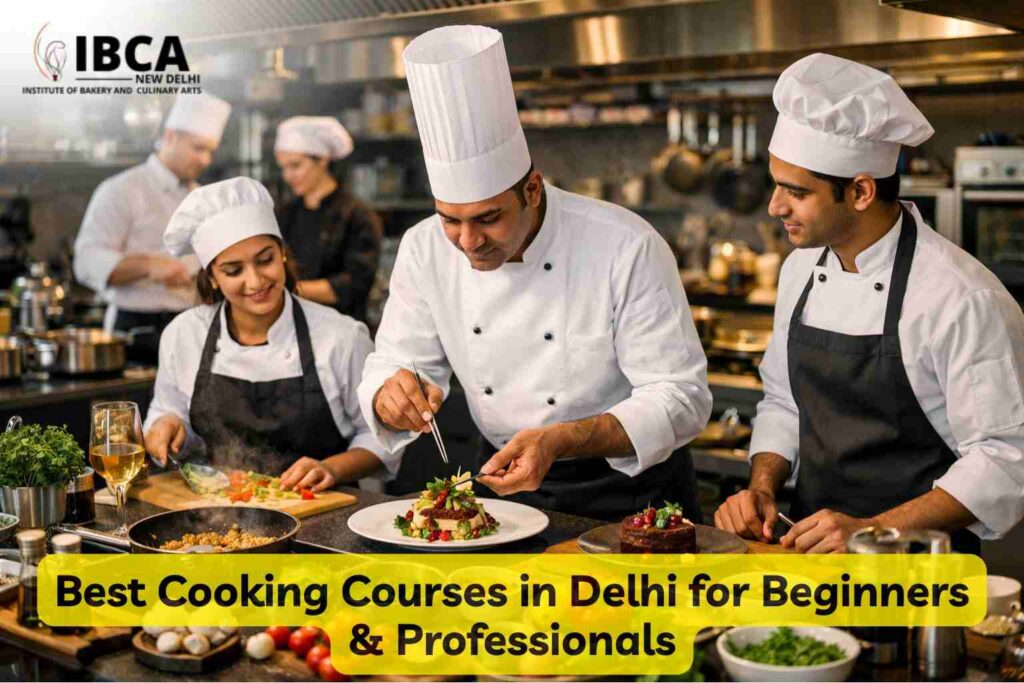
Delhi has emerged as a major hub for hotels, restaurants, cafés, and cloud kitchens, creating strong opportunities in the culinary industry. The Gen Z generation increasingly seeks innovative and experimental food combinations, which has significantly contributed to the growing demand for skilled culinary professionals. To build a successful culinary career, it is important to choose a reputable institute that provides practical training to develop your cooking skills and guides you toward long-term career growth in the culinary industry. IBCA, a Delhi-based institute, offers a two-year culinary course that combines training with experienced chefs and industry-based practical exposure. Who Should Join Cooking Courses in Delhi? This cooking course in Delhi is designed for beginners who have no knowledge of kitchen management. The course starts from the basic level (zero) and gradually trains students in professional cooking techniques. These techniques are taught to everyone, so this course can be joined by: Beginners with zero cooking experience. Home cooks and housewives who wish to upgrade their cooking skills to a professional level of expertise. Working professionals from the culinary field who are planning a career switch toward entrepreneurship or self-employment. Individuals who aspire to become chefs in hotels, restaurants, or bakeries. Students who are seeking a better structured culinary education and improved career opportunities in the hospitality industry. This course is thoughtfully designed in such a way that even individuals with a non-cooking background can develop professional-level cooking skills. Types of Cooking Courses Available in Delhi Cooking courses are of different types, and as per time, duration, and requirements, courses are designed differently. Certificate Cooking Courses (Short-Term) This type of course is a short-term course for a few weeks to months. In this course, beginners can gain a strong understanding of cooking basics. This course is ideal for beginners and hobby learners. Diploma & Advanced Culinary Programs This course typically lasts two years, in which the student will learn kitchen management from basic to a professional level. A Diploma in Culinary Arts provides in-depth kitchen training is given to develop professional-level skills. This course is designed for someone who aspires to be a professional chef. Bakery & Patisserie Specialization Courses This course is designed for cakes, breads, desserts, and chocolate works. The students who have an interest in baking and want to start their own profession as a cake maker or baker can join this course. Key Skills You Learn in Professional Cooking Courses Professional cooking courses teach advanced cooking techniques through structured training and hands-on kitchen practice, helping students develop essential culinary skills at a professional level. (i)Kitchen safety and hygiene standards (ii) Knife Skills and Cooking Techniques (iii) Indian and International Cuisine (iv) Menu Planning and Food Preparation (v) Time Management in a Commercial Kitchen There is proper training provided for these different skills to help take your cooking skills to a professional level. As per the course design, the training provided to students focuses on skill development, mostly conducted by professional chefs who have years of experience in cooking at a professional level and in advanced techniques. Start Your Learning Journey Today – Turn Your Passion into a Professional Career! Contact Us Why Chef IBCA Is Among the Best Cooking Institutes in Delhi Chef IBCA is a leading culinary institute in India that provides professional cooking training with strong practical exposure., where professional-level cooking techniques and ideas are taught. In this institute, you will receive several practices such as:- Some of the key features include: (i) Structured Curriculum for Beginners and Professionals: A structured curriculum designed for beginners as well as professionals. It provides cooking techniques from zero level, starting with basic ideas for individuals who have no prior knowledge of cooking. (ii) Hands-On Practical Kitchen Training: Chef IBCA is known for its hands-on practical kitchen training, where students practice and improve the cooking skills they have learned. (iii) Experienced chef instructors: All training is conducted under the guidance and instruction of experienced professional chefs. (iv) Industry-focused Learning: The institute provides proper conditions and an environment built on an industry-focused learning approach. (v) Supportive Learning Environment: A supportive learning environment is provided for students of all age groups and genders. Cooking Courses at Chef IBCA: Duration, Eligibility & Learning Approach Before taking a cooking course at Chef IBCA, you should check certain eligibility criteria, such as course content, duration, and learning approach. According to your interest and eligibility, you can choose a suitable course. Course Duration: There are two types of courses, based on duration: Course Type Duration Skill Level Short-Term Course Few weeks to months Basic cooking skills Diploma Course 2 Years Professional chef training There is no specific eligibility criterion for taking these courses. Anyone can enroll, from experienced cooking professionals to individuals with no prior cooking experience, including homemakers. A balanced learning approach is followed in the cooking courses, when both theoretical knowledge and practical training are provided to students. Students receive real kitchen exposure and, through practical, hands-on cooking sessions, they learn professional cooking skills. Career Opportunities After Completing Cooking Courses in Delhi After completing a cooking course in Delhi, you will get opportunities in different fields. Once you start working, your experience and skill development will increase over time, which can lead to career growth and a good salary. Here are some of the fields where you can work after completing a cooking course in Delhi: (i) Commis Chef / Line Cook A commis chef or line cook works under the head chef in the restaurant kitchen and assists in preparing ingredients, cooking dishes, and maintaining kitchen hygiene. This role helps beginners gain practical experience in professional kitchens. With dedication and good experience, a commis chef can gradually move up to positions such as chef de partie, sous chef, and eventually head chef. (ii) Pastry Chef A pastry chef specializes in preparing desserts, cakes, pastries, and baked goods. This career path is ideal for those who enjoy baking and creative presentation. After gaining skills and experience, you can work in hotels, bakeries, cafés, or even start your
hotel jobs for culinary students in india
Culinary Arts, Culinary Institute

How Culinary Students Get Hotel Jobs in India – Skills, Training & Career Path

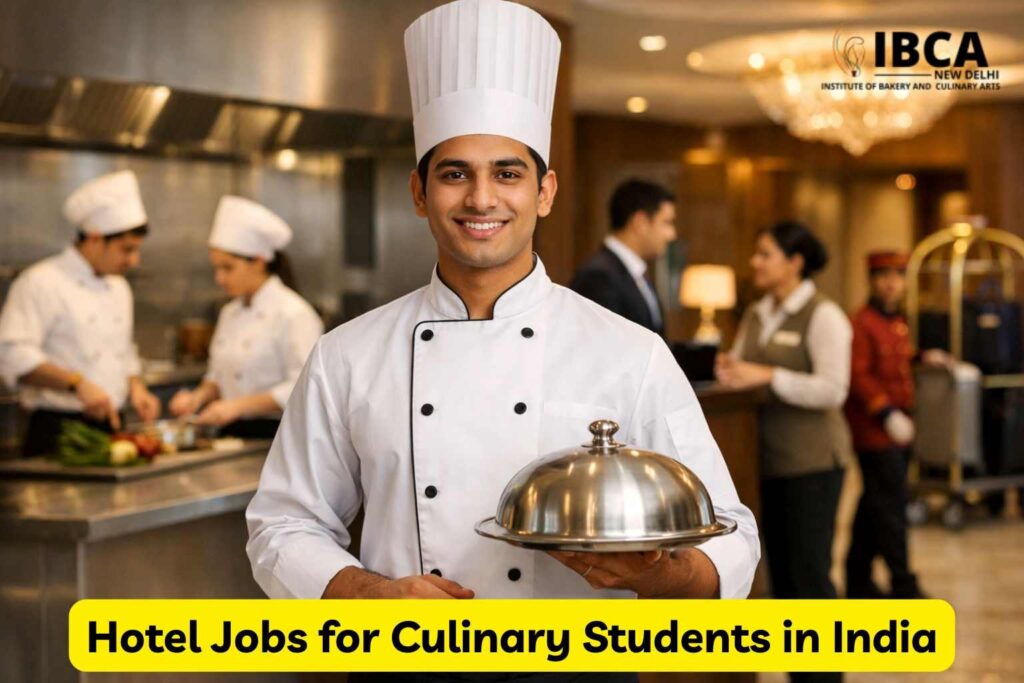
Nowadays, everyone has access to almost everything, as we all have the internet. Due to increasing social media connectivity, people are exposed to different cultures and cuisines. Most people demand different cuisines in various restaurants and hotels. For that reason, the demand for trained chefs keeps increasing in hotels and restaurants that have knowledge of different cuisines, their ingredients, and techniques of preparation. Any chef, for the sake of skill development, must have formal culinary training, which teaches them the kitchen work culture, food safety and hygiene, as well as time management and teamwork. But there are some misunderstandings among students about how culinary students get hotel jobs in India. People think they will earn a high salary from the first day, working hours will be less, and they will start working as a chef immediately, but it’s not like that. This is done with time as per professional progression in your skills through working hours. Many students choose a Diploma in Culinary Arts to gain professional kitchen training and understand how hotel kitchens operate in the hospitality industry. In this guide, we will cover how students get hotel jobs in India and let you know about the skills, training, and career path in culinary arts. Understanding Hotel & Restaurant Job Opportunities in India The places where you are going to work as a chef after culinary training depend on your performance and the skills you have developed. Accordingly, you can get recruited in hotels and restaurants, which will let you know how culinary students get hotel jobs in India. Students who complete a Diploma in Cooking often gain the practical knowledge required to start their careers in professional hotel kitchens. Types of workplaces where culinary graduates can give preference: 5-Star Luxury Hotels These hotels follow very strict hygiene and discipline standards. They are a strong base for beginners. These hotel kitchens have multiple food cuisines such as Indian, Continental, Dessert, etc. Boutique hotels and mid-scale hotels In these hotels, food delivery is done with a small team. Working conditions are more flexible and not very strict. Cloud kitchens and delivery-focused businesses These kitchens cook food mainly for online food delivery. The working speed is high, with no more detailing required in food related to plating. Quick service restaurants In these restaurants, students or employees have fixed roles and are required to cook standardized recipes. To enhance the skills in culinary arts, you should work on standards to improve speed and time management. Working in a team does not develop creativity at the initial stage. Therefore, culinary practice helps you grow gradually. Start Your Learning Journey Today, Turn Your Passion into a Career! Contact Us Kitchen Training Bakery Assistant Cloud cooking person Comparison Between Hotel kitchens and Standalone restaurants  Hotel Kitchens  Standalone restaurants  Require a high level of specialization and professional skills. Smaller in size, but requires the ability to work with a team flexibly. High workload during events and banquets Workload is high during peak business periods. Multiple cuisines are offered, and chefs must have detailed knowledge. Flexibility to focus on and master one type of cuisine or food. Read More : Why Choose IBCA for a Diploma in Culinary Arts in 2026? How Culinary Students Get Hotel Jobs in India (Step-by-Step Process) Culinary students need to understand how to reach their goals and how to be professional. They should start learning from the basics. Step 1 – Professional Culinary Training To achieve professional-level skill development, self-learning alone is not enough. Students need formal training that helps them understand ingredients, time management, and kitchen hygiene. For this, structured courses are required, where students gain a basic understanding and learn kitchen management techniques. Step 2 – Practical Kitchen Exposure These courses provide exposure to live kitchen practices and teach students how to handle kitchen operations. Every student is trained to handle real equipment and work under pressure. Step 3 – Internship & Industry Exposure After completing the course, internships in hotels are required to gain practical training. This training improves culinary skills. Through internships, students learn discipline, research, and the work culture of hotels and restaurants. During internships, the chances of getting a job in kitchens, restaurants, and hotels become easier. Step 4 – Placement Support & Interviews Within the course, students receive help from culinary training institutes on how to design their resumes. The culinary training institute provides proper training for kitchen tests and prepares students for real situations they may face during kitchen interviews or tests in restaurants and hotels. The training institute acts as a guide for students to help them grow in their profession. Must Read This : International Culinary Opportunities After Graduating from Chef IBCA Skills Required for Hotel and Restaurant Jobs Students need to understand how culinary students get hotel jobs in India and jobs in hotels and restaurants. You need to develop several skills that are essential for the hospitality industry. These skills can be broadly divided into two types. Technical (Hard) Skills Hard skills are technical skills related to kitchen operations. These include kitchen management, understanding kitchen hygiene, and food safety. The major hard skills required are: Food Preparation: Understanding ingredients and food science to enhance flavours. Baking Fundamentals: Knowledge of basic baking techniquesis required for baked dishes. Knife Skills: Proper knife-handling skills for efficient and safe food preparation. Kitchen Hygiene and Food Safety: Understanding the different measures required to maintain kitchen hygiene and food safety. Speed Management: Ability to manage speed without compromising the taste and quality of food. Soft Skills Hotels Look for Soft skills are personal and interpersonal skills that hotels look for, such as: Discipline and Punctuality: Being disciplined and punctual at work. Teamwork Under Pressure: Ability to work effectively as a team member, even under pressure. Communication Skills: Good communication skills to ensure customer satisfaction. Learning Attitude: The student must have the ability and willingness to learn continuously. Start Your Learning Journey Today, Turn Your Passion into a Career! Contact Us Role of Culinary Institutes in

choose ibca for diploma in culinary arts
chef career, Cooking Course, Cooking Skills, Culinary Arts, Culinary Institute

Why Choose IBCA for a Diploma in Culinary Arts in 2026?

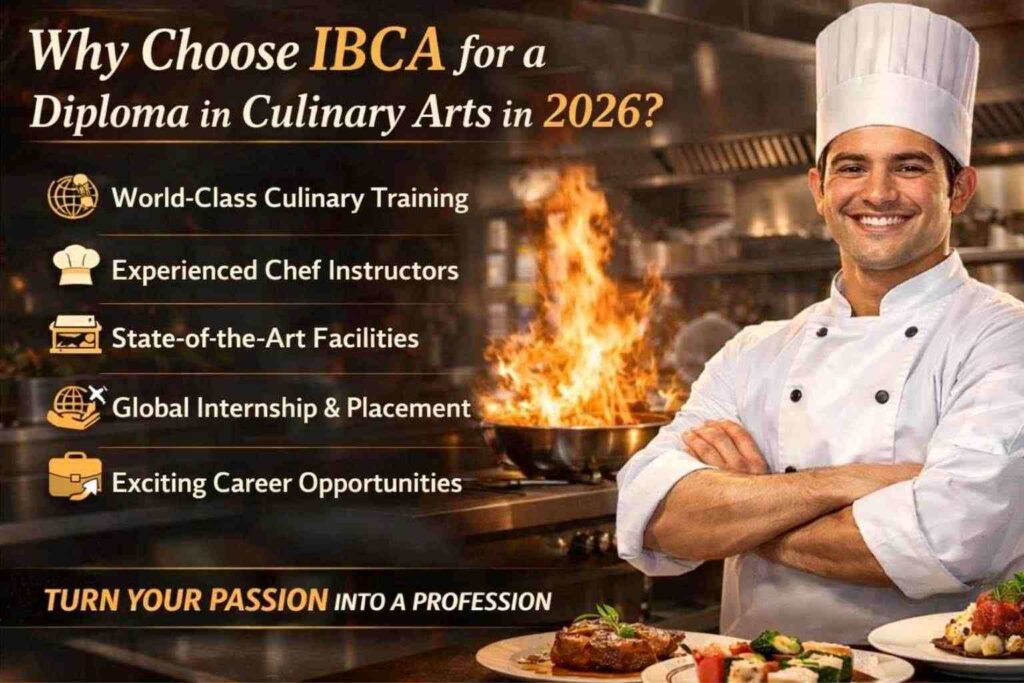
The hospitality world is booming after the pandemic of 2020. According to the 2023 FICCI report, India’s hospitality industry is booming at an annual rate of 13.37% and will hit USD45.39 Billion by 2030.  If you’re looking for a culinary career, this is the perfect time to turn your passion into a profession. So what to do? The best way is to enrol in a culinary Diploma course, learning the skills and details of the job. Now the question is where to learn all these? One of the leading institutions here is the IBCA. They are currently one of the industry leaders who deliver real job opportunities, internships at 5-stars restaurants & hotels, even overseas. IBCA provides you with expert faculty, modern-day facilities, strong industry ties, and more. But that’s not all. In this blog, we will discuss everything in detail. Want to know why you should choose IBCA in 2026? Read this blog till the end. Why the Diploma in Culinary Arts Future-Proof for 2026? A Diploma in Culinary Arts provides you with all the must-have skills, such as: Knife techniques, Molecular gastronomy, Sustainable cooking, and HACCP food safety standards. Also, a diploma course will let you master trends such as vegan menus, zero-waste practices, and AI tools for recipe tweaks. But you must choose the right course at the right institution. IBCA is one such reliable institute for rising aspirants. Its program evolves, learning from all the new-age methods while keeping the heritage of traditional dining. With all these, they prepare you for experiential dining in hotels, cruises, and pop-ups. It’s not just training, it’s your ticket to a stable yet creative career. Start Your Learning Journey Today, Turn Your Passion into a Career! Contact Us Reasons to Join IBCA’s Diploma in Culinary Course Program: 1. World-Class Faculty and Mentorship At IBCA, you learn from the very best chefs who have decades of experience in the field. Our faculties include Michelin-starred chefs and experts from Taj and Oberoi hotels. They not only teach you skills but also offer real insights to your table. The results? Real experience and real-world stories. This also ensures personal mentorship, with a 1:10 student-to-faculty ratio. You get personalised feedback on every dish. Also, there are Guest sessions from celebrity chefs that add inspiration. All this hands-on guidance ensures your Diploma in Culinary Arts develops pro-level confidence in your skills fast. 2. State-of-the-Art Facilities and Tech Integration IBCA’s has full-fledged kitchens with [50+] fully equipped stations, [20] demo labs, and VR simulators for perfect plating. For 2026, we are ready to include future tech such as: 3D food printers AI recipe generators Smart ovens For 2026, we integrate future tech. Use AI recipe generators, 3D food printers, and smart ovens that track temps precisely. This beats typical institutions. Check this comparison: Kitchen Stations 50+ fully equipped 20-30 basic Tech Tools VR/AI/3D Printing Basic ovens Sustainability On-site zero-waste farm Minimal features According to FICCI, tech adoption makes a chef more efficient, and at IBCA, we make sure you learn the modern culinary art through our immersive and innovative Diploma in Culinary Arts training. Read More : International Culinary Opportunities After Graduating from Chef IBCA 3. Industry Partnerships and 100% Placement Guarantee Culinary is a creative field, and people often come away empty-handed after completing a course. But at IBCA, we make sure that you directly go to internships at prestigious hotels and restaurants and land a job later. We have MoUs with Marriott, Hyatt, and cruise lines such as Royal Caribbean. Our students often get internships in Dubai and Singapore that build their global portfolio.  Our record speaks in this regard: we have a record [98%] placement within 3 months. How? We offer partnered programs to our students that offer them a career after completing the course. 4. Comprehensive Curriculum with Global Exposure IBCA offers you a comprehensive program, such as a 12-month Diploma in Culinary Arts that covers everything a new chef must learn. The core modules teach French, Asian, and Indian cuisines. Moreover, it also includes some extent of bakery, nutrition, and live restaurant projects. But that’s not all! You also gain a global edge by learning the foreign cuisines, from street food to precise luxury meals. FICCI reports that such international exposure increases employability. That’s why the IBCA Diploma Culinary Course prepares versatile chefs ready for 2026’s diverse menus. 5. Holistic Development and Alumni Network At IBCA, cooking is just the start. We offer entrepreneurship modules, teach menu pricing, pop-up launches, soft skills over hospitality management and customer charm. Moreover, we have our special alumni community network, offering you fair job opportunities through annual job fairs and connections. For example, Raj Patel is an alumni that says, “IBCA’s network landed me at Oberoi.” Another grad, Neha Rao, says,” The soft skills module made me a leader.” At IBCA, your Diploma in culinary arts is not just cooking, it becomes a launchpad for business or management roles. Start Your Learning Journey Today, Turn Your Passion into a Career! Contact Us 6. Affordable Excellence and 2026 Scholarships IBCA courses are available at affordable prices. This helps our students get a degree without burning their pockets. The courses have everything to help them shape their career and also come with scholarships up to [50%] and easy EMI plans. The results? Students don’t need to compromise and strive for their full excellence with a promising career at the end. Conclusion The demand for true talent in the hospitality industry is rising high. In India, the industry is growing at a rate of 13.37% annually. This means more opportunities for skilled chefs who know the charm of culinary arts. IBCA’s Diploma in Culinary Arts in 2026 offers a complete comprehensive exposure to students, including personalised mentoring, cutting-edge tech, internships and placements, exposure to global cuisines, skill training, and professional networking. The course offers a detailed insight into entrepreneurship with skills such as business management, pricing, and staffing. Want to launch your culinary career in 2026? Enroll

kickstart your career with a diploma in culinary arts
Culinary Arts

Start Your Food & Hospitality Career with a Diploma in Culinary Arts

This industry is booming with culinary arts being a key element of modern dining experiences. A Culinary diploma can open up the world of this dynamic industry as a professional chef. Whether you would like to be a professional chef, food stylist, or the owner of a food business your goals can only be achieved with the right skill set. With several educational paths to take, it becomes important to select the right one for your objectives. For those searching for a quick route into the culinary space, a Diploma in Culinary Arts might be just the course for you. Let’s explore why! The Rise of Culinary Education: Why It Matters With the increasing food industry, hospitality development, food bloggers, and TV shows, the demand for skilled culinary professionals is rising. Culinary education equips aspiring chefs with the knowledge and hands-on skills needed to succeed in professional kitchens. Career Choice: Diploma vs. Degree You may be thinking of culinary education; a diploma vs degree is a critical choice. Here is how those differences break down: 1. Time ad Price Diploma: A quicker and less expensive option, it usually lasts six months to two years. Degree: Takes three to four years to complete, and the cost of tuition is usually higher. 2. The Method of Learning Diploma: Emphasizes practical exposure, industry-relevant skills, and hands-on training. Degree: Consists of business management classes, theoretical subjects, and lengthy internships. For whom is a Culinary Diploma Appropriate? Also Read: Can I Get A Job With A Diploma In Culinary Arts? Job Market Insights: Where a Culinary Diploma Can Take You Food and Beverages Manager When you complete your diploma in culinary arts, food and beverage management is one of the top positions you can get into. A Food and Beverages Manager plays a crucial role in supervising the staff, maintaining quality of service, inventory management, and budget management. The diploma program doesn’t teach only food preparation but also imparts leadership, guest service, and kitchen management skills.  Executive Chef When it comes to a creative leader of the kitchen, it’s always an Executive Chef. An Executive Chefs are responsible for developing the menu, ensuring the best quality of food, and also directing the entire culinary team. This position demands expertise in culinary as well as strong management skills in order to ensure that the kitchen runs smoothly. The culinary diploma offers an in-depth knowledge of food science, global cuisines, and a lot of techniques of modern cooking.  Personal Chef Another position you may get after completing your diploma is a Personal Chef. A Personal Chef prepares the food that is customized according to the preference of the individual client. Sometimes, they can be hired by the private homes or for a special event. When it comes to the basic demands of this role, it always demands creativity, flexibility, and also a deep understanding of the ingredients and flavor.  With the diploma program, a person gets trained in a wide range of food cuisines, food pairings, and presentation techniques. Restaurant Manager Like other managers, Restaurant Managers are also responsible for smooth operations on a daily basis through managing the budget control and inventory. Over and above, they are also responsible for financial responsibilities.  When you master the culinary arts, you’re better equipped to lead effectively. As the nature of the restaurant industry is fast-paced and dynamic, a diploma course can help you to enhance your communication skills and problem-solving. Head Chef Head Chef, a visionary behind the restaurant’s culinary style. The head chef leads the creative process in the kitchen in order to craft signature dishes that actually set the tone of the restaurant’s menu. A head chef is involved in sourcing the ingredients, collaborating with suppliers, and being updated with trends in order to continuously innovate and elevate the experience of dining. With a diploma program, you can easily get into the position of head chef. Beyond the Classroom: Relevant Real-World Experience The practical instruction and exposure to the industry that come with a Culinary Diploma are among its greatest benefits. In order to prepare students for challenges they may face in the real world, many programs incorporate live kitchen experiences, apprenticeships, and internships. The Value of Training and Internships How Real-World Experience Gets You Ready for the Field Students gain confidence, improve speed and accuracy, and acquire skills that theory alone cannot teach them through practical experience.  Is a Culinary Diploma a Wise Investment for Your Future? A Culinary Diploma is a wise investment if you have a strong love for cooking and are keen to pursue a career in the food industry. It is among the greatest options for aspiring chefs because it provides an accelerated learning curve, affordability, and direct industry exposure. The diploma gives you the tools you need to succeed, whether your goal is to work in a prestigious restaurant, launch your own catering company, or become a food influencer. There will always be a need for qualified professionals because the food industry is always changing. Conclusion Your first step toward a fulfilling career in the food and hospitality sector is a diploma in culinary arts. You can differentiate yourself from the competition by selecting the appropriate training program and gaining practical skills, industry insights, and firsthand experience. Take the first step toward your ideal career right now by exploring the Best Culinary Schools in India, like Chef IBCA, if you’re prepared to start this thrilling adventure!

Culinary Arts

How to Become a Pastry Chef: Steps, Skills, and Career Advice

Have you ever thought of making the tastiest cakes and pastries or desserts that bring smiles to faces? The world of pastry arts is truly a fascinating and exciting space, and becoming a grand pastry chef can be a great career option. It’s an important profession where creative expression meets profession along with the results that are great works of art.  The demand for skilled pastry chefs is constantly growing, thus making that a great time for pursuing the career path. If you have a passion for baking, a love for all the important things that are sweet, and an importance for artistic expression, then a career in the field of bakery arts is perfect for you. Understanding the Role of a Pastry Chef So, what’s the role of a pastry chef? And what exactly do they do? More than just about baking cakes, becoming a pastry chef, and being responsible for creating the massive array of sweets and treats. This includes everything from the breads and classic pastries to delicate cakes to ice creams to chocolates. Their work generally involves multiple new recipes, management of the kitchen and its staff, and ensuring the quality of food and presentation for all those baked items.  Where Can You Find These Chefs? Pastry chefs can be found in different areas; you can find them in busy hotel kitchens and also in local bakeries of the high-end restaurants or specialized patisseries. Each of these environments provides a unique experience, from the fast-paced restaurant to the creative freedom that the chefs get in a bakery.  Challenges  Just like any type of career, being a pastry chef also comes with a certain set of challenges. Long hours along with the demanding clients and the pressure to deliver the perfect treat can be tough sometimes. But you get the joy of serving and making people smile, and this can fill up your day while you’re getting paid for that.  Essential Skills Needed for a Role of Pastry Chef Being a successful pastry chef requires multiple skills and artistic expressions along with business ideas:  Technical Knowledge  A deep foundation in baking is required for it to work well. You have to master all the baking skills and understand how the ingredients interact with each other, along with being professional in the kitchen.  Creativity & Innovation Pastry chefs are the artists in their own sphere. The ability to design great-looking, tasty desserts along with experimenting with the different flavors and coming up with new creations.  Time Management & Organization  Baking is a true science as much as it can be described as art. With the accurate measurements along with precise execution of techniques and a deeper eye towards presentation, these are important aspects for good results. Business and Leadership Skills  If you dream of running a bakery in a day, you need to develop a different business along with leadership skills. This directly includes staff management and marketing, budgeting, and understanding the financial needs of business. Education & Training Paths There are multiple paths that you can take for going in a career:  Formal Culinary Education  Enrolling in culinary school along with a pastry program is a great way to gain a great understanding of the field. These programs offer learning as well as hands-on experience plus the lead for diplomas and degrees. Reputable institutions for the Chef IBCA for Delhi for providing great training along with internationally recognized certifications.  Certifications & Online Courses  If you’re looking for specialized training along with certifications and online courses, it can be a great option. These can help you focus on certain areas of the pastry arts for chocolate making along with bread making. Self-Learning & Practice  Self-learning is a great aspect of any course. Experimentation at home along with following the tutorials can be a great supplement for training.  Gaining Hands-on Experience  Practical experience is important for the pastry world:  Importance of apprenticeships and internships: Internships and apprenticeships that provide the sponsorship for providing the opportunity for working in the real kitchen environment, learning from the experienced chefs and gaining practical skills.  Working in hotels, bakeries, and restaurants: Working in different settings that expose you to various settings that expose various aspects for the pastry profession & help in building the resume.  Learning From the Pastry Chefs: Mentorship is important in this field. Seek out the different opportunities for learning from the experienced chefs that can share the knowledge and expertise. Mastering Pastry Techniques From the basic techniques to advanced baking, mastering the art of pastry takes time along with dedication:  Basic Baking (Breads, cakes, tarts, cookies): Start with the different fundamentals. Master the art of making pastries, cakes, cookies, bread, or tarts before moving towards more complex creations. Advanced Techniques (sugar artistry, chocolate tempering, plated desserts): As you get experience, exploring the different techniques like the sugar artistry, chocolate tempering or creating the elegant plated desserts.  Modern Pastry Trends (Gluten-free, vegan, artistic designs): Staying updated with the latest and modern trends in the pastry world, which includes gluten-free or vegan baking along with the innovative artistic designs.  Building a Strong Portfolio & Personal Brand In a competitive world of bakery arts, a strong portfolio and brand image are important:  Using superb pictures to show off your greatest work: To display your skills and your personal style, take excellent photographs of your best works. Making use of social media (YouTube, Pinterest, Instagram): You can connect with other pastry chefs, discuss your work, and build your online presence through platforms like YouTube, Pinterest, and Instagram. Creating a blog or website to show abilities and experience: You can express your love of pastry arts and simply showcase your work in great detail on an individual blog or website.  Career Opportunities in Pastry Arts  There are multiple opportunities in the pastry world:  Jobs in Bakeries, Hotels, Catering, and Restaurants: Kitchen environments are high-pressure environments, so it becomes important to develop certain coping strategies and learn the coping mechanisms along with learning to work well with stress.  Staying Directly Updated with the Latest Trends: The pastry world is changing

Culinary Arts

How to Make Red Velvet Cake: A Step-by-Step Guide

A red velvet cake is a combination of a vanilla and chocolate cake, with a distinct tangy taste. Buttermilk and vinegar, which are common ingredients in a red velvet cake, are the reasons behind the tangy taste that makes it popular for special occasions. Red velvet cake is famous for its eye-catching appearance and delicious taste. It is used to show love for loved ones. This is why it is served at birthdays, weddings, and holidays as a symbol of celebration and indulgence. The chemical reaction between non-dutch cocoa powder and acidic ingredients like white vinegar and buttermilk gives the red color to the red velvet cake. A red velvet cake can be a delicious dessert for almost any occasion, and also easy to cook at home and gives a wide choice of decorations that match the celebration. Must Read: Baking Tips for Perfect Cakes What Makes Red Velvet Cake Special? The distinctive vibrant red color makes the red velvet cake more special. The fine, velvety crumb texture of red velvet cake can be achieved by using buttermilk and vinegar in the batter, which creates a chemical reaction that enhances the cake’s natural red color. Key elements that make red velvet cake special are explained below  1. Color The most noticeable feature of red velvet cake is its deep red color, which can be achieved with food coloring, which makes it different from other chocolate cakes.  2. Buttermilk and vinegar The next baking tip for red velvet cake that makes it different is buttermilk and vinegar which creates a chemical reaction and develops the red color and gives the soft, velvety texture to the cake. 3. Cream cheese frosting  Traditionally red velvet cake is paired with cream cheese frosting, which adds a tangy contrast to the cake that makes it preferable for cake lovers. 4. Mild chocolate flavor The chocolate flavor in red velvet gives a more fine look than a standard chocolate cake with the color combination of red. Ingredients You Need for Red Velvet Cake 1. Flour: The main ingredient in the cooking process of red velvet cake is cake flour which is lighter than any flour in the market. It gives the perfect base for a light, soft-crumbed cake texture. 2. Cocoa powder: Cocoa powder adds depth of flavor and contributes to the red color of red velvet cake. 3. Sugar: Sugar adds sweetness and moisture. It dissolves when mixed with liquid ingredients used in the baking process, caramelizes the cake when heated, and enhances the flavors of the cake. 4. Eggs: Whipped egg whites give the cake a light and fluffy texture. This part cannot be skipped or the cake will not rise and become fluffy. 5. Buttermilk: Moisture and a velvety texture to the red velvet cake are achieved by using buttermilk as a key ingredient. 6. Vegetable oil: Vegetable oil is an essential ingredient in red velvet cake, as it gives a moist, soft, and rich texture to the cake. Vegetable oil is used to keep the cake tender and fluffy for longer. It also blends easily with other ingredients, resulting in a smooth batter.  7. Red food coloring: To achieve the red color in the cake red food color is used to make the cake more eye-catching and give a feeling of love as red is used as a color of love. 8. Baking soda: Baking soda is used to achieve a soft and tender texture of cake. It reacts with acidic ingredients like buttermilk and vinegar to create carbon dioxide bubbles, which make the cake rise. 9. Vinegar: The vinegar reacts with baking soda to help the cake rise. The small amount of added vinegar allows the soda to rise the cake easily. Also Read: Baking Blunders: 12 Common Mistakes to Avoid Red Velvet Cake Recipe Step-by-Step Guide  To make the best red velvet cake you can get help from the step-by-step guidelines explained below. A. Preheat Oven The first baking tip in the baking process of red velvet cake is to preheat the oven to 350°F (177°C). Grease two cake pans according to the size of the cake you want, line them with parchment paper rounds, then grease the parchment paper.  B. Mix Dry Ingredients In one bowl of a stand mixer mix the dry ingredients which are cake flour, sugar, cocoa powder, salt, and baking soda. Mix this on low speed for a few seconds to combine well. C. Mix Wet Ingredients The other baking tip in the baking process is to mix wet ingredients in another bowl which are eggs, vegetable oil, buttermilk, vinegar, butter, vanilla, and red food coloring. While mixing on low speed, add the liquid ingredients to the dry and mix on medium speed until the batter is fully incorporated and smooth. Don’t forget to scrape the bowl to ensure all the ingredients are evenly mixed. This should take about 30 seconds. D. Incorporating Food Coloring After the dry ingredients are combined with the wet ingredients, you have to add the food coloring. You can add about 1-2 tablespoons of liquid red food coloring that is used for a vibrant color. Mix it well until the batter turns a deep red hue. E. Combining Wet and Dry Mixtures Slowly add the dry mixture to the wet mixture. Stir it gently until all gets fully combined. Be careful during mixing and try not to overmix, as this can affect the texture of the cake. F. Baking the Cake Divide batter between cake pans. Bake for 30-32 minutes. You can test by inserting a toothpick in the center that comes out clean. If the wet crumbs are visible on the toothpick, then bake it for longer. After baking, remove cakes from the oven and cool completely. Take care that cakes must be completely cool before frosting and assembling. Perfecting Red Velvet Cake Frosting: A Creamy Delight Making the frosting for a red velvet cake is simple and delicious. You can start by mixing cream cheese and butter until it becomes smooth and fluffy.  Add powdered sugar gradually, and

culinary arts as a top career choice
Culinary Arts

Why Culinary Arts Will Be a Top Career Choice in 2025

The food world is evolving every day, and with it, the possibilities of a great career in culinary arts are growing every day. The culinary flavors, from baking a tasty cake to that sizzle of that pan, along with managing the restaurant, have exploded with unique opportunities. It is not just cooking but a cultural change—a truly shared experience for delicious and tasty food along with a focus on nourishing their body, a focus for commitment towards the planet, and a great hunger for culinary arts innovation. By 2025, the powerful trends will surely create one of the best career options and a way to turn the passion into a fulfilling life.  Reasons Why Culinary Arts Will Be a Top Career Choice in 2025 Here are the 9 reasons why Culinary Arts will be a top career choice in 2025. 1. Growing Demand for Skilled Chefs The demand for some of the most skilled chefs is not just growing but—it’s popping. As the hospitality industry grows everywhere, it’s creating big career possibilities for all those culinary professionals. From those big and elegant kitchens to fine dining restaurants to the high energies of those casual eateries, the on-the-go innovation of food trucks, along with the large-scale coordination done with the catering services. This widespread need translates into more jobs, but also better salaries along with faster career advancement and a greater sense of job security for the culinary professionals, making it a truly promising field.   2. Expanding Culinary Education and Institutes Culinary education continues to expand fast to match the need. More culinary schools have come up, both in regular physical locations and with the advent of faster internet online learning platforms that have come up too. These schools involve a wide range of courses and areas of expertise, like pastry making, vegetarian cuisine, and discovering cultural flavors. Even governments and businesses are investing in culinary education, recognizing its importance. Must Read: Culinary Arts: India’s Top 10 Culinary Arts Schools 3. The Rise of Food Tourism  Food tourism has exploded in recent years, changing and transforming travel into a true delicious experience. People are not only visiting places; they are going for authentic cuisine experiences and diving deep into the food culture. Culinary vacations plus hands-on cooking classes with locals, along with chef-led tours, have surged in popularity. Chefs are at the center of these trends, thus acting as the cultural ambassadors and creating unforgettable experiences that offer travelers a great and genuine taste through the culinary heritage, making that an integral part of the travel experiences.  4. Technological Advancements in the Culinary Field Technology has transformed into a culinary landscape that impacted each aspect from food preparation to customer engagement. From those automated kitchens that streamline processes, along with different smart gadgets that have enhanced precision for social media, along with specialized food apps, technology has changed how chefs work and manage their kitchens and connect with their audience. Digital platforms, along with food blogs and dynamic YouTube channels, provide unprecedented opportunities for building their brands and showcasing their skills with the global audience and opening up great career opportunities.  5. Sustainability and Health-Conscious Cooking People are getting more aware of the connection between the food choices they are going for and their health related to that, along with the well-being of the planet. This amount of awareness has further fueled a demand for sustainable and nature-friendly practices that are not just trends anymore; they show a major shift towards how we go for food. The chefs are leading this movement, acting as advocates and educators, thus informing consumers about nutrition and providing sustainable sources along with creating tasty delicacies involving people related to nutrition and creating tasty and delicious dishes that nourish both the planet and your body.  6. Entrepreneurial Opportunities in Culinary Arts The culinary arts is a great ground for new entrepreneurs. Passionate chefs can achieve their dreams by opening their own eating joints, restaurants, catering businesses, or cafes as well. The growth of food delivery, along with cost-effective kitchens (that are also known as ghost kitchens), plus the pop-up restaurant concept, has greatly lowered the barriers of entry, making it super simple for chefs to launch their own ventures. Numerous chefs have really managed the culinary expertise for building an innovative and thriving business, showcasing the powerful potential in the culinary field.  7. Cultural Influence and Fusion Cuisine The world has become interconnected, and this is reflected in our food. Global cuisines, along with the fusion dishes that are increasingly popular. Chefs that have an existing opportunity for blending different types of cultural influences for their cooking and creating innovative and delicious dishes. Fusion cooking should be a big hit, adding excitement for both modern and traditional dining experiences.  8. The Evolving Role of Chefs Being a chef today has evolved past cooking. Chefs are involved in different areas. They work in food media (like online or TV), write cookbooks, teach cooking classes, and even give advice for the restaurants. They’re becoming social media stars and industry leaders, impacting what we eat while supporting other chefs. They’re expressing their expertise and interest in ways we’ve not witnessed before, and it’s having a major effect on the way we think about food. 9. Job Satisfaction and Career Stability A career in culinary arts can be greatly satisfying. It’s a creative and hands-on job where you can see the results of your work and can feel a big sense of achievement. Top chefs can make a great living, and the food industry is a very steady living. Even when the economy has issues, there are always different jobs available. This makes for a secure career choice for the passion about food.  Conclusion In 2025, culinary arts will be a great career choice due to big demands for skilled chefs and bakers, the expansions for culinary education, the rise of food tourism and technological advancements, the focus on health and sustainability, and many entrepreneurial opportunities and the influence

top traditional dishes in india
Culinary Arts

Top 7 Traditional Dishes in India

India is a food lover’s paradise, Indian food should be tried at least once by every foodie. It’s best to say that Indian cuisine is superb and incredibly diverse, coming from a variety of regions and tastes! In addition to its vibrant colour, distinct and pleasant aroma, and mouthwatering flavour, Indian cuisine is renowned for its spices and flavours. India provides a wide variety of opportunities to sample regional cuisine and indulge the senses. However, because there are so many variations of the same food available, it can be challenging to tell the difference between the original, delicious food and its tasteless, copied version. If you’re fortunate enough to travel around India, you’ll get to sample a wide range of cuisines and cultural traditions. If you are even interested in creating your career in this domain then surely look for the best Culinary Courses in Delhi. The spices and flavours used in Indian cuisine, along with its vibrant colour, distinctive aroma, and mouthwatering flavour, have made it particularly well-known worldwide. Top 7 Traditional Dishes in India Every Food Lover Should Try Here is a list of the top 7 dishes from India that you should try in order to experience the country’s rich diversity. Dal Makhani Although most foodies will have heard of or tried dal, there is nothing quite like eating the dish’s original version in its country of origin. The word “dal” in Hindi refers to lentils, and small black lentils are stewed for many hours to produce this delicious soup-like dish. Despite the fact that there are many variations of this lentil dish, dal makhani is in a class by itself. It represents luxury and is reserved for events like wedding receptions. There are no prizes for guessing how rich and creamy this Indian classic tastes since the word “makhani” in Hindi means “buttery.” To experience the genuine article, travel to Punjab in northern India.  Stuffed Paratha Punjab’s culinary heritage goes beyond dal makhani. In northern India, stuffed parathas are frequently consumed as breakfast and are revered as the meal of champions. The word “paratha,” which means “layers of fried dough,” is derived from the Sanskrit word “atta,” and the dish certainly fits that definition. The parathas are made from the dough (or atta), which is cooked on a tava and then shallow-fried the next day. Parathas are often eaten loaded with the filling of your choosing. Despite the vast array of paratha fillings available, some of our favourites are the aloo paratha and methi paratha (stuffed with fenugreek). Dhokla The Gujarati delicacy dhokla is a savoury vegetarian snack made of rice and split chickpeas and is hailed as the regional dish of northwest India. The meal, which tastes better than it sounds, is consumed by Gujaratis for brunch, lunch, and frequently as a snack or side dish. Dhokla is another dish that requires hours to prepare because it requires soaking the rice and splitting chickpeas into equal parts for an entire night. Baking soda, ginger, chilli, and coriander are then added to the dish, which increases its spice level and volume. This Gujarati speciality, which is typically served with fried chilli and coriander chutney, is incredibly mouthwatering. Also Read: Cooking for Special Diets: Delicious Meals for Food Allergies and Dietary Restrictions Pani Puri The northern Indian state of Bihar is thought to be the source of pani puri or gol gappa. Pani puri, which are hollow deep-fried balls made of wheat or semolina, make the ideal street food. They are served with hot tamarind water, chickpeas, and hot potatoes. Pani puri eating is a unique experience because the top of the deep-fried shell is traditionally cracked open with a spoon before the filling is added. To prevent any filling from spilling out of the delicate case, the majority of Indians consume each pani puri in a single swift bite. The majority of the nation is united by this infamous street food; everyone from neighbourhood college students to urban businessmen can be found gorging on them. Idli Idli is widely consumed throughout South India and is frequently compared to dosa as breakfast foods. Idli is a type of light savoury rice cake that is eaten first thing in the morning. These rice cakes are dangerously simple to consume because they are made by steaming a batter made of fermented black lentils and rice. Idli are typically served with sambar, coconut-based chutneys, or spicy fish curries because they are rather bland on their own. Idli has developed into many different varieties over the years, so you’re sure to find one that pleases your palate. Biryani This traditional Indian combination of rice and vegetables boasts more variations than any other Indian cuisine. Typically, this is made by marinating vegetables in yogurt, while aromatic spices are combined with rice and then cooked slowly for an hours. The appeal of this dish lies in the distinct adaptations created for different regions of India. Some regions adhere to the classic method, while others prefer to blend the rice with a pre-prepared sauce for a flavorful, moist experience, and then incorporate the vegetables. Palak Paneer Palak Paneer is an ideal main dish that is not only nutritious and tasty also quite creative. Primarily composed of spinach and Indian cottage cheese (paneer), it frequently ranks as a top choice on vegetarian menus in nearly every Indian restaurant around the world. Pair it with naan or roti, and you have a wholesome meal bursting with flavor and essential nutrients. Conclusion    Your mouth may be watering. Would you like to sample these delectable dishes for yourself? The world adores Indian food because it is unique and delicious. There are many culinary schools that offer Culinary Courses in Delhi to build your career in this industry. The Indian subcontinent is a sizable continent with up to 36 different cuisines. However, in order to keep things as simple as possible, you can divide the food preferences into two categories: North Indian food and South Indian food. In

Baking Courses, Culinary Arts

18-Month Baking & Culinary Diploma: Your Path to 100% Job Success

The demand for skilled professionals in the baking and culinary industries is increasing rapidly. To take your career to the heights and grow, an 18-month Baking & Culinary Diploma is an ideal option. It provides you with the best training. Many times, despite spending a lot of money, students do not get placement based on their degree, and they remain unemployed. The 18-Month Baking & Culinary Diploma program is a fast-track, high-success program. It also guarantees 100% job placement success. Let’s discuss it in detail. Why Choose an 18-Month Program? The 18-Month Program provides skilled professionals with the best opportunities to build a career. It provides a great range of chef courses that will make you a pro in the industry. The main reasons to choose this program are as follows: Quick Skill Development: This program is a fast-track option. In this, you are prepared to become skilled in less time. In this, every important skill is focused. With its help, you can give a new direction to your career. Along with this, you can be ready for a job soon with the help of this program. Comprehensive Curriculum: 1. The baking and culinary program covers baking techniques, culinary arts, kitchen management, and food safety. This course is designed keeping in mind all the needs of the industry. 2. With this, you will get information about every area of baking and culinary. Many professionals give their training to the students in a very intensive and well-planned manner. Accelerated Career Path: 1. Compared to long academic courses, this diploma gives you the opportunity to get a job quickly. It is a short-term investment. 2. With this, you can give a new direction to your career. Along with this, the results of this program have a long-term effect. Key Benefits of the Baking & Culinary Diploma: The Baking & Culinary Diploma course is designed by industry experts who specialise in this field. Its key benefits are as follows- Hands-On Learning: It is important to have practical experience in the kitchen. This program helps you to provide the experience of working in the field. This increases both your skills and confidence. Exposure to Industry Experts: You get the opportunity to work under the guidance of experienced chefs and trainers. Technical skills can be learned from these experts. You also get inspiration from the experienced experts from their experience in the baking and culinary industries. Access to the Latest Culinary Trends and Techniques: This program introduces you to the latest trends and techniques happening in the baking and culinary fields. This always keeps you relevant in the market. The Role of Job Placement in Career Success Job placement helps shape your career. This opens the way to your success. Baking & Culinary Diploma helps you achieve success. 100% Placement Assurance: The biggest feature of this diploma program is that it provides a 100% job guarantee. This way you do not have to struggle to start your career. Industry Partnerships: The program has partnerships with many renowned hotels, restaurants, and bakeries. This makes the placement process more easy and effective. Internships and Apprenticeships: You get the opportunity of an internship and an apprenticeship during the program. This gives you a great experience. Along with this, it also opens the way to a permanent job. Career Opportunities after Graduation: After graduation, many students do technical courses, while many continue their academic studies. Some of them look for career opportunities based on their talent and hobbies. After doing a Baking & Culinary Diploma, you get many career opportunities, which are as follows:. Job Roles and Positions: After this diploma, you can work in various positions. In this, you can easily get a job in many positions like Pastry Chef, baker, and kitchen assistant. Industry Sectors: After doing this program, you get the opportunity to work in various fields like hotels, restaurants, bakeries, and catering services. Career Advancement and Growth: This diploma not only helps in getting a job. Along with this, it also opens the way for higher positions and special expertise in the future. Is This Program Right for You? For food enthusiasts who want to make their career in the high-paying culinary industry, the Baking & Culinary Diploma is the best program. Ideal Candidate Profile: If you are interested in baking and culinary, start your career in baking and culinary. The competition in this is less than in other industries, and the opportunities are many. Prerequisites and Requirements: No special qualification is required to gain admission to this program. In this program, you only need to have the passion to learn something new. If you do not have a higher academic degree, this course is right for you. How to Enroll and Start Your Culinary Career Journey? To start your Culinary Career Journey, follow the following process: Application Process: To start your Culinary Career Journey, you have to follow the application process, which is as follows: Financing Options: Tuition fees, scholarships, and payment plans are available for this program. You can get admission to it by getting detailed information about it. Conclusion: The Chef IBCA 18-Month Baking & Culinary Diploma is a simple path to make your dreams come true. It not only develops your skills but also helps you reach heights in your career. It gives a strong foundation to your career with 100% job placement success. Enroll in this program today to turn your dreams into reality and start your journey to success.

women in culinary world
Careers for Women, Culinary Arts, Culinary Institute

The Rise of Indian Women in Culinary World: A New Era of Master Chefs

India’s culinary industry has witnessed a remarkable transformation with women in the culinary industry taking center stage. The country’s rich tapestry of cultures and talented individuals has created an environment where women in the culinary industry are flourishing, generating diverse sources of income while maintaining work-life balance. The culinary art have become particularly appealing as they offer flexibility in working arrangements and countless opportunities for growth. Women  Playing the Role of best Chef  in the Culinary Industry Many successful women chefs, like Madhu Jaffrey, Pankaj Bhadouria, Shipra Khanna, Garima Arora, and others Achievements of Garima Arora She is the first female to win the hearts of people in the cooking sector. Garima Arora is India’s first female chef to win the highly coveted Michelin Star in 2018 and Asia’s best female chef of 2019. She has added another success to her life, the 2022 MICHELIN Guide Young Chef Award. Her efforts to make achievements don’t stop there. In December 2023, her restaurant Gaa was awarded a second Michelin star. The Shift in Societal Perceptions The government has played a significant role in supporting aspiring chefs through initiatives like accessible loans and awareness programs about career opportunities. Free courses for diplomas in baking, cooking, pastry, and other culinary arts have opened new pathways for employment. Women’s Position in the Present Time At present, a girl can be a pilot, an entrepreneur, or a chef in a hotel or restaurant by taking training from institutions like Chef IBCA, or she can be a teacher or anything according to her interests. The Growing Influence of Women in India’s Culinary Scene Women in High-End Restaurants and Hotels By developing careers and opening ventures in the culinary world, women have created impressive establishments in the Indian culinary industries. Garima Arora, Ritu Dalmia, and others are creating waves in the field. Tarla Dalal, who was a superstar chef in India, said her vegetarian recipes were the best. On the other hand, we had one more cooking queen, and that was Neeta Mehta. She mastered the art of infusing tradition with innovation. Her journey in the culinary industry began at a young age. Also Read: Five Tips for Women in the Culinary Arts Women Following Passion in the Culinary World Working in the culinary world is not about earning money; it’s about following your passion. This is proved by some women chefs, who are Amrita Raichand, Ritu Dalmia, and Shipra Khanna. Amrita Raichand She is a model, an actress, and a turned chef. Amrita Raichand has become a familiar name in Indian households. She is a well-known face, especially for her successful TV show “Mummy Ka Magic.” She also has a professional culinary degree.  Ritu Dalmia She is a self-trained chef and is famous for Indian cuisine. She has hosted TV shows and has written various books. She also has several popular restaurants in South Delhi.  Shipra Khanna She has been a host of several TV shows across the globe and is famous globally. She is a successful woman across the globe and motivates many women around the world to follow their passion and work hard for it. Women Entrepreneurs in Culinary Arts Many women chefs become motivation and face icons for future entrepreneurs in the culinary industry. They also have a good place in hosting TV shows and writing books globally.  Garima Arora She has a restaurant in Bangkok and provides delicious options to customers in many parts of India. Her innovative approach to cuisine has earned her international recognition.  Pooja Dhingra She is a pioneering entrepreneur in the hospitality industry. She begins her career in a pastry shop. She has also redefined India’s dessert scene through her great taste in food and visionary leadership at Le 15 Patisserie. Deepa Anand She is a chef, restaurant owner, author, and educator. She has shown the diverse opportunities available in the culinary industry. She has become a role model for Indian women who want to enter the culinary industry.  Aditi Gupta She is a chef and entrepreneur. She is a role model for women in small towns. We will have more women in the future, as now women are taking an active part in building their careers and want to be financially independent. They are shaping their dreams in chef IBCA. How Women Are Shaping India’s Modern Food Culture Many chefs are introducing new concepts in cooking styles and reinterpreting traditional Indian cuisines with their unique touch. These women are Natasha Gandhi, Shipra Khanna, Garima Arora, Madhur Jaffrey, and many more. Natasha Gandhi was a CA assistant, and now she is a successful chef with her great skills in food. She has been an icon of changing concepts around biryani. She is creating the future of food fusion. She is bringing regional cuisine and less popular cuisine to the world. Currently, she is working at her venture named ‘House of Millets.’ Madhur Jaffrey is an entrepreneur who introduced Indian cuisine to a Western audience. She is working extremely well. The Importance of Culinary Education for Women in India Role of Institutions Like Chef IBCA Women chefs are self-trained, or some of them are trained by institutions to achieve efficiency and effectiveness in their work. Chef IBCA is an abbreviation for the Institute of Bakery and Culinary Arts. It is also the best culinary and bakery institute in Delhi.  The specialty of Chef IBCA is its strong connections with famous restaurants, hotels, and highly qualified and experienced facilitators. As more women in the culinary industry seek professional training, institutions like Chef IBCA provide an equal platform for women from all educational backgrounds to build their careers. Services Provided by Chef IBCA Chef IBCA provides mentorship programs, real-time experience, and success stories to pursuing students. It motivates them to build their careers in the culinary world. It also helps them to choose and work on their interests, which creates a path of self-dependence in their journey of life. Chef IBCA has a strong networking system in the culinary world

Scroll to Top
Call Now Button