

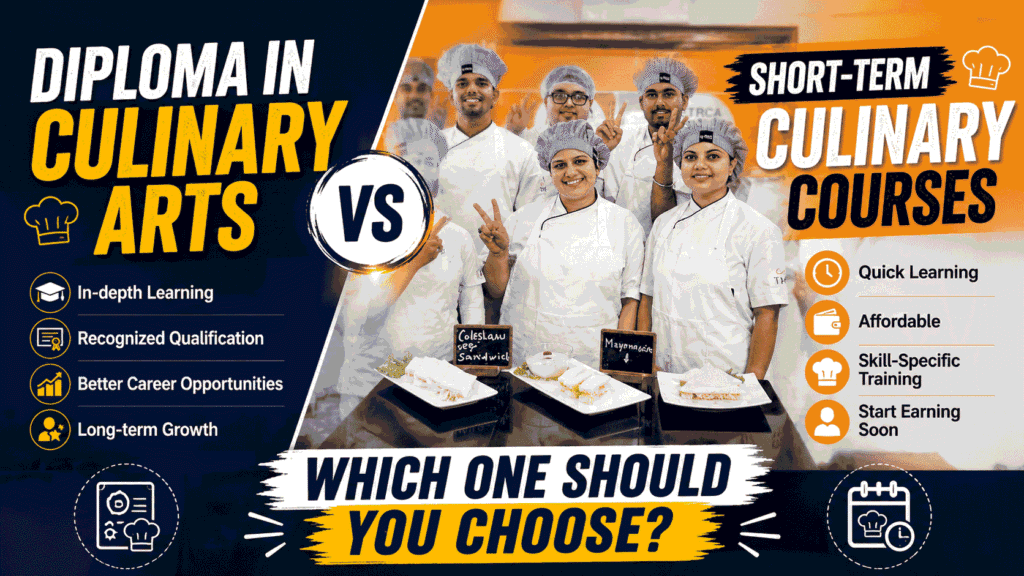
Diploma in Culinary Arts vs Short-Term Culinary Courses – Which One Should You Choose?
The culinary industry in India is growing at an incredible pace, creating a massive demand for skilled chefs. However, the students can easily get confused about choosing a major, a full diploma, and short-term courses. The truth is, both of the paths are valuable and they can serve the unique career goals, budget constraints, time commitments, and learning expectations. Towards wondering if the route can fit the dream, this guide can break down the major differences and help make a confident decision for the culinary journey. What is a Diploma in Culinary Arts? A diploma in culinary arts is a comprehensive professional program designed for building and completing full kitchen expertise. Spanning 9 months to 12 months, this focuses heavily on multiple cuisines that include continental, Indian, international, and bakery cooking. This curriculum covers everything from food safety to knife skills to the best kitchen skills. Most of the diploma programs do include mandatory internships, thus giving the students real industry exposure before graduation. This is a great choice for students that are aiming for long-term careers in luxury hotels, international kitchens, or kitchen lines. What Are Short-Term Culinary Courses? The short-term culinary courses are skill-focused training programs that can usually run for 3 to 6 months. These courses do follow a faster learning structure and targeting of specific cooking techniques, niche skills, or basic kitchen operations like cafe-style cooking or eggless baking. They are completely practical for a less detailed one compared to the diploma programs. These courses are great for beginners, aspiring cafe owners, hobby learners, or the working professionals who want quick upskilling towards the full-year program. Difference Between Diploma in Culinary Arts and Short-Term Culinary Courses Feature Diploma in Culinary Arts Short-Term Culinary Course Duration 9 to 12 Months 3 to 6 Months Learning Depth Advanced Course Basic to Intermediate course Practical Training Fully Extensive Limited Options Internship Included Available sometimes Career Opportunities Stronger En try-Level International Exposure High Basic or Limited Placement Support High Basic Great For Professional Chef Career Quick Skill Learning Who Should Choose a Diploma in Culinary Arts? This program is highly suited for students who have completed both 10th and 12th and want that for building a great career in hospitality. This is fully ideal for cruise line career seekers, hotel chefs, and the students that seek to work abroad, plus anyone looking for long-term growth for the food industry. If your goal is to rise from commis chef to executive chef or to your own premium restaurant, a diploma can give the foundational depth. Who Should Choose a Short-Term Culinary Course? The short-term courses are perfect for home bakers, hobby learners, food startup owners, and working professionals that are looking towards adding in a new skill. These are great for fast skill development without the delay of their career and education. If you plan to run a small cloud kitchen, start an Instagram bakery, or learn professional cooking techniques for personal growth, a great short-term course can provide the focused and quick results. Career Opportunities After a Diploma in Culinary Arts Graduates of the culinary diploma can aim towards high-growth and structured roles like sous chef, commis chef, cruise chef, bakery chef, or hotel supervisor. The right internship exposure and industry exposure can open the doors for cloud kitchen management plus international hospitality careers. For time, the diploma holders that often move towards the executive chef roles or launch their own fine dining concepts are backed by strong businesses plus operational training. Career Opportunities After Short-Term Culinary Courses The short-term graduates can typically start with kitchen assistant, cafe assistant, or junior baker. Many of these skills are for launching home bakeries, dessert delivery services, and small food businesses. While the roles are general and foundational, they can provide the hands-on experience and earning potential. With self-study and additional practice, the short-term learners can gradually upgrade to supervisory kitchen roles plus enhance their entrepreneurial ventures. Which Course Offers Better Practical Training? Both courses do include hands-on experience, but the diploma programs offer deeper, repetitive training for live kitchens. Students can spend more hours mastering the knife skills, large-batch cooking, sauce preparation, and plating for the real-time pressure. The short-term courses can cover the essentials more quickly, keeping pace for the limited duration. For those who want the muscle memory, confidence, and mastery of complex dishes, longer programs that can provide the practical exposure. Which Culinary Course Is Better for Placements? The diploma programs can provide stronger placement support because the institutes can invest in industry tie-ups, internships, mandatory internships, or guided career cells. Graduates that are directly connected to hotel chains, cruise recruiters, and restaurant groups. The short-term courses generally offer self-employment guidance or placement assistance, leaving students to build their own networks. If the job security plus structured hiring for the priorities is great, a diploma holds the clear advantage. How to Choose the Right Culinary Course for Your Career Goals Use the basic checklist to decide: Ask yourself this: Where can you see yourself in 2 to 3 years? If you need steady growth, leadership opportunities, personal passion, or global support, then choose the diploma. If you need focused and fast skills for personal passion or a startup, then short-term courses are smarter. Why Many Students Prefer Chef IBCA for Culinary Training in Delhi Chef IBCA has become the trusted name for candidates seeking high-quality culinary education in Delhi. The institute can focus on practical kitchen learning that’s guided by industry-skilled chefs who can bring real-world insights for each class. With the modern training kitchens, smaller batch sizes, and flexible course options, students can receive personalized attention. The institute can provide strong placement support plus maintain connections with the best hotel chains, food startups, cloud kitchens, and graduates that are industry-ready from day one. Final Thoughts Both the diploma and short-term culinary courses have genuine value. Your choice can depend directly on the career goals, learning expectations, and time availability. Instead of just focusing on priority programs, course duration