

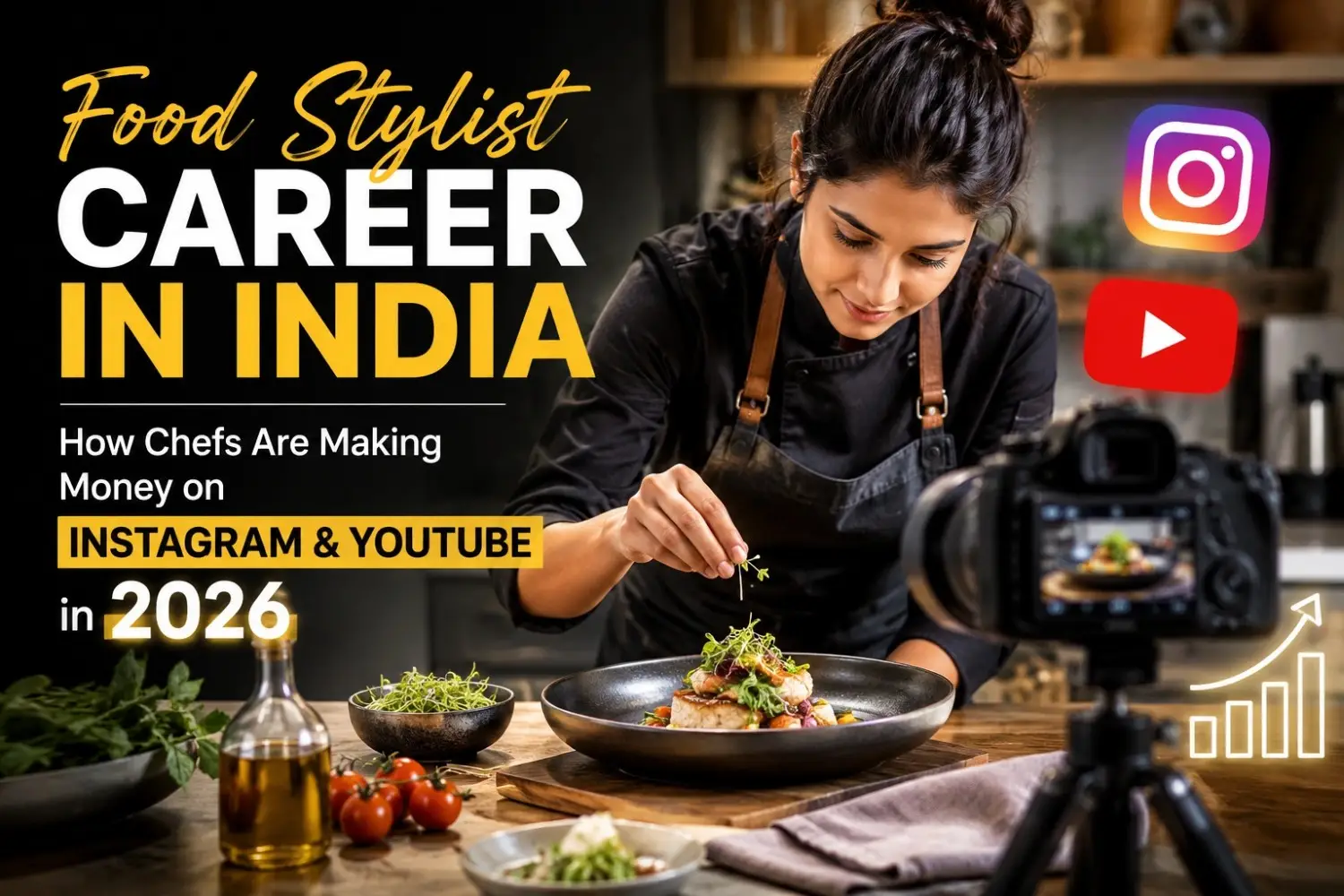
Ever wondered how you can get products to look so perfect on Instagram Reels or YouTube Shorts? Each burger looks plump, each dessert is perfect, and each cup of coffee seems like it’s ready to be picked up. The hallmark of these images is because of the skills of a food stylist. One of the most promising avenues for chefs to combine their culinary skills with the art of content creation is a career in food styling in India, and it’s likely to be even more dynamic in 2026. From brands to restaurants, food delivery apps to digital creators, the need for food experts is always on the target list. It’s the professionals that they all want to get—the brands, the restaurants, the food delivery apps, and the digital creators. If you’re a chef, you will be familiar with the term ‘food stylist’, as it is used in blogs and social media. Yet, you might not be aware that this profession is growing at a swift pace, that chefs are earning cash off of their Instagram or YouTube accounts, or that they’ve turned to food restaurant ventures or simply food styling to make money.
What is a Food Stylist? (And Why It’s Not Just “Taking Pretty Pictures”)
A food stylist is a professional preparing, arranging, and presenting food to look better than the real thing in photos, videos, advertising, TV shows, websites, and social media. Their role isn’t just to adorn a plate; they know how food turns when lit up, how ingredients keep fresh on long flights, and how all the details can make a dish more appealing.
Food stylists are not food photographers. Meanwhile, the photographer gets ready for his next photoshoot, the food is prepared, garnishes are chosen, the presentation is put together, and everything is made to look its best before the camera begins to roll.
When you see an ad for Zomato with a stack of a delicious burger, fresh lettuce, melted cheese, and a shiny bun, it has taken a food stylist hours to prepare before the photographer snaps a picture of it.
Food stylists collaborate with:
- Advertising agencies
- Cafe and restaurants
- FMCG brands
- Food ordering apps such as Zomato and Swiggy
- OTT cooking shows
- Magazines
- YouTube creators
- Cookbooks, recipe books.
There is a need for professional culinary training, as understanding the cooking techniques, behaviour of ingredients, plating, and food presentation allows the creation of visually attractive content, which also looks realistic.
Is Food Styling a Real Career in India? The 2026 Numbers
The answer is yes. Food styling is a genuine and rapidly growing profession in India.
India has more than 400 million Instagram users, and the food category is considered one of the most popular categories on the Instagram platform. Individuals watch cooking tutorials and recipe videos, food reels, and restaurant reviews. This ever-expanding audience has brought about a tremendous need for talented food makers and stylers.
Food content creators and chefs are always hired by large brands like Zomato, Swiggy, Nestlé, Amul, McDonald’s, Britannia, and Haldiram’s to promote their products with interesting food content.
Here are some new opportunities in food styling include:
- FMCG Companies
- Restaurant chains
- Cloud kitchens
- OTT cooking shows
- Food influencers
- Advertising agencies
- Cook book publishers
- Digital marketing agencies
A few people have made a successful career in Indian food creation by producing food content that is engaging. YouTube has become one of India’s most popular cooking channels, with Kabita’s Kitchen and some creators such as Your Food Lab (Sanjyot Keer) now monetising their expertise in cooking to make successful digital businesses, recipe videos, brand deals, and educational content.
These examples clearly show that food styling is no longer just a hobby—it is becoming a rewarding professional career.
5 Ways Chefs Are Making Money on Instagram & YouTube in 2026
1. Brand Collaborations & Sponsored Content
Sponsored content is one of the top ways for chefs to make money.
Culinary experts are often hired by food businesses, cooking oils, flour, spices, kitchen appliances, and cookware companies to promote their products in Instagram Reels and YouTube videos.
Typical earnings include:
- Nano creators (around 10,000 followers): ₹5,000–₹15,000 per sponsored post.
- Mid-sized creators (100,000+ followers): ₹25,000–₹1,00,000 per campaign.
Professionally trained chefs might have the advantage as they are credible, have the ability to present food, and have professional knowledge.
2. YouTube Ad Revenue
One of the most-watched categories on YouTube India continues to be food.
Once a creator reaches 4,000 watch hours and 1,000 subscribers, they are eligible to monetize their YouTube videos.
Taking into account the engagement and the views of the audience, the average income from advertisements in a channel with approximately 1 lakh subscribers is between ₹20,000 and ₹80,000 per month.
Many creators are finding ways to boost their revenue in addition:
- Affiliate marketing
- Product placements
- Sponsored videos
- Recipe e-books
- Online cooking classes
These additional income streams often generate more revenue than advertisements alone.
3. Food Styling for Restaurants & Zomato/Swiggy Listings
Photos are key to attracting online customers to restaurants.
Food stylists are trained individuals who help restaurants take pictures of food that is pleasing to the eye for social media marketing, websites, and delivery.
Freelance food stylists charge between ₹5,000 to₹30,000 for a restaurant shoot, depending on the location, size of the project, and number of dishes.
In the digital age of India, food styling services are increasingly becoming essential, especially with the growing trend of cloud kitchens and the undeniable influence of food photography on online orders.
With the increasing popularity of cloud kitchens in India, the need for food styling services is growing continuously, and it’s undeniable that a great food picture can affect on-line meals orders.
4. Selling Online Baking & Cooking Courses
There are lots of chefs out there who are now generating revenue through their expertise by providing online training. They not only teach baking and cooking in restaurants, but they also create courses and offer them on social media platforms, such as Instagram, or online platforms, such as Teachable or Graphy.
The course fee ranges from ₹999 to ₹5,000 per student. Online courses can be sold again and again, with no extra production costs, and this can be a good method to make lots of cash down the road.
For instance, a pastry chef who has 50,000 followers on Instagram might earn around ₹15 lakh in a single course if he launches a baking course for ₹2,999 with 500 students. It proves that digital content and skills in the kitchen can combine to be a very profitable business.
5. Food Ad Shoots & OTT / TV Production
Typically food stylists work for a television commercial production house, an advertising agency, or OTT cooking shows.
The food stylists are needed to create presentations for the popular food brands Amul, Britannia, Parle, Nestlé and Haldiram’s for their promotions. The food styling experts are also assigned to OTT giants such as MasterChef India to ensure that all the dishes look perfect on the screen.
Food stylists earning varies between ₹8,000 and ₹40,000 per day on an average, varying according to their experience, project size and client needs.
Skills You Need to Become a Food Stylist in India
Being a creative person is just the beginning of the road to a successful food styling career in India. It starts with good culinary knowledge and then moves into photography, content creation, and social media marketing.
Culinary Foundation
The most essential skill is the knowledge of cooking professionally. You need to know the effects of heat on ingredients, the thickening of sauces, how bread can brown, how chocolate melts, and how garnishes can keep their freshness for long shoots.
A food stylist not used to cooking can make up delicious, appealing dishes, but keeping them looking good during the photoshoot or video shoot can be challenging. These problems can be answered by the technical skills acquired in professional culinary training.
Food Plating & Presentation
One of the major assets of a professional chef is their presentation.
Learning proper:
- Plate composition
- Colour balance
- Garnishing
- Portion control
- Texture combination
Enhances presentation of the food, making it look good in real life and on camera.
Basic Photography Knowledge
Food photographers operate professional cameras, but there are a few things about every food.
Stylists must know about:
- Camera angles
- Natural lighting
- Artificial lighting
- Background selection
- Prop placement
The food content may be captured with a smartphone in good lighting conditions.
Editing & Reels Skills
Content creators should be aware of how to make Content creators must know how to edit short-form videos with tools like:
- Capcut
- Instagram Reels Editor
- Canva
- Adobe Express
Through training, chefs can create content for social media without needing to hire professional editors.
Stay Updated with Trends
Food makers are always following the latest recipes and presentation trends.
Examples include:
- Dubai Chocolate
- Sourdough Bread
- Korean Street Food
- Birria Tacos
- Viral Desserts
Trends are a great way for creators to create content that performs better and attracts more viewers and brand partnerships.
Be Consistent
You’ll have to be patient when building an audience.
Putting out quality content 3-4 times per week for 6-12 months will grow visibility, engagement, and long-term growth.
Step-by-Step: How to Start a Food Styling & Content Career in India
Step 1 – Get Professional Culinary Training
Professional chefs have a strong advantage because they know different techniques of cooking, how to serve the food, how to make different recipes that enhance the taste of food, and they also know how to present the food to the customers.
Programs such as Chef IBCA’s Diploma in Culinary Arts or Diploma in Baking & Pastry Arts provide the foundation for students, which helps in learning food styling and content creation.
Step 2 – Build Your Visual Skills During Training
Get started making content while continuing to learn.
- Take pictures of your hands-on food projects.
- Weekly food plating practice.
- Know how to take smartphone food photos.
- Get ideas from international food stylists.
These habits will help to establish a solid portfolio.
Step 3 – Create Your First Nine Instagram Posts
Focus on one content niche and not all of them.
Popular niches include:
- Baking
- Restaurant-style recipes
- Healthy meals
- Street food recreations
- Plating challenges
Be consistent and not become perfect.
Step 4 – Offer Free Shoots to Local Restaurants
Call two or three cafés or restaurants that are close to you and offer to style and photograph their food.
The early projects might not be remunerative, but they will help you to:
- Build a portfolio
- Gain testimonials
- Become a member of social media tags.
- Improve practical experience
These projects can result in a paid client engagement.
Step 5 – Start Monetizing
It’s not a rule that you need to have 1 million followers to earn money.
You can approach with only 5,000 – 10,000 followers engaged.
- Local cafés
- Kitchen equipment brands
- Food startups
- Small FMCG companies
In case you’re pitching brands, emphasize your engagement rate, content quality, and niche instead of just the number of followers.
Food Stylist Income Reality Check
| Career Stage | Followers | Estimated Monthly Income |
| Beginner (0–6 months) | 0–5K | ₹0–₹10,000 |
| Growing (6–18 months) | 5K–50K | ₹15,000–₹60,000 |
| Established (2–3 years) | 50K–200K | ₹60,000–₹2,50,000 |
| Top Tier (3+ years) | 200K+ | ₹2,50,000–₹10,00,000+ |
Note: These are approximate numbers. The actual income will be influenced by niche, consistency, audience engagement, and how well multiple income streams like sponsored content, freelance food styling, online courses, YouTube income, and consulting perform.
Do You Need a Food Styling Course or a Culinary Diploma?
Short food styling courses range in price from ₹5,000 to ₹20,000 and primarily cover photography, props, lighting and editing, but there’s not much in the way of culinary tips or skills.
The best learning sequence is a combination of:
- A vocational Cuisines Diploma
- Practical kitchen experience
- Food plating knowledge
- Self-learning in photography
- Regular use of social media.
Students in Chef IBCA’s diploma programs develop solid cooking, presentation, and food aesthetics skills—crucial skills for every successful food stylist.
Conclusion
Food styling jobs in India demonstrate that modern cooks have more vocational opportunities than in hotel kitchens. With culinary abilities, creativity, and regular posting, talented foodies can make money via Instagram, YouTube videos, restaurant partnerships, advertisements, and online courses. While it may not be a quick process to make it all the way to success, training will give you the confidence and technical knowledge to stand out in this competitive industry. We at Chef IBCA believe that there are exciting career opportunities for aspiring chefs when they combine their culinary skills and digital creativity. Chef IBCA’s Culinary Arts and Baking & Pastry Arts Diploma can give you a solid foundation if you are ready to make your passion a career. The July 2026 admission is open.
Frequently Asked Questions
Can I become a food stylist without a culinary degree?
Yes, but people who have trained to become chefs would generally have better job prospects since they are more familiar with the process of preparing food and how it will react on the plate and the type of ingredients they use.
How many followers do I need to start earning?
As small as just 2,000–5,000 active followers, you can still find yourself freelancing on restaurant gigs and brand partnerships in your area.
What camera should I use?
For beginners, a modern cell phone equipped with a decent lighting system is sufficient. A lot of the successful Indian food makers began with mobile phones.
Is food styling a stable career in India?
Yes, the need for talent in the field of food styling is growing year by year as more and more restaurants, Cloud Kitchens, FMCG brands, and digital food businesses are emerging.
Does Chef IBCA teach food styling?
Chef IBCA’s Diploma courses provide the ultimate introduction to the art of food styling, including professional plating, food presentation, and culinary skills.