

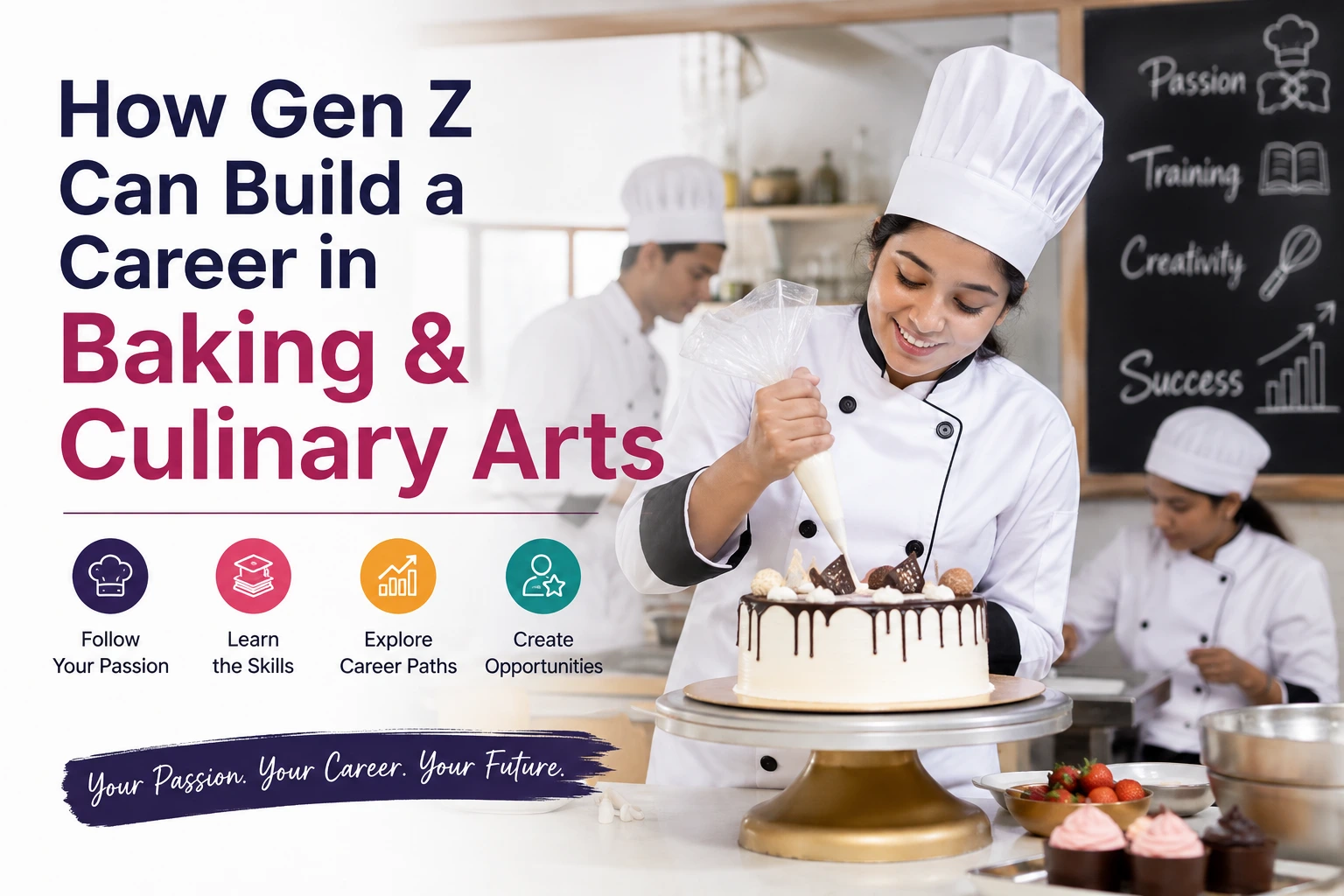
Gen Z students are not only rejecting the status quo of “engineering, medicine, government” career options, but they are also setting a standard for personalization. Gen Z students aren't just rejecting the status quo of “engineering, medicine, government” career options—they're establishing the standard for personalization. Hundreds of careers today are based on skills that provide opportunities to be creative, learn hands-on, and are available for students to pursue as a career. Baking and culinary arts are one of the hottest options where students can pursue a career they love and passionately enjoy. It's fast becoming an ever-growing possibility, from professional kitchens and bakery spaces to cafés, cloud kitchens, and food entrepreneurship. However, it is essential to know that for a career in culinary arts, one needs to be disciplined, work in a team, manage time, maintain hygiene, and practice regularly. In this blog, we will talk about career paths, skills required, courses to take, practical training, and the selection of the right Institute for a successful long-term career.
Why Baking and Culinary Arts Appeal to Gen Z
Gen Z are drawn to baking as a creative yet hands-on pursuit, and the art of baking has become popular. Baking is gaining popularity among Gen Z due to its creative yet hands-on nature. Culinary education offers students an opportunity to learn hands-on—whereas careers that study theory only do not. Young children like playing with flavours and decorating desserts, presenting food attractively, and sharing their food creations on the Internet.
Key reasons Gen Z finds this field attractive
- Even learning experiences in which hands-on or skills-based learning are involved.
- Creative work and food presentation
- Job opportunities in hotels, restaurants, bakeries and cafés
- The possibility of operating a home bakery, catering or cloud kitchen business.
- Building a food portfolio and personal brand through social media
However, social media tells a different story than just the pretty part of the business. Consistency, cleanliness, speed, working as a team, and pressure handling are also needed for professional success in baking and culinary arts.
Baking or Culinary Arts: Which Career Path Should You Choose?
Culinary arts are often confused by many students for baking and pastry arts. The key is to choose the right one according to your interests, working style, and career goals.
Culinary Arts | Baking and Pastry Arts |
Delicious food and culinary skills | Bread, cakes, pastries and desserts |
Fast-paced kitchen service | Precision and measurement-based work |
Hotels, restaurants and catering | Bakeries, cafés and pastry kitchens |
Restaurant and cloud-kitchen opportunities. | Opportunities for bakery and dessert business at home. |
However, culinary arts might be more your calling if you like preparing a variety of cuisines, live kitchen service, and savory food. Baking and pastry arts may be a good career choice for those who enjoy precise measurements, cake decorating, desserts, and details.
Skills Required for a Successful Culinary Career
It takes a lot more than creativity to kick-start a successful career as a baker or a chef in the culinary industry. Professional kitchens demand technical skills and a good work ethic.
Technical skills
- Techniques for cooking and baking.
- Correct handling of knives and equipment.
- Recipe standardisation
- Plating and presentation
- Food hygiene and food safety.
Professional skills
- Time management
- Teamwork
- Communication
- Ability to work under pressure
- Consistency and discipline
Creativity is important, but with a pro kitchen, repeatability is equally important with quality and efficiency. The chef has to be able to cook the same dish the same way the next time around.
Career Options in Baking and Culinary Arts
A great thing about baking and culinary arts is the number of careers that are offered in this industry.
Entry-level opportunities
- Kitchen Trainee
- Junior Chef
- Bakery Assistant
- Pastry Trainee
- Cake Decorator
- Kitchen Assistant
After gaining experience
- Kitchen Station Supervisor
- Pastry Chef
- Bakery Supervisor
- Junior Chef
- Production Chef
- Head Chef
Entrepreneurship and modern career paths
- Home Baker
- Café Owner
- Cloud-Kitchen Entrepreneur
- Caterer
- Food Stylist
- Recipe Creator
- Food Content Creator
It is important to note that senior-level roles are not typically available upon graduating from a course. Intern and junior chef roles are usually the first step to a career in the restaurant industry, and students will be promoted based on their performance, experience, and ongoing education.
Why Practical Training Matters
A successful culinary career begins with good practical training. It gives students an understanding of the way a real commercial kitchen works, much different than cooking at home.
Practical training helps students learn.
- Commercial kitchen workflow
- Industry-standard equipment
- Batch preparation
- Portion control
- Service timing
- Team coordination
- Hygiene procedures
- Waste management
Practical training in a kitchen, with supervision, can offer correction and assessment, and a professional discipline of the kitchen, for the beginning student to understand basic recipes from online videos. Real growth occurs when students do the same thing again and again under the tutelage of experienced teachers.
How to Choose the Right Baking or Culinary Course
One of the most crucial choices a student has to make is which course to take in case they want to pursue a career in baking and culinary arts. Carefully research institutes and evaluate before taking admission rather than relying only on advertisements.
Check these points before enrolling.
- Practical training hours
- Course curriculum
- Faculty experience
- Kitchen facilities
- Batch size
- Certification details
- Industrial training opportunities
- Placement assistance
- Alumni outcomes
- Complete fee structure
A very important point is that placement assistance and guaranteed placement are not the same. Students should inquire about their institute’s recent placements, background of employer associations, internship assistance, and the actual procedure of providing career assistance to students.
Why Online Learning Alone Is Not Enough
YouTube or social media is where many students begin their learning – good start! It can assist with simple cooking, words, and ideas. But a career in the culinary arts is much more involved.
Limitations of learning only from videos
- No personal feedback
- No correction of mistakes
- The health and hygiene measures are neither assessed nor reported.
- No experience of service pressure
- No teamwork exposure
If students are planning a long-term career, they are more likely to be able to structure their practical learning than access it via the web alone.
How IBCA Supports Aspiring Chefs
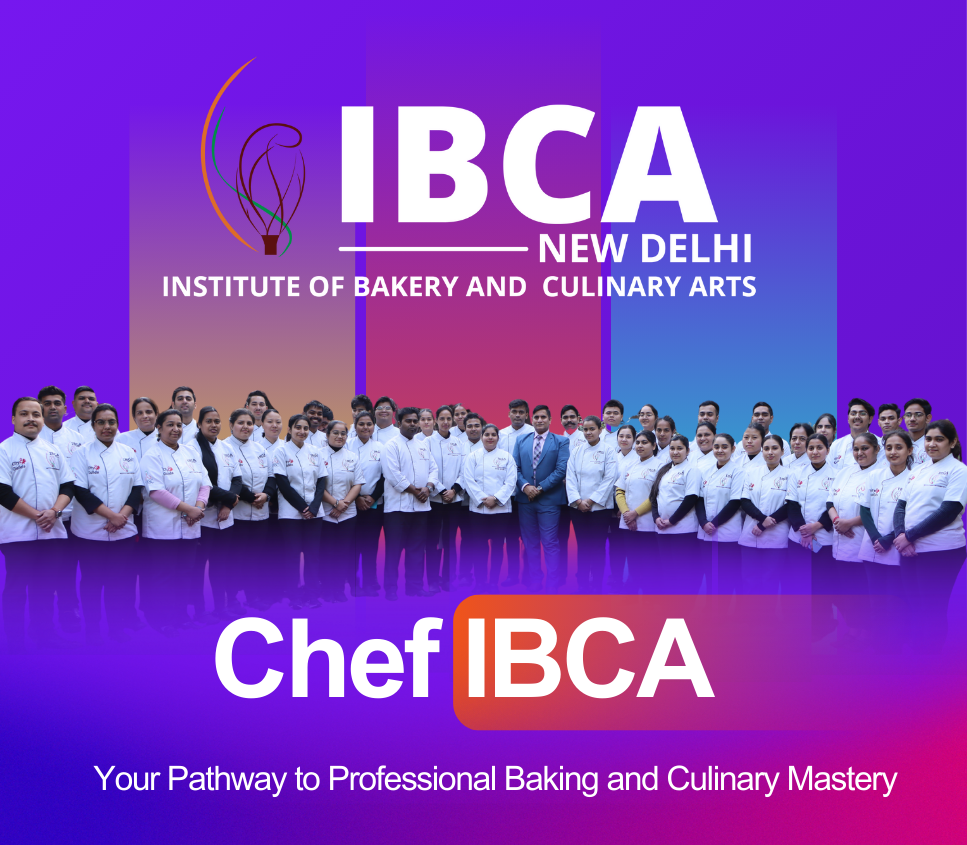
Students seeking career training can make a comparison between the institutes based on their practical exposure, curriculum, and career guidance. IBCA provides culinary and bakery courses aimed at imparting industry-relevant skills.
Verified highlights
- Courses in culinary arts and baking are offered.
- Hands-on practical training
- Professional kitchen facilities
- Experienced chef instructors
- Industry certifications
- Industrial exposure
- Placement assistance
- Programme progression options
Students are able to make a comparison between the Chef IBCA 6 Month Diploma and 9 Month Advanced Diploma based on curriculum, hands-on training, certification and personal career aspirations. You should be looking for a programme that will suit where you’re at in your learning and what you’re planning for the future.
Building a Food Portfolio as a Gen Z Learner
A strong portfolio can differentiate you from other students for internships/placements or freelance positions.
What to include
- Photographs of foods and desserts
- Before-and-after improvement examples
- Short recipe descriptions
- Video clips of techniques or plating.
- Certificates and participation in competitions:
A portfolio should be consistent and show skill rather than interesting editing. Social media skills are not always what employers appreciate—neither the fancy photos nor the well-placed hashtags.
Conclusion
Baking and culinary arts are a right career choice for Gen Z students who are more hands-on, creative, and disciplined. Career options in the industry include hotels, bakeries, cafés, catering, cloud kitchens, and entrepreneurship. But it takes skills (not certificates) to grow over the long term, including practical skills, hygiene, teamwork, industry exposure, and continuous improvement.
The best way to succeed is to choose the right course and to get some practical kitchen experience. If you want to pursue a professional career in the food industry, consider a programme that aligns with your interests, learning style and career objectives. Jump into the world of culinary arts with confidence and step up to a successful career with Chef IBCA.
FAQs
Is baking and culinary arts a good career after Class 12?
Yes. Students who enjoy practical learning, creativity, and food-related work can build a strong career in hotels, restaurants, bakeries, cafés, catering, or entrepreneurship. Success depends on training, discipline, and experience rather than only academic marks.
What is the difference between culinary arts and baking?
Culinary arts focuses mainly on savoury cooking, kitchen operations, and restaurant service. Baking and pastry arts focus on breads, cakes, pastries, desserts, and precision-based preparation. The working style and career opportunities are different.
Can I start a home bakery after completing a baking course?
Yes. Many students begin with a small home bakery and grow gradually through custom orders, social media marketing, and repeat customers. Knowledge of costing, hygiene, packaging, and customer service is also important.
What is the first job after completing a culinary course?
The first job is usually a trainee or commis-level role, such as Kitchen Trainee, Commis Chef, Bakery Assistant, or Pastry Commis. These roles help students gain practical experience and understand professional kitchen operations.