


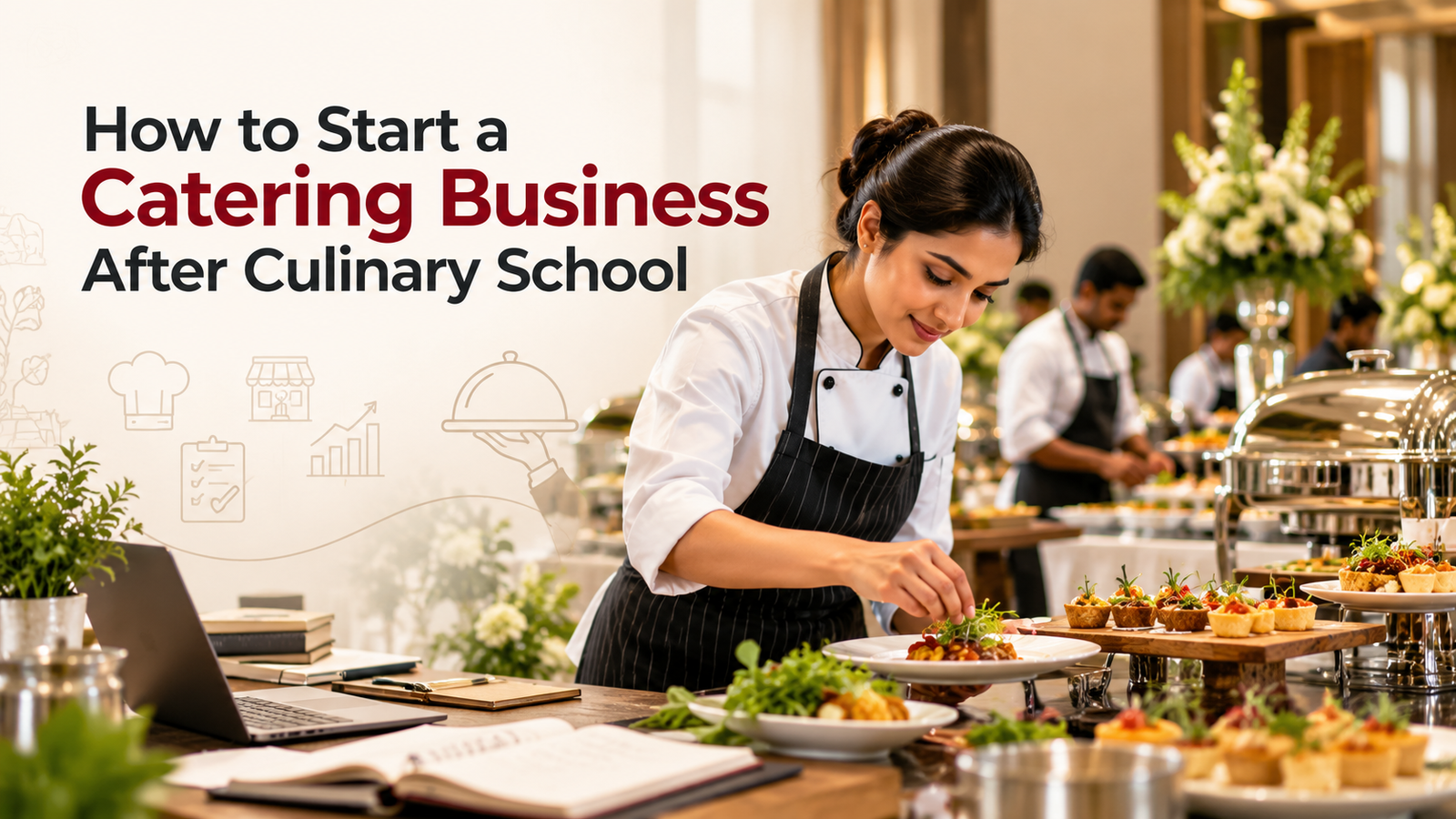
Finishing culinary school can open up several career options. Also work in a hotel, join a restaurant or become a private shop. If you enjoy cooking for people and planning meals for different occasions catering would be completely worth considering. But running a catering business involves way more than just preparing delicious food. You also need to manage costs, planned menus and maintain food safety. If you want to start a catering business after culinary school this guide is just for you.
Is catering a good business after culinary school?
Catering can be a good business option for culinary graduates because food is needed for many occasions from birthday parties and family gatherings to weddings and office meetings. You can start with a small menu gradually and take on to larger orders as your experience grows. Your culinary training can give you an advantage. You might already understand the cooking techniques, ingredient handling and presentation. These skills are useful when you need to prepare consistent meals for 20, 50 or even 200 people. You also have a choice between gaining work experience and starting your own restaurant. Working in a professional kitchen first can help you understand purchasing and portion control and the pressure of serving food on time
| Career route | Best for |
| Hotel or restaurant | Gaining professional kitchen experience |
| Home catering | Starting with lower overheads |
| Event catering | Weddings, celebrations, and larger gatherings |
| Corporate catering | Office meals and recurring orders |
| Cloud kitchen plus catering | Combining regular food orders with event services |
Choose your catering niche
Before buying equipment or designing a menu , decide what catering you want to offer. Trying to serve every type of customer from day one can make purchasing preparation and pricing difficult. You can start with the food you cook well and the customers you understand. Some catering business ideas to consider include corporate catering wedding and event catering private parts of catering homestyle meal catering and regional cuisine catering. For example if you are particularly good at Gujarati food you can begin with small family functions and festive orders. Once you understand the demand and costs you can even decide whether to expand into larger events.
Create a simple catering business plan
You don’t need a lengthy business document to start. You just need a clear plan. Workout what you want to serve where you will operate and what you will cook and how customers will place orders. Next, estimate how many orders you can strictly handle every month. Consider ingredient purchases, kitchen capacity and staff requirements. Also decide your service area. Delivering meals to a nearby office is very important from transporting food to a wedding venue several kilometres away. Your pricing and equipment needs should reflect the difference.
| Business idea | Target customer | Typical service |
| Home-style catering | Families and working professionals | Daily meals and small gatherings |
| Wedding catering | Couples and event organisers | Large functions and receptions |
| Corporate catering | Offices and businesses | Meetings, lunches, and events |
| Dessert catering | Families and event planners | Cakes, pastries, and dessert tables |
| Healthy meal catering | Health-conscious customers | Planned meal deliveries |
Decide your kitchen and equipment setup
Your kitchen setup will depend on your menu and how many meals you plan to prepare. If you are starting small a suitable home kitchen might be enough provided its use is permitted and it meets the applicable food safety hygiene and local requirements. Another option is renting a commercial kitchen when you receive large orders. You will generally need some combination of cooking equipment suited to your menu like burners ovens. You will also need refrigerators and suitable storage facilities for ingredients and preparation. Preparation tables and food grade containers are also important. Avoid buying everything at once. You can start with equipment that supports your initial menu and expected order size. You can also add specialized equipment as the business grows.
Understand licenses and food safety requirements in india
Before accepting paid orders check the registrations and permissions that apply to your business.
FSSAI Registration or licensing
Catering is a recognised food business category in India’s food safety framework. The appropriate registration or license depends on the business category and applicable eligibility criteria.
business registration
Depending on how you operate you might need to establish a suitable business structure and complete applicable registrations.
Check local requirements before operating.
Municipal registrations
Home based and commercial kitchens might be subject to local rules covering permissions and waste disposal activities.
Gst registration
Whether you need GST registration depends on your turnover and other applicable conditions including exceptions under the law. You should also establish clear food handling practices including hand hygiene, safe storage temperatures and separation of raw and cooked ingredients.
Build a profitable catering menu
A long menu might look very impressive but it can be difficult to manage when you are starting out. Begin with a selection of dishes you can prepare consistently and in the quantities your customers need. Choose dishes that travel well and can be prepared and retain the quality until serving time. For example a corporate lunch menu might include rice Dal to vegetables dishes and a dessert rather than several complicated items. When setting prices include every expense not just the ingredients. Remember to account for food wastage, fuel cleaning supplies and any hired equipment.
Calculate your catering business costs
The catering business cost in India depends on whether you work from home, rent a commercial kitchen or set up a dedicated catering facility. Your menu location and order volume also affects the budget. Preparing a start up budget and keeping some money aside for working capital. Customers might pay deposits for events but you still need funds to purchase ingredients and cover expenses before the final payment arrives.
| Expense | What to consider |
| Kitchen | Rent, deposits, or setup expenses |
| Equipment | Cooking, refrigeration, and storage |
| Ingredients | Initial stock and regular purchases |
| Packaging | Food containers, boxes, and cutlery |
| Staff | Cooks, helpers, and temporary event workers |
| Transport | Delivery, fuel, and food carriers |
| Licences | Applicable registrations and permissions |
| Marketing | Website, social media, and promotional materials |
Start small and test your menu
Your first few orders and an opportunity to learn how your business works in practice. Start with a limited menu and accept orders you can manage comfortably. Track the ingredients used preparation time, actual portions served and food leftover. You need to ask specific questions after each order. Once the quantity is sufficient? Did the food arrive on time? Use this feedback to improve your recipes portion size and delivery process. Once you manage smaller orders, consistently begin accepting larger bookings.
How to get your first catering customers?
You don’t need a large advertising budget to find your customers. You can start with people and businesses that are likely to need your service. You can use Instagram and share clear photos of your dishes or sample menus. WhatsApp Business is also a great idea as you can create a menu catalogue and make it easy for customers to inquire. Ask satisfied customers to recommend you to their friends and family. Furthermore you can also build relationships with wedding planners, decorators and menu managers. You can contact local businesses with a simple menu and pricing proposal. Think beyond getting a single order.
Common mistakes new catering businesses should avoid
A few avoidable mistakes can eat into your profits or damage or trust.
Under pricing
You might end up forgetting labor transportation and overheads and it can leave you with little profit.
Offering too many dishes
A smaller menu is easier to manage consistently.
Ignoring wastage
It’s very important for you to track leftovers and adjust quantities for Future orders.
Accepting too many orders
You should not commit to more work than your kitchen and staff can handle.
Overlooking food safety
It’s very important for you to maintain proper hygiene and safe storage for preparation and delivery.
How culinary school can help you build a catering business?
Culinary school can provide a useful foundation for running a catering operation. Learning professional cooking techniques is very important but the training can help you develop the discipline required to prepare your food consistently. Skills like menu planning, food preparation and kitchen organization can be useful when you are handling catering orders. For example, preparing a dish for 4 people is different from producing the same dish for 100 guests. You need to understand ingredient quantities or timing preparation schedules and how to maintain consistency across batches. If you are exploring culinary education you can explore IBCA’s Culinary arts courses to learn more about the training options.
Faqs
Can I start a catering business after culinary school?
Yes culinary training can help you develop the necessary cooking and kitchen management skills. You will also need to have a business plan suitable for permissions , food safety practices and a way to reach customers.
How much does it cost to start a catering business in India?
There is no fixed cost. A home based operation renting a commercial kitchen and a full scale event catering company all have different expenses so you need to understand your goals before starting anything.
Do I need FSSAI catering licensing?
Yes if you start a catering business you need the applicable registration or license. The category depends on your company and relevant criteria.
Can I start a catering business from home?
Yes you can start a catering business from home provided the premises can be legally used for the activity and meet applicable food safety and local requirements.
Which equipment is needed for catering business?
You need to have cooking equipment, refrigeration preparation tables and insulated carriers. The exact setup will depend on your menu and order volume.
How can I get my first catering business?
You can start with referrals WhatsApp businesses Instagram local search event planners and nearby offices. Just share a clear menu and make it easy for your customers to request a quotation.
Is catering a good career after culinary school?
It is a great option if you enjoy cooking, planning and working with customers. Success depends on food quality and sensible pricing.
How do I price catering orders?
You need to calculate ingredient costs, labour packaging transportation and your desired profit. Test your calculations against actual expenses and adjust prices when costs change.