


Getting your first culinary internship in a 5 star hotel is really exciting but it can also feel a little overwhelming. You have probably spent months learning recipes, practicing techniques and working in a training kitchen. Now you are about to enter a real hotel kitchen where the pace is faster, the standards are higher, and everyone has a specific role to play. The good news is that nobody expects you to know everything on day one. What matters is how prepared you are and how willing you are to learn. From brushing up on basic skills to understanding kitchen etiquette, a little preparation can make your first internship much easier.
Understand what a culinary internship really involves
Before you start it’s really worth setting realistic expectations. A culinary internship in a 5-star hotel might not begin with you preparing elaborate dishes or plating food for guests. Your first responsibilities would include preparing vegetables, basic cutting and chopping food, cleaning workstations, handling stocks or helping senior chefs with preparation. You might spend a lot of time doing simple tasks, especially in the beginning. And that is completely normal. A culinary internship is not about proving how many dishes you can cook. It’s also about understanding how a professional kitchen works.
Strengthen your basic kitchen skills before day one
You don’t have to be a MasterChef before your internship starts. But you should be comfortable with fundamentals. Take some time to revise basic knife cuts, cooking methods, stock sources measurements and common kitchen terminology. Brush up on food safety and make sure you know how to use common kitchen equipment safely. It is also useful to practice keeping your workstation organised while you work. In a professional kitchen being able to find what you need quickly can save a lot of time. When you are confident with the basics you generally find it easier to adapt to the speed and structure of your hotel kitchen.
Learn professional kitchen etiquette
Your technical skills are very important but your behaviour will make a strong impression. You can start with basics like you can arrive on time, wear a clean uniform, maintain good personal hygiene and keep your workstation tidy. Listen carefully when a chef gives you instructions and avoid unnecessary phone use during working hours. You will also need to understand that a professional kitchen has its own hierarchy and way of working. You might be corrected, asked to repeat a task or given work that seems very basic. You need to treat it like part of the learning process instead of taking it personally.
Understand kitchen hierarchy and communication
Hotel kitchens usually have a clear chain of command. Depending on the establishment you might work with an executive chef or sous chef. You do not have to memorise every position before your first day. What is important is knowing who you report to and whom you should approach when you need help. Communication is especially important during busy service hours. Listen before you start a task. If an instruction is unclear, ask rather than guessing. Once you finish the assigned job, let your senior chef know and ask what needs to be done next.
Carry the right internship essentials
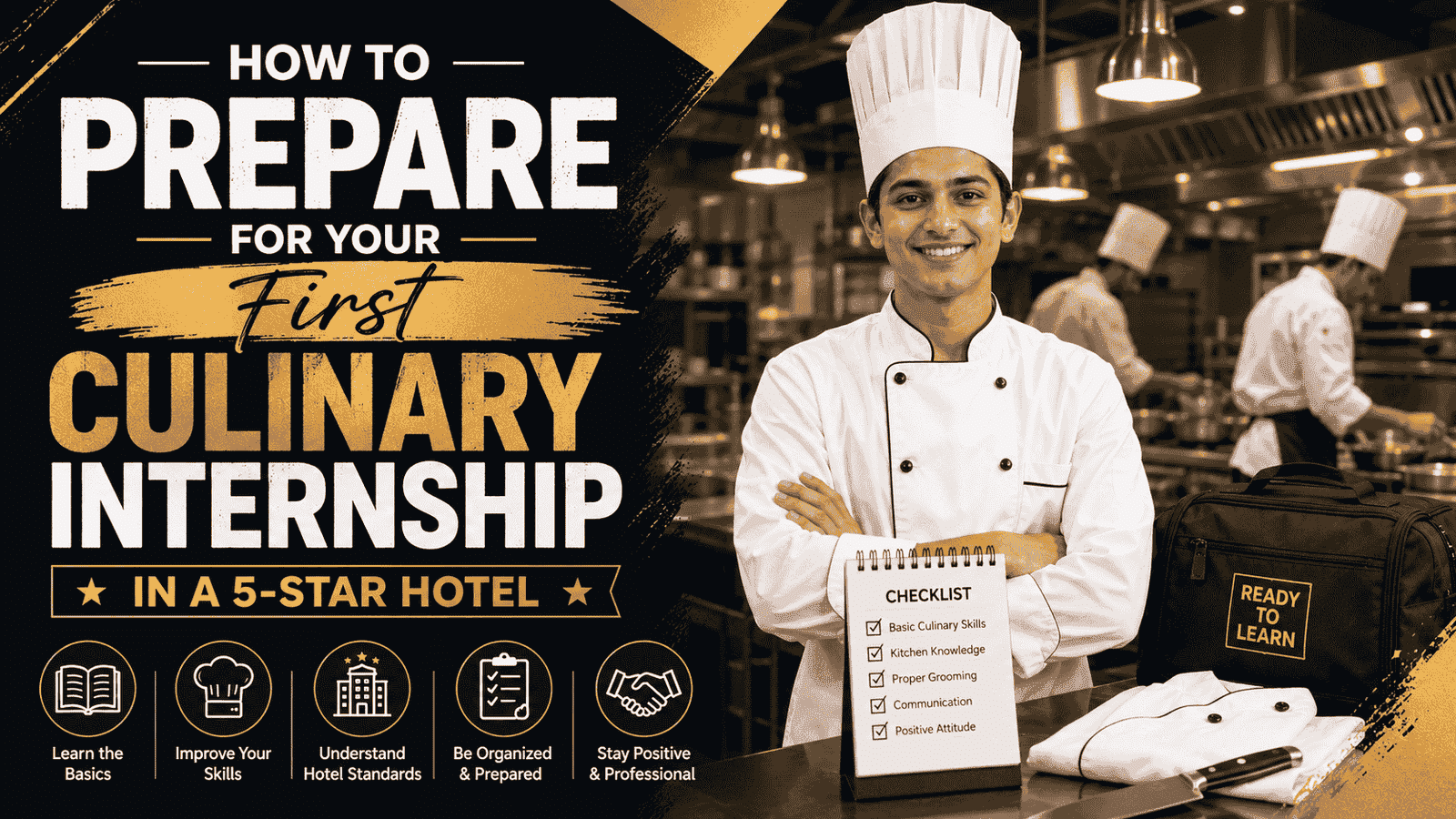
It’s better to prepare your things a few days before your internship instead of rushing the night before. Depending on the requirements you might need a chef uniform kitchen shoes notebook and pen besides water bottle and grooming essentials. Some hotels might also ask you to bring your own basic knife kit. Do not assume that every hotel has the same rules. Ask your hotel or institute for a checklist before your joining date.
Prepare for long hours and physical work
Professional cooking can be physically demanding. You might spend several hours standing working around heat and moving between stations. Your body needs time to adjust particularly during the first few weeks. You should try to get enough sleep before your shifts, eat properly, and stay hydrated throughout the day. Being tired after a long shift does not mean you are doing something wrong.
Observe more ask smart questions, and take notes
One of the best things you can do during an internship is simply observation. You must watch how experienced chefs organize their stations, prepare ingredients, communicate with one another, and also manage a busy service. Notice how they move around the kitchen and how they stay organized even when several orders are coming in. Ask questions, but choose the right moment. If a chef is in the middle of a hectic service wait until things settle down. Keep a notebook if your workplace allows it. Write down new terms, techniques, and preparation methods from the day.
Take hygiene and food safety seriously
In a hotel kitchen, hygiene is not something that you can afford to take casually. You must wash your hands properly and regularly. Keep raw and cooked food ingredients separate. Keep your equipment and workstation clean throughout your shift instead of waiting until the end. Personal grooming matters too. Keep your nails clean and uniformly neat. These might sound like small things, but they’re essential and professional kitchens.
Build good relationships in the kitchen
You do not need to impress everyone on your first day but focus on being someone the team can trust. Help your colleagues when you can. Stay calm when things get busy. Respect the chefs and kitchen staff. If you make a mistake, admit it and learn from it. The chefs around you are not just supervising interns. They can become your mentors and professional contacts later in your career.
How Chef IBCA prepares students for culinary internships
The transition from a culinary classroom to a professional hotel kitchen can be much easier when you already have plenty of practical exposure. Chef IBCA focuses on hands-on culinary training, professional kitchen skills and industry exposure. Its culinary programs are designed to give you practical experience and help you understand what working in a professional kitchen is actually like. If you are looking specifically for hotel exposure the diploma in culinary arts includes practical training followed by live industrial training in leading 5 star hotels. This gives you an opportunity to experience professional kitchen operations, workplace discipline and the expectations of the hospitality industry.
FAQs
What should I expect during my first culinary internship?
You will probably begin with basic responsibilities like ingredient preparation, cleaning or assisting senior chefs.
Should I carry my own knife kit?
That depends on the hotel and internship program. Some hotels provide equipment while others expect interns to bring their own basic knife kit.
How long does a culinary internship usually last?
The duration depends on your course and internship arrangement.
Can a culinary internship lead to a full time job?
It can. Internships can give you an opportunity to show your technical skills, attitude, and reliability to work with the team. Performing well can lead to references and future career opportunities.
Preparing for your first culinary internship is not just about knowing everything before you walk through the kitchen doors. It’s also about having your basics right and being ready to learn. Your first internship might be challenging, but it can also be the experience that turns what you have learned in class into real confidence as a future chef.