


In culinary terms, knife skills are similar to a performer perfecting their instrument-playing ability. Like how a good singer creates beautiful music, a culinary master with exceptional knife skills creates delicious meals. A meal that can satisfy taste buds as well as the sight.
Knife talent is an essential part of culinary knowledge. They play an important role in turning raw ingredients into culinary art. This blog will talk about the significance of knife skills in culinary. Also, the critical processes required to become a skilled culinary specialist.
Selecting the Right Type of Knife
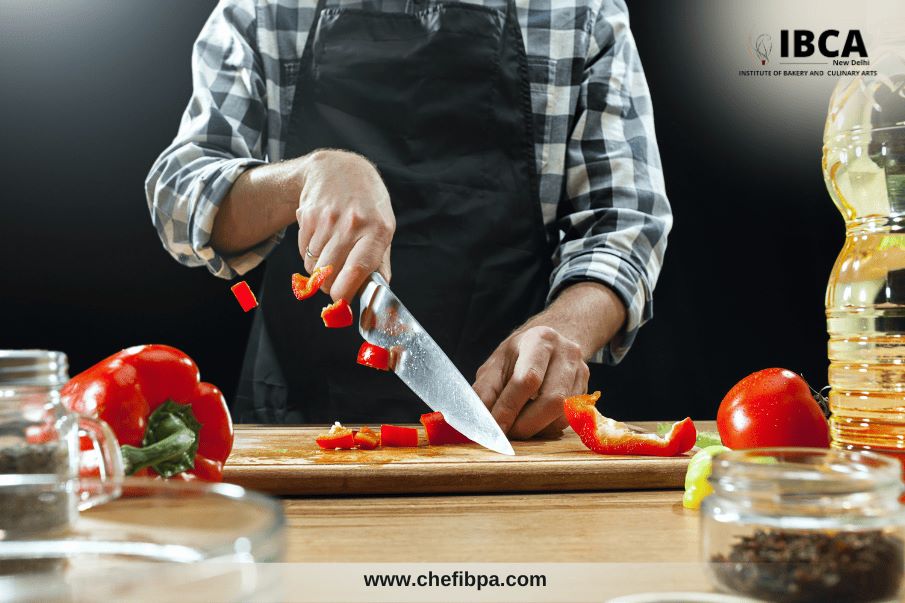
Here are some essential knife that you can choose –
Kitchen Knife– This multipurpose blade normally has a 8 to 10-inch sharp edge that is ideal for cleaving, cutting, dicing, and mincing. Pick a gourmet specialist’s blade that is agreeable to utilise and gives great control.
Paring Knife – The paring blade, with its short, dainty edge, is utilised for sensitive activities like stripping, managing, and cutting minuscule leafy foods. For exactness, go for a paring blade with a sharp tip.
Serrated Knife- With its toothed sharp edge, the serrated blade is ideal for knife cutting skills bread without crushing it. Sharp serrations are essential for good cutting.
Boning knife – A boning knife has a thin, flexible edge that is sharp and intended to manoeuvre around bones for deboning meat and fowl. For accuracy, choose one with a tiny, sharp tip.
Utility Knife – The utility blade, which is adaptable and useful in some circumstances, is sized halfway between a culinary expert’s blade and a paring blade. Find one with a sharp edge in a size that suits your needs.
Santoku knife- The Santoku knife, which has a shorter, wider blade with a flat edge, is best for slicing, dicing, and chopping. It is Japanese in origin. Pick a Santoku knife with a secure grip and a cutting edge that is razor sharp.
Fillet Knife – The fillet knife has a thin, flexible blade for precise, clean cuts and is designed for filleting fish and deboning meat. For maximum performance, make sure it has a sharp, thin blade.
Also Read – Importance of Studying Culinary Arts
Safety First: Mastering Kitchen Knife Safety
It is important to prioritise safety before starting on a training course for knife skill.
Here are some basic safety guidelines:
- Keep Your Blades Sharp: Dull blades are more likely to slide and cause an accident. Sharpen your knives on a regular basis to keep them sharp.
- Use a Stable Cutting Board: Make sure your cutting board stays in place as you work. For increased stability, place a non-slip mat or a moist towel beneath it.
- Use Proper Hand Placement: To protect your fingertips, use the “claw” grip. Curl your fingertips inside, guiding the blade with your knuckles.
- Control Your Cutting technique: Use a methodical and controlled cutting technique, avoiding hurry or undue force.
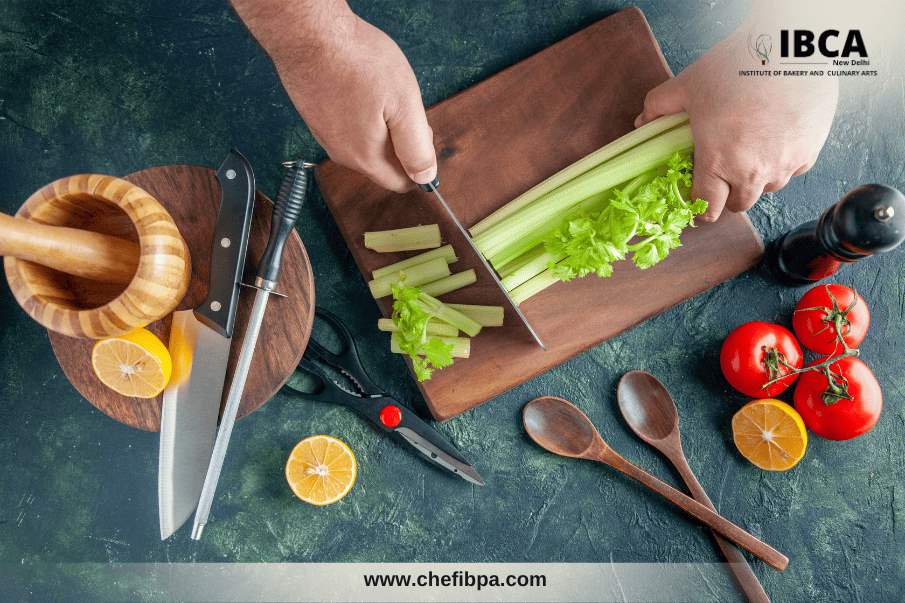
Let’s get started with the essential Knife cutting techniques that every cook should know:
Chopping: In this technique, materials are sliced into small, uneven pieces. Begin with a firm hold and rock the blade in a rhythmic manner.
Dicing: To get consistent, tiny cubes, chop your item into slices first, then cross-cut into cubes.
Julienne and Brunoise: Julienne involves slicing items into thin, matchstick-like strips, while Brunoise dices those strips into tiny cubes.
Mincing: Chop ingredients into fine, consistent pieces by swaying them back and forth.
Slicing: Cut thin, uniform slices by sliding the blade smoothly through the item while keeping a steady hand.
Advanced Knife Techniques
- Deboning: Remove bones from chicken, fish, or meat with care. A boning or fillet knife is required for this procedure.
- Butterflying: Splitting a food item horizontally to create a butterfly-like look, such as a chicken breast. This method guarantees even cooking.
- Chiffonade: To make chiffonade, thinly slice herbs or leafy greens into fine ribbons. Roll the leaves and make fine slices.
- Tourne: A traditional French Knife cutting technique for moulding vegetables into seven-sided, rectangular chunks. It’s a difficult process that requires accuracy and skill.
Maintenance and Sharpening Advice for Knives
Maintaining and improving your knife on a regular basis is critical to ensuring their viability. Below are ways you can maintain your knife.
- Honing: Use a sharpening bar to sharpen the cutting edge before each use. This helps to keep the blade sharp.
- Sharpening: Invest in a good blade sharpener or hire a professional sharpener. Hone your blades as needed, which should be at regular intervals depending on how frequently you use them.
- Cleaning: Use a mild cleaner to hand wash and dry your blades. Dishwashers should be avoided since they can harm the cutting edge and handle.
Conclusion
In the culinary art, mastering knife skills is similar to building the foundation for outstanding meals. Understanding simple techniques can help improve your culinary talents, display, and whole culinary experience, whether you need to be an expert culinary specialist or merely work on your home cooking. Remember that rigorous discipline produces promising results, therefore it’s okay to continue working away at it until you achieve it!!
With effort and certainty, you may become a blade ace, creating culinary wonders that leave a lasting mark on each plate you serve.