

Author name: Seo_executive

IBPA Image
Bakery Institute

How to Start a Bakery : The Ultimate Guide for Bakers

Have you ever wished to make others happy by baking them delicious bread or cakes? You’ve come to the perfect location if you’re prepared to use your skills to start a successful bakery. It might be frightening and overwhelming to start a bakery. In addition to education and discipline, which are qualities that are equally vital in business, baking has long been a creative hobby. Therefore, deciding to launch your own baking company is a great endeavor, whether it be selling pastries and doughnuts, pies and cakes, or a combination of everything. A wide range of food items, such as cakes, biscuits, bread, cookies, cupcakes, doughnuts, and other chilled goods, are included in the bakery goods. Before opening a bakery in this cutthroat industry, there are many things to think about. If you plan to bake or need to employ someone to bake, you might need to enroll in professional bakery courses in India. Being a business owner is not simple. It necessitates extensive planning, resources, and effort. The stages of starting a bakery business are listed below. Market research to be done In 2020, bakeries will be a common entrepreneurial venture. There is a nearly universal market, regardless of whether they pose as conventional bakeries or even cakes prepared to order from homes. You must nevertheless conduct an in-depth study into the viability of your business plan. For instance, how many rivals are there near you? What kinds of goods aren’t offered where you live so you can learn from professional bakery courses in India. All of these solutions have the potential to contribute to your company’s success and may call for some flexibility on your part. Since your bakery can only realistically service a relatively small consumer base if starting as a store, location is particularly crucial in this regard. Select a Bakery Type  There are three main types of bakeries from which to pick when opening a bakery business. ●  A retail establishment The most typical sort of bakery is a storefront business, where you own your physical facility and sell baked products directly to customers through in-store sales or on-site catering events. ●  A baking enterprise run from home Due to the lack of expensive bakery equipment required to get started, home-based bakeries provide bakers more flexibility with their start-up times. You can begin by going online. Independent bakers sell their baked goods to merchants, restaurants, farmers’ markets, and online. You can run it from your house if you have a fantastic website, images of your work, and a means for customers to make an order. ●  Wholesale Bakery This kind of bakery company serves as a supplier to establishments like restaurants and grocers without maintaining a physical storefront. The everyday operations are reliable and predictable, which is a plus. People make bulk purchases. The main problem for a wholesale bakery is finding stores and eateries to carry your goods. This crucial element could be challenging for a startup company trying to enter the baking sector. Plan your business. You must write a business plan once you have decided what kind of bakery you want to open. This will compel you to examine the company from all possible perspectives. It will aid in the definition of your company, goal-setting, identification of revenue-generating opportunities, expense tracking, client base identification, and competitive analysis. You’ll explore financing in your company plan. Startup costs will be one of the numbers you need to calculate. You’ll need to make a list of all the equipment you’ll need, from larger goods like pots and pans to appliances like ovens and refrigerators. Make careful to make a complete list of your tools. There are many funding options available, with a bank loan being the most likely one. Make sure to create a compelling and quantifiable business plan based on the market research you’ve previously conducted to show to any potential investors. The goods and services you’ll offer It’s time to consider what you want to sell and how much you’ll charge for it. It would be advised to start out by keeping things very straightforward. Although it may be alluring to want to accomplish everything, specializing and limiting your options will help you stand out from the competition. You must also select how much each item will cost you and what price you will maintain for it. Locate the proper place If you’re operating a bakery out of your house, you already know how much space you need. If you want to open a retail store, you should start looking for a place. The success of a firm is greatly influenced by its location. Whatever location you choose for your bakery, make careful to consider the advantages and disadvantages as well as the associated costs. Find assistance A network of friends and family is essential in the baking industry. A business takes time to launch. The time investment is only half of baking. You’ll need to market your company, receive orders, assist clients, and carry out a number of administrative duties. ●  Expertise Of course, you – or your chief baker – should have an extensive understanding of how to really bake if you intend to start a pastry or cake business. You must enrol in professional baking courses in India if you want to learn and refine your palate. ●  Networking To guarantee that you start with a strong reputation and an established clientele, it is a good idea to spread the word about your talent and competency in the kitchen before you open. Promote Your Business Any business must have a strong brand, but those that are centred in the arts need it even more. It is a chance to show off the look and feel of your product and specify the kind of customer you are aiming for. Additionally, it will help you stand out from the crowd and set you apart from your rivals. It’s time to start the legal paperwork now that you have your bakery business
Culinary Institute

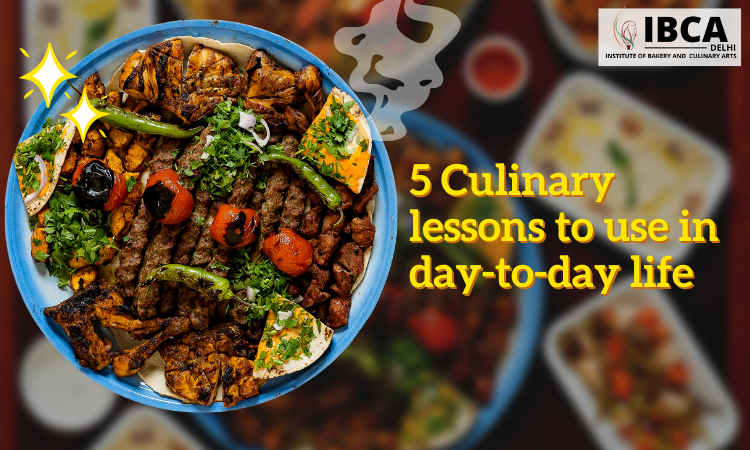
5 Culinary lessons to use in day-to-day life

If you’re thinking about attending culinary school, you’re probably wondering what you can learn. Culinary education may teach you things that you can use every day, both in and out of the kitchen, in addition to introducing you to skills and practices that can help you prepare for a career in the culinary arts.  These include: So here are some takeaways from culinary courses in Delhi that you may apply on a daily basis and not just in food-related situations! Learning something new every day In culinary school, you’ll have the chance to explore unfamiliar flavor profiles like tamarind and anchovy, discover new ways to prepare certain dishes, or even improve your dicing skills. Along with showing you how to be open to learning, the culinary school can also provide you opportunities to practice accepting constructive criticism. You might strive to respectfully take criticism from both other students and chef instructors as a culinary school student. Learning is almost always an active act if you want to progress in your career, but it’s not always easy to know where to start. Culinary courses in Delhi will teach you how to master the art and science of cooking. Whether you want to learn about flavors or ingredients, this is the place for you! Believe in teamwork What does it take to be a chef? It’s not just about cooking. There is teamwork behind every dish you serve, and you’ll be expected to make critical decisions that affect the success of your station. In culinary school, you can learn how to work with others so that they can accomplish their goals, whether through cooking classwork or project-based settings like service lines. Throughout culinary school, you’ll practice new skills like teamwork and collaboration with classmates. During your internship, you can use these skills to your advantage by spending time in a professional kitchen learning how to become an effective teammate. Whether that means passing on tasks you’re not comfortable with, cleaning up after another team member, or collecting ingredients together. Management of Time.  Managing time demands in the kitchen can be a challenge. The best way to master time management is through practice. Whether it’s in the kitchen or elsewhere, you can start by organizing and prioritizing your tasks down to the last minute. This may require closing tasks off from one another until they are completed. It also may mean accepting that some things are out of your control and working with what you have instead. When you manage your time well, you’ll spend more of it on the things that matter most to you. Let’s say you want to fix yourself a plate of your favorite dish from the fridge: smoked pork chop, mashed potatoes, and carrots. You know what they say: “To thine own self be true”—so you cooked this dish many times before. Finally, when it was time to dig into your meal, not only have you been preparing your ingredients all day long, but also you’ve decided to make everything at the same time so that everything will be done at exactly the same moment. Even though managing your time may seem like a more significant task than cooking, it is necessary to successfully cook. With the skills you learn at culinary schools such as time management, scheduling, and organization, it will be easier for you to work efficiently in the kitchen. Using Perseverance for excellence Perseverance is a key skill that you need in order to achieve any goal. Rather than thinking about success, focus on the process. If you put in the effort, it won’t take as much time to get where you want to be! Culinary school is not just about the food! You can learn so many skills that you’ll use in your professional career. If you struggle at a certain technique, ask your instructor for advice and guidance, and then keep practicing until you’ve mastered the skill Patience with your work.  Being patient in the kitchen may be helpful when you want to achieve good results, but it’s also important to remember that patience on a larger scale can be equally rewarding. When you want to speed up the process of learning how to cook, there are a number of exercises that can help you practice your patience. As a culinary school student, you can examine the importance of patience on both a large and small scale. You may realize the value of understanding the fundamentals before attempting more difficult techniques and how speeding the process of braising spare ribs or caramelizing onions can result in poor-quality food. Conclusion. Would you like to find out whether or not you’re good at following instructions and making delicious, original dishes from scratch? Or know which culinary courses in Delhi offer you the best courses in culinary. Then IBCA is the right option for you. It offers both degree and diploma culinary arts programs as well as the option to attend in-person or online. And all these programs include a hands-on industry culinary externship where you can practice incorporating the lessons you need to know while working with our teachers on real-world tasks! Are you prepared to advance in your career? We have a diverse selection of programs that are right for you. Don’t hesitate to contact us today! 

Bakery Institute

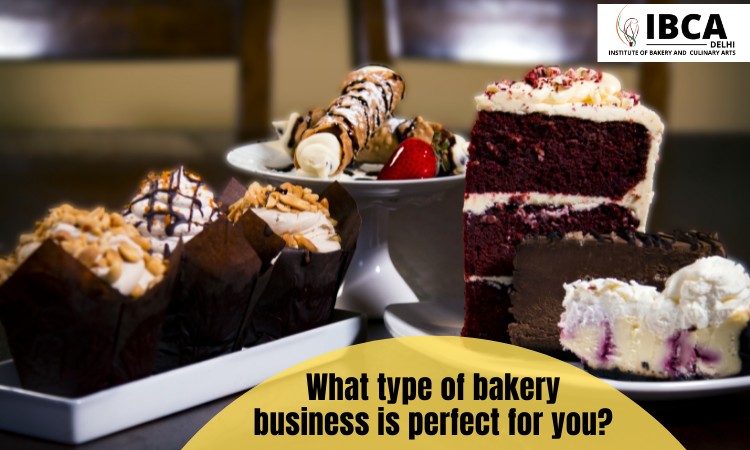
What type of bakery business is perfect for you?

Introduction Home bakeries are a great way to get started. It will also help you to test the profitability in a particular location. You can check what bakery items have good sales among the people living in that particular area. This way you can estimate your profits. And the best part with a home bakery is that you will not need to have much investment. Also, after gaining better experience in this field you can expand your operations. If you are thinking about opening a bakery then this is the article for you. It will give you an overview of the different types of bakery businesses to get you started. And if you want to see, yourself as a baking professional then bakery classes in Delhi provide you the perfect stage to accomplish all your future goals There are many reasons to start your own Bakery business and the top two are: You enjoy baking, cooking, and creating something delicious out of flour, sugar, eggs, and other ingredients. You want to be your own boss! Having your own bakery business can be a great idea and you don’t have to invest in it much. After taking up courses from one of the best bakery classes in Delhi you can start up your own bakery business with a good investment of money. Also in order to start a bakery business, you must make sure that you have planned everything in detail. You need to choose the type of bakery you want to start; whether it’s a wholesale bakery business or a retail bakery business. After that, you will have to decide on what products to sell and how much profit you want from them. Let’s take a look at the retail bakery industry. Specialty bakery A specialty bakery is a bakery that focuses on one or a few topics. They have become popular because of the fact that they can offer better-quality items using specializations and skills. Specialized bakeries usually focus on baking one particular type of cake or cookie, such as wedding cakes only, cookies only, cupcakes only, etc. They do not offer many kinds of baked items to their customers. They stick to their menu and deliver them to their customers. Online Bakery If you’re looking for a bakery business that will give you the chance to start small and scale up as needed, starting an online bakery may be the best option. With this type of online bakery business, all of your goods can be delivered directly to your customers’ homes. This means that they won’t need to come into your store, which means less overhead and more profits! And if you don’t have much money to invest in starting an online bakery business, no problem—you can buy pre-made cakes from a local baker or use websites like Etsy or Pinterest to find already-made recipes that are ready for delivery. You’ll also be able to save on equipment costs by using borrowed kitchen space at someone else’s house (or apartment) until you get bigger. You’ll only need minimal supplies: pans and utensils from thrift stores; a few ingredients from grocery stores; some basic packaging materials purchased at office supply stores like Staples or Office Depot;  Bakery Café A bakery café offers tea, coffee, and bakery products on its menu. They are good for seating the guests and enjoying their time. As a result, more revenue is expected to generate from the bakery café. The main challenge with opening a bakery café is to find a perfect location along with ample space to attract people to come inside the bakery café. The bakery café business is an extremely lucrative business venture for you to start. It has a huge initial investment cost and higher running costs, but your business will bring you more profit. You can also create a great number of jobs if you open a bakery café in your locality. Conclusion Why choose IBCA  IBCA is among the bakery classes in Delhi that have over decades of experience in the Bakery and Culinary Arts industry with top industry experts who have gained a wealth of experience to prepare the next generation for upcoming challenges. All of the courses follow an international curriculum to ensure that students receive the best possible education. It is an ideal platform for newcomers to learn and master the discipline of Bakery and Culinary Arts. I hope this article has given you some insight into the different types of bakery businesses out there. There is a lot more information available so be sure to keep researching and don’t forget that there are plenty of expert guides on our website. You could also consider taking one of our specialized courses from bakery classes in Delhi if you’re serious about opening your bakery soon.

Bakery Institute

A guide to getting you the best bakery course

No matter what subject you are interested in, the right information always makes a big difference in your life. Here, we are going to talk about a career in Culinary Arts, which will definitely help. It is one such field that has a lot of opportunities and is quite diverse. Apart from that, we will be talking about several other factors that are related to this stream but cannot be ignored at all as well. If you do consider all these aspects carefully, then no doubt there can be no better way than choosing this as a career option for yourself. Bakery is one of the most popular and desired careers of all. It has many opportunities and is definitely a promising field to build an even better career in the future. There are several advantages to choosing this as your option and if you want we will be talking about them in detail. Lets us see why you should choose baking courses in India to help you land your dream job What does your future hold?  A bakery diploma course has many advantages and can help you get a better job. The benefits associated with these diploma courses are so many. Taking a look at these items before making a final selection might be a good idea. Going in for a bakery diploma course will provide you with a set of skills that are highly sought after by many. The fact that the course pays great attention to the client should not be ignored either. Those who go for these courses also get to work along with experienced staff members and also experience real-life scenarios. This helps them get better as well as improve their experience levels. There are two types of bakery and pastry diplomas: advanced and foundation. Both of them can give you the professional skills needed to work in the field. If you want to develop to a more advanced level, then you must get an advanced diploma because that is when you get exposed to advanced concepts that cannot be offered at the foundation level. However, if you are just starting out your career in this field and want to learn about the basics, then foundation courses are what you should focus on—they cover all core aspects of baking and pastries.  Benefits of joining this course This course is for people who are interested in going into the baking business or individuals looking for jobs in this field. If you want to get better opportunities than others when it comes to grabbing high-paying jobs, then this course is for you. You’ll also gain skills and experience that open 1000 doors of opportunities in the future. Even if you’re planning to become a teacher or engage in another job field entirely, this course can help you develop the essential knowledge required to start a bakery with confidence. After completion of this course, you will be able to: Why is it important to choose such from a reputed organization There are many baking courses in India available that allow you to learn more and more about baking cakes. If you think, it could be a great option for you then make sure you go through all the details of such courses before zero upon a particular college or institute. It will help you understand a lot better as well as will reduce the possibility of being misguided in any way. If you fall in this category then we would like to suggest you choose The Institute of Bakery and Culinary Arts as one of the best baking courses in India right now in order to fulfill your dream of becoming an expert baker one day CHEF IBCA IBCA is one of the leading institutions for Bakery & Culinary Arts in India. We have gained a reputation for being one of the most trusted names in this industry. At IBCA, we aim to give our students the right exposure and make them industry-ready. Our team of experienced industry experts has gained a wealth of experience in this industry to prepare the next generation for upcoming challenges in their Bakery and Culinary Arts Careers.  Conclusion Indian bakers are famous for minimizing their ingredients, concentrating on the tastes and flavors of each item. So for becoming a good baker, you need to learn how to combine various ingredients in the best possible manner. Classes on cake baking in Delhi can help you gain knowledge about various aspects of baking like how to select ingredients and their optimum utilization, what is different about baking and baking tools and equipment required for it etc. If you want to start a bakery business someday or join as a professional baker at luxury five-star hotels then learning proper baking skills will help you get started in your career at right time.

Bakery Institute

Six Skills Every Baker Should Have

It is not difficult to become a chef, but raising the bar is a difficult task. To become a successful baker, you’ll need the right knowledge and skills, as well as plenty of practice. Being a baker necessitates a thorough understanding of baking science, but this is insufficient. To become a professional baker, you’ll need more than just a basic understanding of how things work. You’ll also need practice and the right skills. If you want to work in this field as an aspirant, you should familiarize yourself with these ingredients and take a bread baking class so that you can confidently bake the item you want in the future. Baking appears difficult, but it can be turned into simple cooking if one understands the ingredients and selects them appropriately. It is the cook, not the food, that can make it difficult by selecting the wrong ingredients. A baker should learn work ethics in addition to getting the right ingredients and following the correct recipe. A baker ought to be able to meet tight deadlines in the most efficient manner possible. To perfect your baking skills, you’ll also need the personality traits listed below. 1. Understanding the preparation of dishes and ingredients In baking, time is of the essence. The process should go smoothly from start to finish once you start it. To make the best cakes, you’ll need to organize your kitchen, ingredients, and recipes. Rather than rushing up and down, and putting things together while the oven is baking, you should have everything ready. Being organized also entails weighing your ingredients ahead of time. Before you begin, weigh your ingredients and double-check all is ready to use and that you have all of the necessary equipment. These factors can lead to the baker’s becoming second nature at problem-solving, as well as being highly efficient and well-managed at first. You will learn these things in professional baking classes in Delhi. 2. Clear Team Communication The success of your bakery business is determined by your ability to communicate. Even in your baking space, you must be polite and firm when requesting assistance. hem. It’s critical to have a clear means of communication so that you can keep up with your work. How do you communicate with the customer when you are unable to deliver the cake on time in a way that he understands without becoming agitated? You might make a good cake, but not what the customer ordered; most likely, there was a communication breakdown somewhere along the way. At this point, your ability to communicate is your saviour. 3. Attention to Detail Baking is a science that requires precise measurements and temperatures, and art is all about the details. It is critical to measure and calculate. Because even a minor calculation error can result in a disaster in the end. Baking is a cooking method that does not require any trial and error. To crack the recipe, you must have the correct measurements as well as the proper oven conditions (temperature and preheat). When baking, meticulous attention to detail is required, beginning with reading the recipe from beginning to end before proceeding. You will learn most of the recipes in professional baking classes in Delhi. You may end up failing to understand what is required if you don’t understand the steps and processes. 4. Creativity with Flavor and Texture In addition to time-honored favorites, the world’s best bakers are constantly creating new crowd-pleasing pastries. The classics are what good bakers stick to. Great bakers are inquisitive, attempting new flavour combos and techniques. Although not all of those experiments will be successful, successful bakers can view these blunders as learning opportunities rather than failures. Cake decoration, which can range from brainstorming physics-defying cake structures to trying to craft elaborate sugar fondant flowers, is another way to express creativity in baking. 5. Excellent Hand-Eye Coordination If you don’t have natural hand-eye coordination, you can improve it with practice. Cake decorating, using a palette knife, piping, painting, and fondant decorations are all skills that take time and effort to master. When it comes to mastering these skills, it takes a long time. Inspiration and practice for new decorating techniques can be found in books and online tutorials. If you’re serious about improving your decorating skills, consider enrolling in professional baking classes in Delhi, which offer a variety of courses for those aspiring to be professional bakers.  6. Patience Under Pressure Many baking tasks necessitate taking time to allow important processes to take place. If you can’t keep your cool, things could get a lot worse. It’s crucial to know how to handle pressure, especially if you’re in charge of baking things in the right order. You will be expected to deliver the requested item on time. As a result, you must learn and adopt positive behavior that will assist you in getting through difficult times. For some baking tips and tricks, you can check out our YouTube Channel. IBCA Institute of Bakery & Culinary Arts.  

common cake baking problems and solutions
Bakery Institute

9 Common Cake Baking Problems and Solutions

Perfection in baking is not for everyone. We all know that the baking process does not always go as planned. We fantasize about baking a light and fluffy cake, but we end up making mistakes, and the cake baking develops into a dense block that is far from flawless. The second most common error while cake baking is taking the pan out of the oven before the timer goes off. Just when everything appears to be going pretty smooth, you see the lovely golden brown you imagined, and when you pull the pan out of the oven to discover it is still unbaked. You were only disappointed after you departed. Cake baking mistakes are easy to make, but thankfully Baking Course in Delhi gives you a chance to develop your baking skills. You will learn the art of baking and get to know valuable techniques that can help you enhance your abilities and make you a better cook in the long run. Cake Baking Mistakes to Avoid for Perfect Results So let’s have a look at some typical cake-baking mistakes. Too Dense If you’ve ever baked a dense cake that never seems to rise properly, there are a few reasons why this can happen. Cake flour may have been substituted for all-purpose flour, or too much sugar was used, but the most common reason is that not enough air was incorporated into the batter. Here are some tips on how to add air back into your batter while the cake baking process. When making cake, the first thing to do is to mix the batter. If your recipe calls for oil, try not to rush this step. Let the air bubbles form! A poor leavener is another cause of dense cake. Perhaps your baking powder or baking soda is outdated and ineffective. To help the batter rise and keep the air in during the baking process, you’ll need a decent leavener. A well-risen cake will not be dense! Too much flour adds dryness and heaviness to cakes and a collapsed structure. To keep your cakes light and fluffy, make sure you’re using cake flour instead of all-purpose flour. This recipe uses cake flour, but feel free to swap in all-purpose flour straight out of the bag if you don’t have any on hand. A hot oven will make your cake rise like a champ. Preheat the oven for at least 20 minutes before putting your cake in for the best results. If you have a convection oven, preheat it to at least 325°F instead of 350°F. A fan-forced oven needs less time to come up to temperature than an old-fashioned regular oven, so keep this in mind when testing your oven with an oven thermometer! Cake Overflows The heat from the oven seems to make the batter rise up and over the edge of a burnt pan, causing it to run out of the cake onto the bottom of the oven (and I’m sure you know what that can do). Filling your pan with less batter is the simplest remedy to this cake baking problem. Filling a cake pan halfway to two-thirds of the way up the edges is a good rule of thumb. A Sunken Cake While your cake may look nice on the outside, there could be a problem lurking in the middle. This happens more often than you might think. Two quick tests can help prevent a collapsed cake: 1.) Stick a toothpick or knife into the center of your cake. If it comes out cleanly with no sticky wet batter on it, then it is baked all the way through; if there is still batter on it or if it comes out gooey or wet, then give your cake another 3-5 minutes in the oven and retest again until fully cooked 2.) Use an instant-read thermometer (preferably digital!) to test for doneness. Once baked through, place a thermometer in several spots throughout the center of the cake; temp should be between 180-190 degrees F. Many things can cause sunken cakes while cake baking. They could be underbaked, over-baked, or if you put too much batter in the pan. To avoid this problem, make sure your oven is at the correct temperature, do not open and close the oven door too often and use ingredients as directed; otherwise, your cake will sink! Additionally, your cake will not maintain its shape and sink if your batter is not firm enough due to skimping on ingredients like eggs or flour. Lastly, it may also be caused by an air bubble formed during mixing and rising in the oven. This bubble needs to pop for your cake to settle evenly once cooled, making for a sunken appearance. Stuck to the Pan One of the most common cake baking problems is when a cake sticks to the pan. Although there are various reasons for this, one easy solution to try is to grease the bottom of your pans with shortening instead of cooking spray. It will help keep your cakes from getting stuck to enjoy a perfect dessert every time! Crusty Edges You may not know it, but a little bit of non-stick greasing goes a long way. If your cakes are tasting burnt and dry when they come out of the oven, it is likely because you’re making a mistake with the pan spray or grease. The most important part of greasing a cake pan is where you put the cooking spray – too much on one side of the cake, and it will cook unevenly. You should coat both sides with a thin layer of canola oil cooking spray so that heat can transfer from both sides evenly! Cake Batter is Too Stiff Adding too much flour when making cake batter will make your cake come out in a tough, dense texture. The stiff, sticky batter is usually due to adding too much gluten to the batter, which happens most often when over-mixing. Mixing for too long can also

Bakery and Pastry Classes, Bakery Institute, Baking Institute

How To Become a Professional Baker in 5 simple steps.

If you dream of working in a fun, fast-paced environment with fresh-baked treats, then consider a career as a professional baker. Baking is a creative and hands-on job that involves a variety of tasks, including mixing ingredients and portioning doughs and batters. To become a professional baker, you’ll need to acquire certain skills and take the proper coursework. Learn more about how to become a professional baker in this guide. Become a professional baker by completing your education, building experience, and perhaps even looking for paid internships. Here are five steps to help you start in this rewarding career. Finish high school or equivalent Though not a requirement, the end goal of earning a baker’s diploma is to pursue a culinary or pastry school. While most vocational schools do not require that you obtain the equivalent of a high school diploma, if your local high school offers an elective that would expose you to baking and/or nutrition, that could bolster your resume as an applicant to one of these types of programs. Consider attending a culinary or technical school to become a professional baker.  Many people don’t realize that the skills of a professional baker are not learned through experience alone. Courses designed to teach students how to bake bread and cakes are offered at culinary or technical schools throughout the country. These programs teach you how to make delicious baked goods and give you an understanding of nutritional and health issues related to baking. Whether you want to open your own bakery or learn more about baking as a hobby, attending culinary or technical school may be best. You can check out our YouTube Channel. Chef IBCA   Gain experience as an apprentice or baker’s assistant Picking up an apprenticeship in the baking industry is a great way to learn and build your portfolio. During your apprenticeship, you will receive training in safe food handling practices, sanitation, and other basic baking skills. As you work under a professional baker, you’ll have the chance to practice these skills until you become comfortable enough to take on more responsibilities. And by building relationships with other bakers, you may find it easier for you to land a job as a professional baker when it comes time to move on.  Choose a specialty Baking is a profession that requires a lot of hard work and dedication. To become a professional baker, it’s best to start by gaining some experience and learning about the different types of baking. After you’ve learned how to bake and gained some practical knowledge, choose what type of baking you are interested in so you can pursue your dream career! Commercial bakers work in manufacturing facilities and use equipment to mass-produce baked goods for stores. This can be a high-pressure job where workers often have to meet strict deadlines. However, the pay is competitive, and many bakers feel that their work has a higher purpose. A retail bakery produces and sells bread, cakes, and other baked goods to its customers. They work in grocery stores or specialty shops and bakeries to produce smaller amounts of baked goods for customers. A retail baker is responsible for creating new recipes for their customers. A pastry chef is a person who bakes and decorates desserts, sweet pastries, and other baked goods like cookies. They also create the dessert menu and manage all aspects of the kitchen pertaining to pastries. A pastry chef is also a skilled cake decorator and is often called upon to sculpt figures out of icing or other edible mediums like chocolate or gum paste. Artisan bread bakers are skilled at crafting and shaping bread on a small scale. Their bread is often made with organic flour, whole grain flour, and freshly milled grains. Bakery owner– If you’ve always wanted to open a bakery, this might be the perfect opportunity. Craft bakers may open up their own bakeries to have complete control over things like the menu and store hours, which means more goodies for their customers. Pie maker-These bakers specialize in making pies. They use similar culinary skills for fillings and crusts to make the perfect pies they hope will be devoured at an upcoming event. Cake decorators are responsible for making the finishing touches on a cake to elevate how it looks. These may be custom orders or themed cakes for special occasions. Food stylists have an eye for detail that turns ordinary food into something special. They use their knowledge of photography and product styling to create beautiful photos and visually appealing food products. They’re also experts at keeping foods fresh, plumped, and professional-looking while they’re shooting. Continue perfecting your art. Cooking is an art that should be practiced with freedom, creativity, and imagination. Always be on the lookout for new tricks or continue upgrading your recipes. Creativity and vision will also give you the tools for becoming a great baker who can continue to improve and grow. Practice Regularly– To improve your baking skills, try experimenting independently. By practicing new recipes and testing different techniques, you’ll get a better feel for what works and ways to improve your baking routine. Grow Your Network– Whether you’re just starting or you’ve been in the industry for some time, joining a professional group can help advance your career. There is power in numbers, and when you network with other bakers, you gain access to hundreds of bakeries worldwide who are willing to help one another. Continue your education– It is important to continue learning and be sure that you are staying up to date. There are always new ways to bake, such as adding more flavor or making clean ingredients. Taking additional classes can help you do this, and if you want to certify your skills, you can earn a certification. Learn the trade tricks and put your skills to use at Professional Bakery Courses in Delhi. Students will learn how to bake various baked goods from scratch and make specialty cakes, pastries, and other items during

Baking Institute

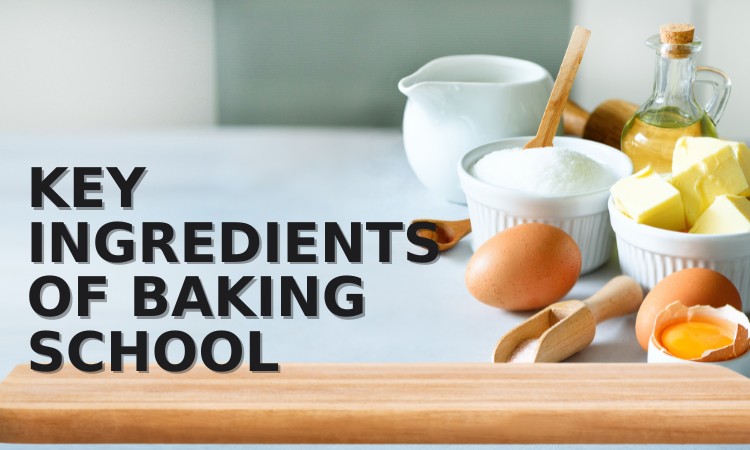
Some Key Ingredients Of Baking School

Key behind mastering a baking art. Do you know the key behind mastering a fine art like baking in a baking school? It’s the numbers and the ingredients. Yes, it requires a perfect numerical balance with the right quantity of ingredients, and you can master baking in no time. Especially if you are new to baking, I would suggest you narrow down your list with the most specific ingredients you will need to bake. Instead of bringing the list of baking ingredients and storing them in your kitchen which will only consume that extra space without much use.  So what would you like to go with? The first one of course. So let us go through the following list organized by category, such as flour, leavening, sugar, salt, and so on. These are the basic components of your baking pantry. As your baking experience grows, you’ll begin to define what’s most important to you.   Flour All-purpose Flour is the most common flour used in baking school is all-purpose flour, commonly known as plain flour. It is the flour to invest in if you just have one flour in your pantry. It is used in the majority of my recipes, be it black forest cake, puff pastry, handmade croissants, or vanilla sablés. You can also use it to make this no-knead cinnamon raisin bread. All-purpose flour can be bleached or unbleached and the bleaching process not only changes the color of the flour but also alters its pH. Bleached flour is more acidic than unbleached flour. Many people might be unaware of the fact that all-purpose flour in North America has a protein content of around 10 % and this varies depending on the brand, grain, and country of origin. Whole wheat flour is one of the different types of flour we use in our recipes at Baking School. It is also known as wholemeal flour and is made by grinding the whole grain, so there’s more fiber in whole wheat flour than in regular plain flour.  Cake flour is a finer flour with lower protein content and higher carbohydrate content. This type of flour will produce a more delicate and tender crumb and provide your cake with a smoother mouthfeel and less gluten formation. Too much gluten would make for a very tough cake. Cake flour has a protein content of 7 to 9%, which is less in comparison to pastry flour. When it comes to Pastry flour is probably the most central ingredient in any baker’s pantry. On the flour spectrum, pastry flour falls somewhere between all-purpose and cake flour. It can be used for many types of pie crusts and is great for any type of baked good. It has a little less protein than all-purpose flour, but more protein than cake flour. Because of its fine texture and high starch content, it helps to keep your pie crust light and flaky. While any-old flour will do for some baking, Bread Flour makes a difference. Made from hard red spring wheat and with two to three times more protein than all-purpose, bread flour has a high gluten content that gives structure to baked goods. Due to its high protein content, it adds structure and creates air pockets to let gas escape while baking, trapping all the delicious flavor.   Self-raising flour– It is highly popular in Great Britain. It has baking powder and salt already added to it, so when you bake with self-raising flour, you don’t have to add any chemical leaveners or any salt. If you don’t have access to it, you can make your self-raising flour: for 1 cup of self-raising flour, blend 1 cup of all-purpose flour, add 1 ½ teaspoon of baking powder and ¼ teaspoon of salt (or ½ kosher salt) You might be wondering, “do I need to buy another bag of flour for this new recipe?” Well, you only need to know about alternative flours and how to choose the right one for any recipe. These alternative flours aren’t as widely utilized in baking recipes, I recommend buying them in small quantities from your local store. Or you can easily invest in a 5-kilo bag of all-purpose flour because you will use it in almost every recipe you make! Fats used in baking schools Vegetable oil with a neutral flavor that can be used in recipes as well as to grease baking pans. Butter- It reacts with leaveners to make pancakes and biscuits fluffier and more tender. Look for shelf-stable powdered buttermilk if you don’t want to keep it in the fridge all the time.  Shortening It is a solid vegetable fat used by some cooks either to replace butter or in combination with butter to make tender baked goods like pie crusts. Butter is mostly fat, but also has about 15 percent water, as well as milk solids. Shortening has a higher melting point compared to butter, so cookies made with shortening tend to keep their shape better.  Leaveners You can tell when a cake or biscuit is light and fluffy because tiny gas bubbles have made it rise. These bubbles are created by leaveners, which cause chemical reactions in baked goods that fill them with air. There are two kinds: Chemical and Biological. Sodium Bicarbonate, better known as baking soda, is a chemical leavening — when activated by heat, it produces gas bubbles that cause baked goods to rise. Baking soda works best alongside acid ingredients, like yogurt or buttermilk. Baking Powder is a leavener used in baking. Baking Powder contains Sodium Bicarbonate (Baking Soda), but it already includes the acidifying agent, so it only needs a liquid to become activated. It can also be called double-acting baking powder because it releases one burst of gas when liquid is added, and another when exposed to heat. Yeast is one of the two main leaveners in bread and pastries; chemical leaveners, such as baking soda, are the other. Yeast and chemical agents rely on different mechanisms for making

Recipe of Cookies

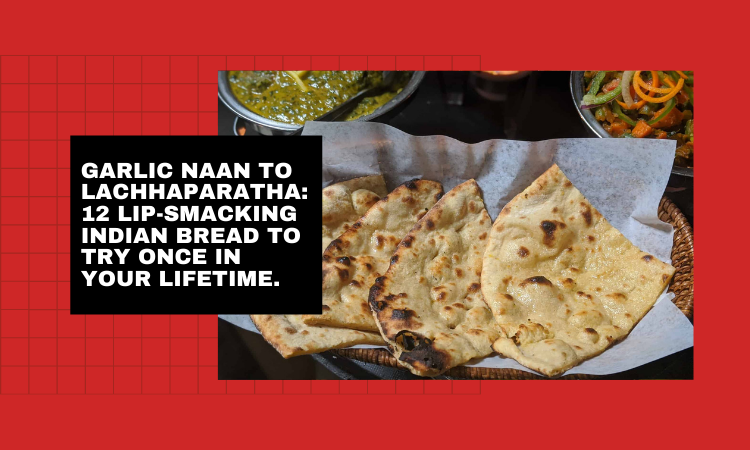
Garlic Naan to Lachha Paratha: 12 Lip-Smacking Indian bread to try once in your lifetime.

When it comes to bread around the globe, Indian bread is one of the most popular, which certainly means Parathas such as Chapati, Roti, Naan, Thepla, Naan, Kulcha, etc. Yes, everyone’s idea of the perfect Indian paratha is different; whether it takes you back to your childhood or conjures up a joyful memory, it is just incredible.  But if you are one of those bread lovers who always end up with what to try next? Don’t worry. we have got your back. Try these ten unique types of Indian bread that leave your tongue asking for more. Poratta The parottas are something the malu enjoys almost as much as his spirit and a little more than his wife. Kerala Parotta/Porotta is a layered flatbread cooked with plain flour, a lot of oil, and an egg that is popular in Kerala thattukada (roadside eatery).It is a most popular Indian bread in all over India. 2. Bhakri Bhakri is one of the most popular forms of parathas (Indian Bread) in the states of Gujarat, Maharashtra, Rajasthan, and Kerala. This round flatbread, despite being traditional, is quite popular among Gujju’s and Marathis. Bhakri is also known as biscuit roti due to its thick, crisp texture. 3. Puran Poli If you understand what delicacy is, you will know what Puranpoli is. It is an Indian delicacy made by stuffing soft whole wheat with soft-cooked yellow lentils, jaggery, or brown sugar in the dough ball. 4. Akki Roti Looking for a perfect meal to kick start your morning, you would not say no to this traditional Indian bread called Akki Roti. It is a soft-n-crispy flatbread made with rice flour, grated carrot, and onion, blended with perfect Indian spices. The term Akki means rice in Kannada, also known as rice roti, very popular in Karnataka. 5. Baati Do you know Baati was preferred to be a perfect wartime meal for Rajput during the time of BappaRawal- the founder of the kingdom of Mewar? After the Rajput’s returned from the battlefield, they would dig into perfectly baked batis, slathered with ghee and consumed with curd.  As the meal gained popularity in Rajasthan, each local ruler added their spin, later known as dal baatichurma. This delicious baati is a traditional Rajasthani bread first boiled in water and then baked in tandoor. Also, check out How to make Pita Bread like a PRO 6. Bakarkhani You wouldn’t want to miss this amazing food hailing straight from the valley of Kashmir, which has a biscuit-like texture. Yes, Kashmir offers a unique culinary ecosystem in addition to its scenic beauty, and their curries and bread are among the best dishes to experience in Kashmir. Not to miss the little fun fact, Bakarkhani is named after a tragic love story between a general named Aga Bakar and a dancer named Khani Begum. 7. Naan What is the first thing that strikes your mind when you think about Indian cuisine? Well, if I am not wrong, it’s naan and curry. It is probably the most famous bread among Indians. Be it a party or a wedding, naan is never out of fashion. Though it originated in Egypt, naans have become a popular Indian dish for gobbling up restaurant gravies. It is a flour-based flatbread made from all-purpose flour, wheat flour, or a mix of the two traditionally baked in a tandoor (or clay oven).  8. Sheermal Sheermal is one of Lucknow’s most well-known bread, and Lucknow is noted for its bread, both sweetened and baked. But sheermal is likely the one that has stood the test of time, beloved by both youths and elder people. It is a traditional bread of the Hyderabadi cuisine, a sweet bread made with maida, saffron, ghee, and milk. 9. WarqiParatha-  This Punjabi paratha, a near cousin of the lachcha paratha, is all about the sweet and savory layers. If you love Indian cuisine & Indian bread, then you might have tried warm paratha. This traditional Indian flatbread is tender, flaky, and utterly delicious. It goes very well with almost any type of curry or dal, and it’s typically used as an edible spoon for scooping up the sauces. 10. Litti. A traditional dish from Bihar, Litti-Chokha, is a unique mix of steamed, stuffed dough balls and a spicy vegetable curry. It’s quite popular in Mumbai and other cities as street food! If you are a big-time Indian street food lover, then Litti-Chokha is a must-try recipe. It is an easy Indian dish to make at home, and it is filling too, making it a great lunch or dinner meal. 11. Girda   Girda is a type of baked bread often served as breakfast and noon chai (salted tea) on cold mornings. But what genuinely makes girda unique is its distinct family of accompaniments. It is eaten in combination with traditional Kashmiri recipes like Haak (collard greens), monjeThongchai (sweetened hawksbills), and a type of granular, salty tea called noon chai. 12. Taftan Taftan is a royal flatbread of the Awadhi cuisine, originating from the historical city of Lucknow. It is flakier and lighter than the normal naan, with a unique flavor and aroma. In the Hindi language, “taf” means “hot” and “tan” refers to a skillet. It can be best enjoyed with spicy meat, vegetables, or cheese, and can be easily stored for future use. Indian bread made up of wheat, such as Roti and Paratha, is considered the country’s staple cuisine. In contrast, wheat and maida are the most popular cereals to avoid for persons who are Gluten intolerant. Not to mention that a gluten-free diet is becoming increasingly significant in India as people become more conscious of health issues. so, the demand of gluten-free Indian brands are rising Baking and Culinary Art uses a wide variety of gluten-free flours to create your taste of the traditional texture and flavor. So here is the complete list of ingredients using which we can prepare Gluten-Free bread. Did you know that an Indian kitchen is where we can find

Bakery Institute

How To Become a Professional Baker in 5 Steps

How to become a professional baker From crusty bread and croissants to more intricate confections like macarons and kouign-amann, baked products come in a variety of shapes and sizes. Bakery work conditions can be equally as varied, giving this a versatile career path with a wide range of alternatives. The wage of a baker is determined by their number of years of experience, location, workplace, industry, and position. Specialty bakers, for example, often produce more than industrial bakers. Earning a certification from Baking school in Delhi can help you make a positive impression on future employers by demonstrating that you have the necessary knowledge and abilities to work in a bakery. In this post, we’ll go over how to become a professional baker, as well as the education, certifications, abilities, and experience you’ll need to get started. To become a baker, you’ll need a combination of experience and education, depending on your goals. To pursue a profession as a baker, follow these five steps:  1. Finish high school or equivalent If you desire to enrol in a baking school. These colleges require 10+2, which means you must complete high school in order to understand the fundamentals of the professional degree. While you don’t need a diploma to work as a baker, most vocational schools will need you to have the equivalent of a high school diploma before you can begin a culinary or pastry programme. Furthermore, if your high school offers an elective that allows you to gain exposure to baking or nutrition, take advantage of it to begin developing your talents.  2. Consider attending a culinary or technical school Even if you’ve mastered your own recipes, a culinary, technical school Baking school in Delhi can offer you vital skills to help you enhance your baking abilities and hone your art. Nutrition and health, various cuisines, proper culinary methods, kitchen management, and recipe computations are all included in the courses. Attending culinary or technical school is not essential, however, it may assist you in developing more advanced culinary skills. Sign up for a proper course, which can be either short or long term depending on your budget and time constraints. You can take hotel management courses at both private and public universities. Those interested in starting their own bakery should consider getting an associate’s degree in baking and pastry arts. Depending on the depth of the programme and whether you attend full- or part-time, a culinary or technical school degree typically takes one to two years to finish.  3. Gain experience as an apprentice or baker’s assistant It’s always better to work as an apprentice or as a baker’s assistant to get experience. Working at a local bakery as an apprentice, trainee, or helper can give you significant industry experience. You can learn safe food handling, hygiene, and other basic baking techniques by working under a baker for one to three years. Working as an apprentice or assistant baker allows you to form ties with other bakers, which might help you obtain a job as a professional baker later on.  4. Choose a speciality Find out what type of baking you are most interested in after you have had some experience baking from Baking school in Delhi. Depending on the course you take, you may need to acquire specialized skills. Plant bakers, for example, may use high-volume industrial tools and ovens that require specialised training to operate properly. Here are a few popular baking specialities to get you started: baker for commercial service These bakers labour in factories and use machinery to mass-produce baked goods for retail outlets. Baker in a retailing context These bakers manufacture smaller quantities of baked items for clients in grocery stores, speciality shops, and bakeries. Some retail bakers own their own bakeries and are in charge of staffing and inventory management. Pastry Chef Pastry chefs, often known as patissiers, operate in a professional kitchen and are often in charge of the dessert menu. They frequently create and select recipes, as well as supervise all aspects of the pastry kitchen. Baker of artisan bread These bakers specialise in handcrafting and shaping bread on a small scale, often by hand, using only conventional bread components such as flour, water, yeast, and salt. Owner of a bakery Craft bakers may create their own bakeries to have complete control over aspects such as the menu and store hours. Maker of pies These bakeries specialise in pies and employ comparable culinary techniques for fillings and crusts. Decorator of cakes Decorators add the finishing touches to a cake’s appearance with frosting and other accents, which are frequently ordered for special events. stylist for food These food professionals, who aren’t bakers, fine-tune food, particularly baked goods, to look their best for photography and presentation.  5. Continue perfecting your art The practice of fine-tuning your culinary expertise will continue for the rest of your career. Always be on the lookout for fresh methods to improve your recipes or new approaches to use. Of course, creativity and vision will provide you the tools you need to become a great baker who can advance and thrive in the future. Practice on a regular basis Weekly practice and experimentation with new recipes might help you improve your baking abilities. By trial and error, you may figure out what helps and how to be more efficient in the kitchen. Collaborate with others Having connections with other bakers might help you grow your career by giving job opportunities and professional references. Attend a baker networking event or join a professional organisation to meet more people in the industry. Continue your studies. Since baking techniques are always changing, it’s vital to continuously study. Earning a credential or taking extra classes online from Baking school in Delhi can help you achieve this.

Scroll to Top
Call Now Button