

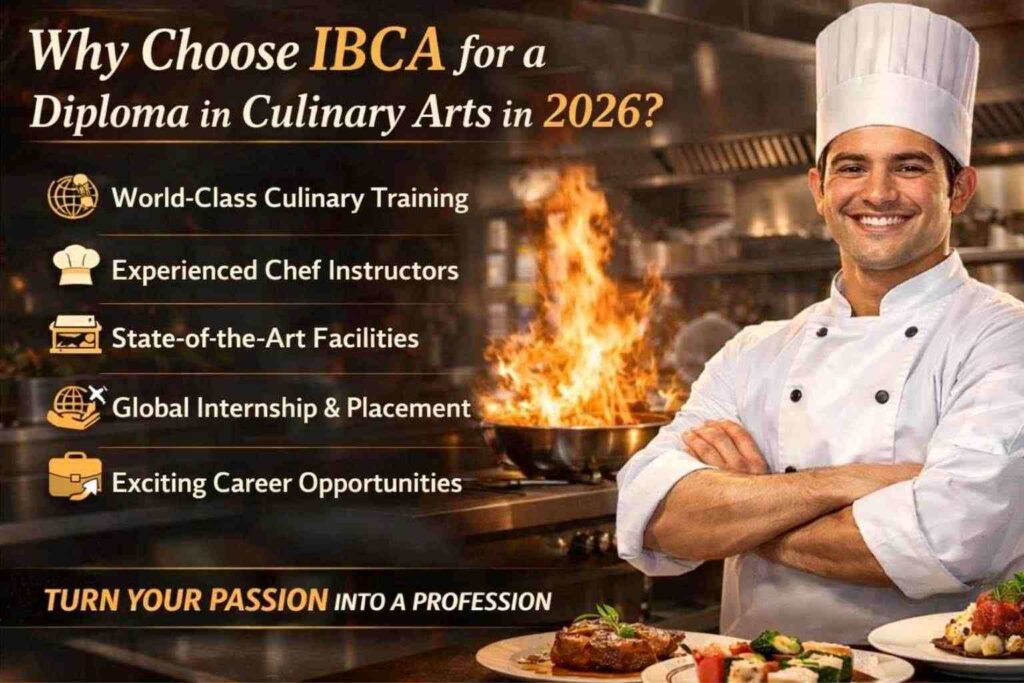
Why Choose IBCA for a Diploma in Culinary Arts in 2026?
The hospitality world is booming after the pandemic of 2020. According to the 2023 FICCI report, India’s hospitality industry is booming at an annual rate of 13.37% and will hit USD45.39 Billion by 2030. If you’re looking for a culinary career, this is the perfect time to turn your passion into a profession. So what to do? The best way is to enrol in a culinary Diploma course, learning the skills and details of the job. Now the question is where to learn all these? One of the leading institutions here is the IBCA. They are currently one of the industry leaders who deliver real job opportunities, internships at 5-stars restaurants & hotels, even overseas. IBCA provides you with expert faculty, modern-day facilities, strong industry ties, and more. But that’s not all. In this blog, we will discuss everything in detail. Want to know why you should choose IBCA in 2026? Read this blog till the end. Why the Diploma in Culinary Arts Future-Proof for 2026? A Diploma in Culinary Arts provides you with all the must-have skills, such as: Knife techniques, Molecular gastronomy, Sustainable cooking, and HACCP food safety standards. Also, a diploma course will let you master trends such as vegan menus, zero-waste practices, and AI tools for recipe tweaks. But you must choose the right course at the right institution. IBCA is one such reliable institute for rising aspirants. Its program evolves, learning from all the new-age methods while keeping the heritage of traditional dining. With all these, they prepare you for experiential dining in hotels, cruises, and pop-ups. It’s not just training, it’s your ticket to a stable yet creative career. Start Your Learning Journey Today, Turn Your Passion into a Career! Contact Us Reasons to Join IBCA’s Diploma in Culinary Course Program: 1. World-Class Faculty and Mentorship At IBCA, you learn from the very best chefs who have decades of experience in the field. Our faculties include Michelin-starred chefs and experts from Taj and Oberoi hotels. They not only teach you skills but also offer real insights to your table. The results? Real experience and real-world stories. This also ensures personal mentorship, with a 1:10 student-to-faculty ratio. You get personalised feedback on every dish. Also, there are Guest sessions from celebrity chefs that add inspiration. All this hands-on guidance ensures your Diploma in Culinary Arts develops pro-level confidence in your skills fast. 2. State-of-the-Art Facilities and Tech Integration IBCA’s has full-fledged kitchens with [50+] fully equipped stations, [20] demo labs, and VR simulators for perfect plating. For 2026, we are ready to include future tech such as: 3D food printers AI recipe generators Smart ovens For 2026, we integrate future tech. Use AI recipe generators, 3D food printers, and smart ovens that track temps precisely. This beats typical institutions. Check this comparison: Kitchen Stations 50+ fully equipped 20-30 basic Tech Tools VR/AI/3D Printing Basic ovens Sustainability On-site zero-waste farm Minimal features According to FICCI, tech adoption makes a chef more efficient, and at IBCA, we make sure you learn the modern culinary art through our immersive and innovative Diploma in Culinary Arts training. Read More : International Culinary Opportunities After Graduating from Chef IBCA 3. Industry Partnerships and 100% Placement Guarantee Culinary is a creative field, and people often come away empty-handed after completing a course. But at IBCA, we make sure that you directly go to internships at prestigious hotels and restaurants and land a job later. We have MoUs with Marriott, Hyatt, and cruise lines such as Royal Caribbean. Our students often get internships in Dubai and Singapore that build their global portfolio. Our record speaks in this regard: we have a record [98%] placement within 3 months. How? We offer partnered programs to our students that offer them a career after completing the course. 4. Comprehensive Curriculum with Global Exposure IBCA offers you a comprehensive program, such as a 12-month Diploma in Culinary Arts that covers everything a new chef must learn. The core modules teach French, Asian, and Indian cuisines. Moreover, it also includes some extent of bakery, nutrition, and live restaurant projects. But that’s not all! You also gain a global edge by learning the foreign cuisines, from street food to precise luxury meals. FICCI reports that such international exposure increases employability. That’s why the IBCA Diploma Culinary Course prepares versatile chefs ready for 2026’s diverse menus. 5. Holistic Development and Alumni Network At IBCA, cooking is just the start. We offer entrepreneurship modules, teach menu pricing, pop-up launches, soft skills over hospitality management and customer charm. Moreover, we have our special alumni community network, offering you fair job opportunities through annual job fairs and connections. For example, Raj Patel is an alumni that says, “IBCA’s network landed me at Oberoi.” Another grad, Neha Rao, says,” The soft skills module made me a leader.” At IBCA, your Diploma in culinary arts is not just cooking, it becomes a launchpad for business or management roles. Start Your Learning Journey Today, Turn Your Passion into a Career! Contact Us 6. Affordable Excellence and 2026 Scholarships IBCA courses are available at affordable prices. This helps our students get a degree without burning their pockets. The courses have everything to help them shape their career and also come with scholarships up to [50%] and easy EMI plans. The results? Students don’t need to compromise and strive for their full excellence with a promising career at the end. Conclusion The demand for true talent in the hospitality industry is rising high. In India, the industry is growing at a rate of 13.37% annually. This means more opportunities for skilled chefs who know the charm of culinary arts. IBCA’s Diploma in Culinary Arts in 2026 offers a complete comprehensive exposure to students, including personalised mentoring, cutting-edge tech, internships and placements, exposure to global cuisines, skill training, and professional networking. The course offers a detailed insight into entrepreneurship with skills such as business management, pricing, and staffing. Want to launch your culinary career in 2026? Enroll