


bakery course in delhi

moist chocolate cake recipe
Cake baking classes in Delhi

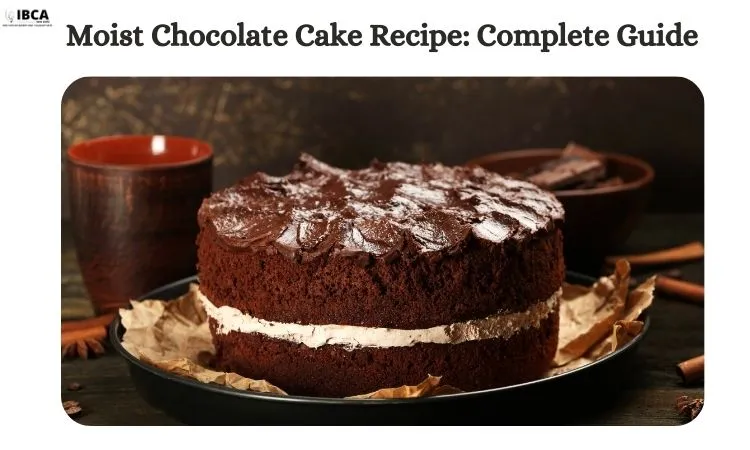
Moist Chocolate Cake Recipe: Complete Guide

Diving into the world of baking, the pursuit of the ideal moist chocolate cake is a combination of art and science. A piece of chocolate cake has the power to uplift and soothe people, and baking is a really easy way to do this. There are many wonderful cake-baking classes in Delhi and recipes out there helping everyone prepare a former taste of moist chocolate cake. You’ll quickly become addicted to this chocolate cake recipe because of its incredibly moist crumb and delicate, yet light texture. For three times the chocolate flavor, add chocolate buttercream and chocolate chips on top. Regardless of your preference for it to be moist and black, rich and chocolaty, or fluffy and light, as long as you follow a few golden rules, it should turn great each time. This blog aims to elaborate on the intricacies behind achieving that luscious moisture texture, guiding you with every pinch step of creating a decadent delight that fascinates the taste buds.  Science Behind a Moist Chocolate Cake To prepare your chocolate cake soft and fluffy, you are just required to use stuff like baking soda and baking powder called raising agents that significantly help in giving a fluffy structure. Baking powder is made from baking soda, an acid, and starch mixed. It’s something that helps make dough rise, and it has both so and basic parts to make it work well. There are certain ingredients in cake recipes, like those that I include, that could seem hard or meticulous to those who aren’t familiar with them, but when you deep down acknowledge the science behind them, everything starts making sense. The baking certificate courses conclude the science behind a moist chocolate cake, understanding the importance and role of different ingredients. The accurate and exact combination of butter eggs, butter, sugar, flour, milk, cocoa powder, and vanilla essence provides a symphony of flavors and textures, ensuring an indulgent experience.  Key Ingredients for a Moist Chocolate Cake Here are some of the key ingredients that are highly required for preparing a wholly moist chocolate cake:  1. Butter and Its Impact on Moisture Butter’s high-fat content makes it essential for hydration. It coats flour particles when it melts during baking, further hindering the production of gluten and producing a soft and sensitive crumb. It’s a very essential component because of its ability to enhance flavor. By using unsalted butter, you can easily control the salt content. I think the reason your cake can taste a bit salty is because of the salt fluctuations in the butter. Some theories claim that salted butter might not be as fresh or of higher quality. Therefore, consider using unsalted butter, but if you are finding it hard to get then you can use a bit of salted butter.  2. Sugar and Moisture Retention Sugar contributes to the cakes’ moistness by absorbing and retaining water. White and brown sugar both have their unique qualities. Therefore, choose after finalizing the type of bake you are going for. Creaming brown sugar can take a little bit longer because it naturally contains more moisture than white sugar. It also interacts with proteins, creating a softer texture. Balancing sugar levels is crucial to achieving the right degree of sweetness and moisture. 3. Eggs and Their Moisture-Boosting Properties Eggs act as emulsifiers, binding fats and liquids. The presence of proteins in it provides a structure, while their fat content contributes to richness. Eggs also retain moisture, ensuring a luscious and moist cake. Eggs is seen as a crucial component of many baked things, due to their unique properties and the important contribution that they give to appearance, structure, texture, and taste. In cakes, cookies, muffins, waffles, pancakes, and many other other goods, eggs are used as a binder. Eggs are considered the natural binders, helping hold all other baking ingredients together and increasing the viscosity of doughs and batters.  Also Read: Baking Tips for Perfect Cakes 4. Flour and Its Impact on Moisture Levels The choice and quantity of flour influence moisture retention and the cake’s density. Using the right flour in the right proportion is very essential for achieving the desired crumb texture without compromising the structure. If there is too much flour, this cake will turn dry. Therefore if possible measure the floor to add to the food scale. Otherwise, to ensure the exact amount, gently spoon the flour into the measuring cup and measure its level with a flat edge.  5. Cocoa Powder and Moisture Absorption Cocoa powder, with an intense chocolate flavor, tends to absorb moisture. If you prefer a Richer color, I suggest swapping just 10 to 15 grams of the regular cocoa powder with the Dutch process. This will offer a deeper color without disrupting the batter. Adjusting liquid levels compensates for this, ensuring the cake remains moist without becoming dry or crumbly.  6. Milk or Buttermilk for Added Moisture Milk, or buttermilk, introduces liquid content, intensifying moisture and tenderness. The acidity in buttermilk reacts with baking soda, contributing to a very light and airy texture. This chocolate cake absorbs the moisture and acidity from buttermilk. We require a mix of sour cream and buttermilk for a preferred texture and taste.  7. Vanilla Extract for Flavor and Moisture Beyond imparting a subtle Vanilla flavor, the alcohol in vanilla extract helps in moisture retention. Its inclusion enhances the overall taste profile of the cake.  Also Read: make a cheesecake recipe without eggs Step-by-Step Recipe for Moist Chocolate Cake Here is a detailed step-by-step recipe for preparing a full-fledged moist chocolate cake:  1. Tools and Equipment Begin by ensuring that your kitchen is well-equipped with essential tools like mixing bowls, electric mixers, spatulas, and cake pans. Grease and flour the pans or line them with butter paper to prevent sticking the cake at the base of the pans. Preheat the oven to the specified temperature providing a conducive environment for a perfect baking.  2. Preparation Preparation includes arranging all the required materials that are to be
Bakery Business, Bakery Institute

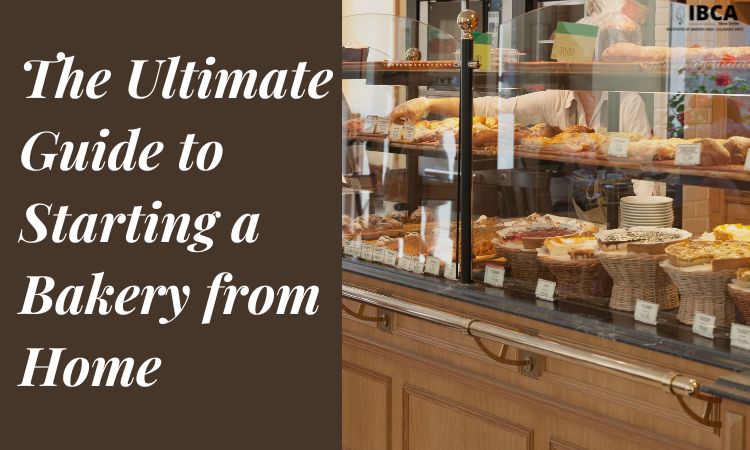
The Ultimate Guide to Starting a Bakery from Home

Do you want to start a Bakery from Home because you love baking? Making a cake for a friend or relative is one thing, whereas opening a bakery business needs thoughtful planning and preparation. Numerous elements come into play, including financial and other costs, licensing, registration, employing a group of experts, and general administration. Over the past ten years, the baking institutes in India have changed. These days, bakeries provide a wide variety of sweets in addition to cakes and pastries. In India, the home baking industry is regarded as one of the highest-paying and most successful industries nowadays. A lot of people who have a strong passion for baking have found success in their home-based businesses. A home-based business, like any other, needs full-time attention and focus for growth and better revenue. Is Starting a Bakery Business Right for You? Starting a bakery takes a combination of culinary skills, business savvy, and a sincere passion for baking delicious cookies, cakes, cupcakes, and many more items. Evaluate your baking ability and your capacity to handle the complexities of managing a baking business. Passion by itself might not be enough; it’s important to comprehend consumer preferences, market trends, and fundamental financial concepts. After you have decided that starting a bakery is a good fit for your goals and strengths, it’s time to learn how to do it with the assistance of the best bakery institute in India, from the comfort of your home.  Also, Read Career Advantages of Professional Baking Certificate How to Start a Bakery from Home Here are some of the points to consider before starting a home bakery:  1. Planning Your Home Bakery Business : Bakery from Home It doesn’t take much planning to launch a small-scale home-based bakery. But having a business plan is essential from a business perspective. This promotes improved marketing and administrative efficiency for expanding businesses. Choosing the recipes, testing them, putting up an online ordering website, marketing, and promoting the business are all part of the planning process. Make sure you complete the required licensing and registration before launching the firm. This even gets an exemption and aids in the GST computation. GST exemption is contingent upon a minimum yearly revenue of Rs 20 lakh. An important part of the bakery business’s branding is its name and logo. The company’s name and emblem serve as its public face. 2. Legal and Regulatory Compliance Before you put on your apron, there are additional legal requirements to think about when starting a home baking business. Operating a home bakery may necessitate possessing a business license in certain states. Depending on your state, you might also require a food manager license from the health agency. 3. Sourcing Ingredients and Suppliers You can acquire everything you need to carry out your offerings after you know what you’re going to bake. Make sure you have everything ready to go, including piping bags, tips, cupcake wrappers, cake tins, and various cake or muffin tins. You should also have a place to put it all. 4. Setting Up Your Kitchen Remember that some states have cottage food regulations that require keeping your bakery equipment separate from your kitchen equipment. To account for the cost of your goods when you price your menu and file your taxes, ensure to keep track of their total cost. 5. Developing Your Bakery Menu Maintaining a menu that is diverse and has a range of things is crucial. Improved abilities and methods lead to a better proliferation of home-based baking businesses. Start with the basics, in which you are always proficient and have firsthand experience. By attending workshops or lessons, you can gradually improve your skills and incorporate more recipes, tastier cakes, and a wider variety of bakery products. A well-designed menu makes it easy for clients to browse through several selections and place their orders. 6. Marketing and Promotion The next crucial stage in the bakery business plan is marketing and promotion once the recipes, supplies, and equipment are selected. There are numerous approaches to market and promote the company. Improved revenue and sales are facilitated by the company’s online presence. The initial step is to arrive with baked products prepared for sale. However, you can get folks enthusiastic about discovering your booth at the neighborhood farmers market with a little marketing and advertising. You can publish pictures and videos of your gorgeously iced cakes and pastries on a visual social networking site like Instagram. You may advertise a weekly deal to entice customers to visit your stand every week! You might even use a unique freebie to encourage customers to interact with your brand. Another venue where potential clients may see your behind-the-scenes operations is TikTok, albeit making visually appealing baking films could require a little more expertise. Remember to account for the time you devote to advertising and promotion, as well as the costs of any digital tool you pay for, into your COGS. You can also encourage your customers with a “buy 9 and get one free offer”.  7.Setting Prices for a Bakery from Home Setting prices requires much more than just looking at what your rivals charge and setting your price for your baked goods. With any money left over for profit, your baked goods may be able to pay for your labor, ingredients, and other overhead such as business licenses and farmers market fees. However, how are you going to calculate all those numbers? Therefore, do consider the following points while setting the prices of the baked items:  Conclusion Many people have become entrepreneurs and secured a reliable monthly income by starting a home-based bakery business. Numerous tiny home-based bakeries have experienced rapid growth and expansion into larger commercial spaces. Establishing a home-based baking business involves careful planning, money management, aggressive, astute marketing, and ongoing skill development.  These above pointers will assist you in comprehending and determining how to open a bakery; therefore, consider all of it before starting a home bakery. With years of experience, Chef IBCA,

Baking Tips
Baking Institute

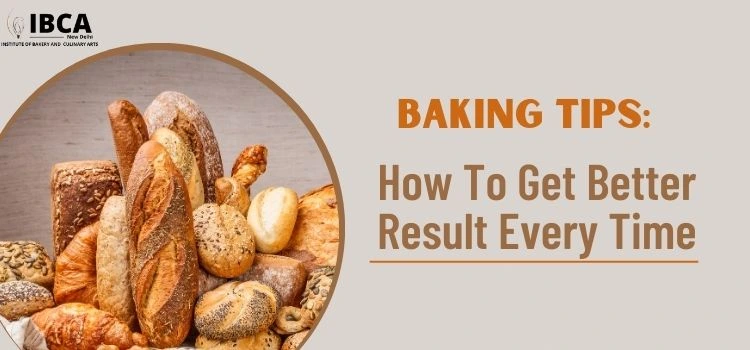
Baking Tips – How To Get Better Result Every Time

Rise & Shine! Conquer Your Kitchen With The Best Baking Tips in Town  Ever dream of those lip-smacking cakes and pastries you see in TV shows or cooking magazines? But if you don’t know how to do it, then dish out those oven blues and get started today, as we will be sprinkling some of those magic tips to get you rolling those sweet treats from your kitchen. Here are some of the best baking tips to get better results every time.  Measure Like a Pro  Of all those baking tips, we think this is the most important tip to becoming the best at baking. This is the number-one rule in baking. If possible, use a digital scale to measure all of your ingredients.  If you don’t have a digital scale, then you can use a technique called the Spoon & Level method: Spoon every ingredient into a cup used for measuring (make sure that the measuring cup is dry) and just level the cup with a straight edge. A cup of floor that’s too much can easily make your cake or pastries dry.  Measure the liquid ingredients in a transparent measuring cup and measure them perfectly according to the scale of the cup.  Become a Mix Master  While hand whisking can be a workout, a great mixer will become your BFF. It can save a lot of time, effortlessly mixing all the ingredients, and you don’t need your arm strength to mix all the ingredients. The time saved can help you focus on other things like cake decorations and other stuff.  The other alternative that can get the job done is an electric hand mixer. Although not as efficient as professional whiskers it still will work but can take a little bit more.  The Room Temperature  When a recipe says it has to be created at room temperature, do that. Cold butter cannot become cream at that moment, and cold eggs can’t be shocked and made into one batter.  The best way to do that is to leave the ingredients on the countertop and out of the fridge the night before the preparation. That will bring them down to room temperature. Bring the eggs down by putting them in warm water (not hot water) for a few minutes.  You can use a microwave to bring the butter down to room temperature. Don’t overdo it and as soon as the butter softens, remove that from the microwave. Cut it into sticks, keep rolling it in a bowl, and microwave it for 10 seconds until soft. Don’t overdo it.  Checking the Oven Temperature  Check your oven temperature to check the accuracy. Don’t open your oven if the baking time is not complete. The only exception is if you see one side of your cake or the other being cooked too much and the other side is not cooked, then you can open it and rotate the container.  Say No To Substitutions  Stick to your recipe as much as possible. We have all come to scenarios where we don’t have one ingredient, let’s put something else that tastes and feels like that, don’t do that.  There’s zero substitute for all-purpose flour, eggs, or butter. Still, there’s nobody that will put you behind bars for putting ingredients of your choice in your dessert. Just don’t alter the ingredients too much so that it ruins the taste at the end. This is where the professionals can teach you how to do it. If you are in Delhi, you can take Baking Classes in Delhi to learn the art of effortless and amazing baking.  Also Read: 9 Baking Tips by Experts for Home Bakers Gentle Hands  Think of butter as a cloud, not as a punching bag. Overmixing is the enemy of great cakes and light cookies. When you overmix, it starts to produce gluten, which will give it a tough and chewy texture, which will ruin your cakes and pastries.  Understand Leavening Agents: Baking Soda, baking powder, and yeast are the magic ingredients for the bakery world. Learn about their superpowers (leavening, gas production, and gluten development) and how to use them. Little less and it won’t work, a little more and it will destroy the whole. Use these wisely.  Adding Ingredients with Flair! Instead of just dumping every ingredient in the bowl like a big lump, try adding ingredients in little piles. Put ingredients slowly and in piles and mix them lightly when you are preparing the batter.  Prepare Pans Properly  Grease your pans properly before putting any batter into them. You can also use parchment paper if needed and preheat this paper (use the lowest temperature to heat it) before putting batter over it.  Scooping Batter With Precision This is important; use portion cups or ice cream scoops for measuring cookie dough for cupcakes, muffins, etc. The scoop gives you better consistency and it will get the job done easily. Some of the best Cooking courses in Delhi will teach you all these skills on a pro level.  Use Quality Ingredients  This is a brainer. Better ingredients, better results! Try to find the recognized brands that have been in the business of creating these ingredients for a long time. Buying a great-quality All-purpose flour or different essences, chocolates, etc can make a difference.  This is where the art of professional bakers comes in. if in the metro region, you can take baking classes in Delhi and these guys will tell you the art of buying the best quality ingredients and how to use them.  High-Altitude Baking Tips for Perfect Results When you are baking at high altitudes, you have to make some adjustments by yourself.  Conclusion  With these tips, you can hone the art of the best baker. Baking a proper cake or pastry can be difficult, but these tips can help you become the best. Also, be a professional baker and learn the art of baking from the best Bakery classes in Delhi to hone your skills. 

Scroll to Top
Call Now Button