

Baking Institute

how to start a bakery business in india
Baking Institute

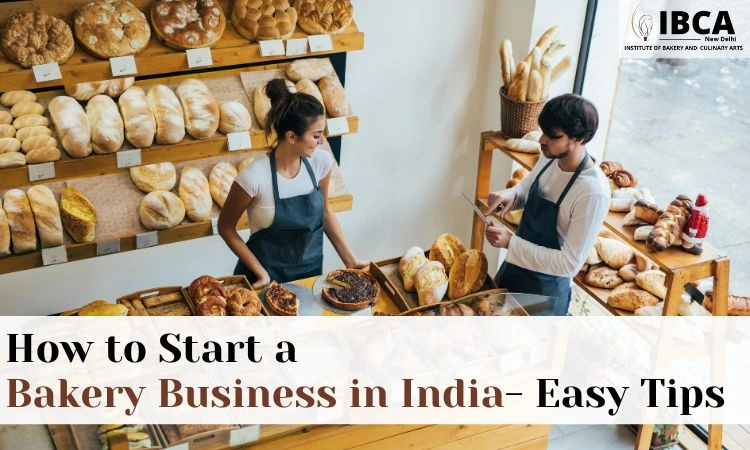
How to Start a Bakery Business in India in 2025- Easy Tips

Bakery is a very old business, existing for more than 500 years. But in recent years, bakeries & their products have gained remarkable growth in terms of business. Results people are inclining towards the taste of baked goods and making a profit by opening offline & online stores.  The bakery industry can bring a large profit to you. According to a report, the Indian market is ready to have an increment of 8.5% of CAGR between 2021 to 2026. It can reach a value of USD 12.39 billion by 2026.  This blog is a detailed step-by-step plan on how you can start your own bakery business in India after completing your training in bakery classes in Delhi.  Create a Bakery Business Plan: Before starting a bakery business, create a blueprint of your start, progress, targets, budget, and future. Focus on the following points to understand better.  Choose a Location: One of the most important factors for any growing business is its location. Find out a place in the market or near the market where people visit regularly. Your ideal place would be a high-footfall shopping street.  You should search for a 700-900 sq ft place having two floors. One, where you can cook your bakery and the other to serve & show the bakery items. Make sure that it is easily visible to the people in the market. However, you can go with different choices as per your comfort. The rent for a 700-900 sq ft area would nearly cost you an average of 30K per month.  Get All the Licenses Required: Like every other industry, a bakery also demands authorized licenses from the government. Police and food authorities can shut down your business anytime if you miss any of these licenses. FSSAI, GST Registration, Police Eating House License, Fire License, and Local Health License.  Out of all these, you must issue FSSAI, GST, and local municipal health licenses before you open your outlet. Rest you go with time and can issue them later.  Hire Manpower: Being the owner of a bakery means you need a good workforce. You need to hire Chefs, and service boys to entertain your customers properly. Ideally, the total of working people in any bakery restaurant should be 10-15 which includes Head Chef, Chef De Parties, and Commi Level Chefs.  The salary of every employee in your bakery depends on their respective experiences.  Buy all Equipment: A bakery outlet demands a complete set of equipment for making bakery goods. Notably, each piece of kitchen equipment in a bakery can be costly cause of its stainless steel long-lasting material.  A bakery outlet needs Planetary Mixers, Oven, Deep Fridge, Cooling Fridge, Working Table, Gas Stove, Cylinders, and Storage Utensils extra. Also, you can for some 2nd hand equipment if you want to save money. Although the challenges with 2nd hand equipment will come along.  Design the Display Area: There is a saying in business- ‘What you see will see’. A bakery outlet is such a place that needs a presentation. A presentation of such kind can attract people and convince them to buy your cooked items.  For this, you need to decorate the front of your outlet with attractive paints, banners, and a logo. Also, set the display area such that people notice it and walk into your restaurant. For cakes & pastries, you require a display fridge with good storage space.  Install POS: POS system is advanced management software. You can use it as a billing machine in your restaurant. Today POS software also includes inventory management system software. For a restaurant or bakery good, it is a very must tool for you. Before buying one for your outlet, make sure to double-check all its features. Its prices can differ based on the features it offers you.  Focus on Marketing: Marketing and promotion of your outlet is and will be an integral part of the business. It takes your new business to people and helps it to flourish. Get a business log and trademark it. Create a well-designed menu card for your customers. Get some pamphlets and spread them throughout the city. If possible, advertise your business on the radio. You can choose big hoardings and Google Ads too.  Decide a Staff Uniform: Uniforms are the best way to promote your brand. Simultaneously, a uniform leaves a professional effect on everyone. Make sure that all your employees wear the set dress code so that your visitors can feel a sense of professionalism. Make sure that they are hygienic, good-looking, trendy, and as smart as a professional one. You can go for smart shirts, chef coats, t-shirts, and aprons for your outlet.  Make Partnerships with Online Food Delivery Agencies: Today it is very important for any bakery to go online. An online presence helps your bakery to generate customers from all sides of the city irrespective of your location. Also, it creates awareness about yo ur outlet among the local & global people.  Also make a partnership with online food ordering companies like Swiggy, Zomato, and any local one (if any). This will increase your reach in the city and also help market your outlet and products effectively.  Conclusion: Bakery is indeed a very profitable business idea in today’s time. But before opening a bakery outlet, you must understand all the factors and create a concrete plan. Above are some of the necessary steps for anyone opening a bakery shop. You can also join the best bakery classes in Delhi– Chef IBCA to learn about the bakery and get suggestions from experts in the field on this matter.

Bakery and Pastry Classes, Bakery Institute, Baking Institute

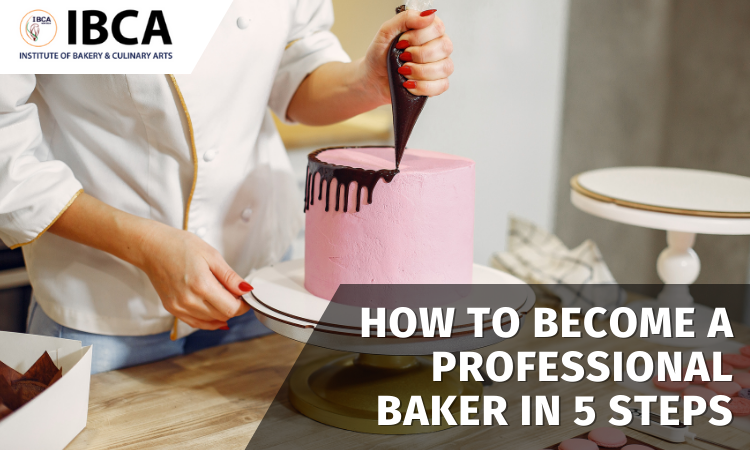
How To Become a Professional Baker in 5 simple steps.

If you dream of working in a fun, fast-paced environment with fresh-baked treats, then consider a career as a professional baker. Baking is a creative and hands-on job that involves a variety of tasks, including mixing ingredients and portioning doughs and batters. To become a professional baker, you’ll need to acquire certain skills and take the proper coursework. Learn more about how to become a professional baker in this guide. Become a professional baker by completing your education, building experience, and perhaps even looking for paid internships. Here are five steps to help you start in this rewarding career. Finish high school or equivalent Though not a requirement, the end goal of earning a baker’s diploma is to pursue a culinary or pastry school. While most vocational schools do not require that you obtain the equivalent of a high school diploma, if your local high school offers an elective that would expose you to baking and/or nutrition, that could bolster your resume as an applicant to one of these types of programs. Consider attending a culinary or technical school to become a professional baker.  Many people don’t realize that the skills of a professional baker are not learned through experience alone. Courses designed to teach students how to bake bread and cakes are offered at culinary or technical schools throughout the country. These programs teach you how to make delicious baked goods and give you an understanding of nutritional and health issues related to baking. Whether you want to open your own bakery or learn more about baking as a hobby, attending culinary or technical school may be best. You can check out our YouTube Channel. Chef IBCA   Gain experience as an apprentice or baker’s assistant Picking up an apprenticeship in the baking industry is a great way to learn and build your portfolio. During your apprenticeship, you will receive training in safe food handling practices, sanitation, and other basic baking skills. As you work under a professional baker, you’ll have the chance to practice these skills until you become comfortable enough to take on more responsibilities. And by building relationships with other bakers, you may find it easier for you to land a job as a professional baker when it comes time to move on.  Choose a specialty Baking is a profession that requires a lot of hard work and dedication. To become a professional baker, it’s best to start by gaining some experience and learning about the different types of baking. After you’ve learned how to bake and gained some practical knowledge, choose what type of baking you are interested in so you can pursue your dream career! Commercial bakers work in manufacturing facilities and use equipment to mass-produce baked goods for stores. This can be a high-pressure job where workers often have to meet strict deadlines. However, the pay is competitive, and many bakers feel that their work has a higher purpose. A retail bakery produces and sells bread, cakes, and other baked goods to its customers. They work in grocery stores or specialty shops and bakeries to produce smaller amounts of baked goods for customers. A retail baker is responsible for creating new recipes for their customers. A pastry chef is a person who bakes and decorates desserts, sweet pastries, and other baked goods like cookies. They also create the dessert menu and manage all aspects of the kitchen pertaining to pastries. A pastry chef is also a skilled cake decorator and is often called upon to sculpt figures out of icing or other edible mediums like chocolate or gum paste. Artisan bread bakers are skilled at crafting and shaping bread on a small scale. Their bread is often made with organic flour, whole grain flour, and freshly milled grains. Bakery owner– If you’ve always wanted to open a bakery, this might be the perfect opportunity. Craft bakers may open up their own bakeries to have complete control over things like the menu and store hours, which means more goodies for their customers. Pie maker-These bakers specialize in making pies. They use similar culinary skills for fillings and crusts to make the perfect pies they hope will be devoured at an upcoming event. Cake decorators are responsible for making the finishing touches on a cake to elevate how it looks. These may be custom orders or themed cakes for special occasions. Food stylists have an eye for detail that turns ordinary food into something special. They use their knowledge of photography and product styling to create beautiful photos and visually appealing food products. They’re also experts at keeping foods fresh, plumped, and professional-looking while they’re shooting. Continue perfecting your art. Cooking is an art that should be practiced with freedom, creativity, and imagination. Always be on the lookout for new tricks or continue upgrading your recipes. Creativity and vision will also give you the tools for becoming a great baker who can continue to improve and grow. Practice Regularly– To improve your baking skills, try experimenting independently. By practicing new recipes and testing different techniques, you’ll get a better feel for what works and ways to improve your baking routine. Grow Your Network– Whether you’re just starting or you’ve been in the industry for some time, joining a professional group can help advance your career. There is power in numbers, and when you network with other bakers, you gain access to hundreds of bakeries worldwide who are willing to help one another. Continue your education– It is important to continue learning and be sure that you are staying up to date. There are always new ways to bake, such as adding more flavor or making clean ingredients. Taking additional classes can help you do this, and if you want to certify your skills, you can earn a certification. Learn the trade tricks and put your skills to use at Professional Bakery Courses in Delhi. Students will learn how to bake various baked goods from scratch and make specialty cakes, pastries, and other items during

Baking Institute

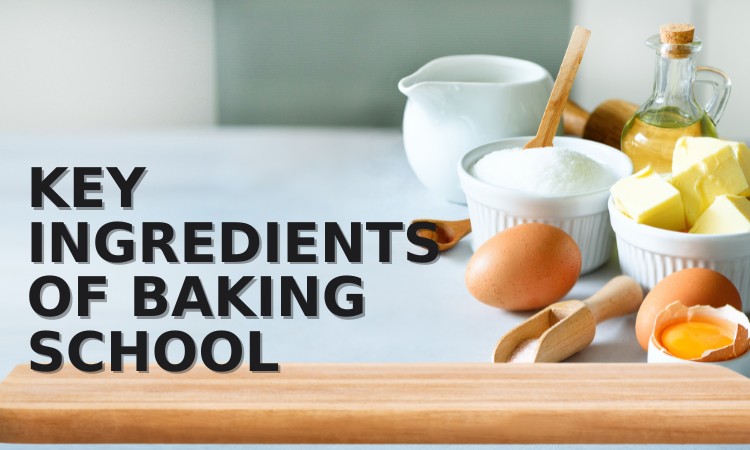
Some Key Ingredients Of Baking School

Key behind mastering a baking art. Do you know the key behind mastering a fine art like baking in a baking school? It’s the numbers and the ingredients. Yes, it requires a perfect numerical balance with the right quantity of ingredients, and you can master baking in no time. Especially if you are new to baking, I would suggest you narrow down your list with the most specific ingredients you will need to bake. Instead of bringing the list of baking ingredients and storing them in your kitchen which will only consume that extra space without much use.  So what would you like to go with? The first one of course. So let us go through the following list organized by category, such as flour, leavening, sugar, salt, and so on. These are the basic components of your baking pantry. As your baking experience grows, you’ll begin to define what’s most important to you.   Flour All-purpose Flour is the most common flour used in baking school is all-purpose flour, commonly known as plain flour. It is the flour to invest in if you just have one flour in your pantry. It is used in the majority of my recipes, be it black forest cake, puff pastry, handmade croissants, or vanilla sablés. You can also use it to make this no-knead cinnamon raisin bread. All-purpose flour can be bleached or unbleached and the bleaching process not only changes the color of the flour but also alters its pH. Bleached flour is more acidic than unbleached flour. Many people might be unaware of the fact that all-purpose flour in North America has a protein content of around 10 % and this varies depending on the brand, grain, and country of origin. Whole wheat flour is one of the different types of flour we use in our recipes at Baking School. It is also known as wholemeal flour and is made by grinding the whole grain, so there’s more fiber in whole wheat flour than in regular plain flour.  Cake flour is a finer flour with lower protein content and higher carbohydrate content. This type of flour will produce a more delicate and tender crumb and provide your cake with a smoother mouthfeel and less gluten formation. Too much gluten would make for a very tough cake. Cake flour has a protein content of 7 to 9%, which is less in comparison to pastry flour. When it comes to Pastry flour is probably the most central ingredient in any baker’s pantry. On the flour spectrum, pastry flour falls somewhere between all-purpose and cake flour. It can be used for many types of pie crusts and is great for any type of baked good. It has a little less protein than all-purpose flour, but more protein than cake flour. Because of its fine texture and high starch content, it helps to keep your pie crust light and flaky. While any-old flour will do for some baking, Bread Flour makes a difference. Made from hard red spring wheat and with two to three times more protein than all-purpose, bread flour has a high gluten content that gives structure to baked goods. Due to its high protein content, it adds structure and creates air pockets to let gas escape while baking, trapping all the delicious flavor.   Self-raising flour– It is highly popular in Great Britain. It has baking powder and salt already added to it, so when you bake with self-raising flour, you don’t have to add any chemical leaveners or any salt. If you don’t have access to it, you can make your self-raising flour: for 1 cup of self-raising flour, blend 1 cup of all-purpose flour, add 1 ½ teaspoon of baking powder and ¼ teaspoon of salt (or ½ kosher salt) You might be wondering, “do I need to buy another bag of flour for this new recipe?” Well, you only need to know about alternative flours and how to choose the right one for any recipe. These alternative flours aren’t as widely utilized in baking recipes, I recommend buying them in small quantities from your local store. Or you can easily invest in a 5-kilo bag of all-purpose flour because you will use it in almost every recipe you make! Fats used in baking schools Vegetable oil with a neutral flavor that can be used in recipes as well as to grease baking pans. Butter- It reacts with leaveners to make pancakes and biscuits fluffier and more tender. Look for shelf-stable powdered buttermilk if you don’t want to keep it in the fridge all the time.  Shortening It is a solid vegetable fat used by some cooks either to replace butter or in combination with butter to make tender baked goods like pie crusts. Butter is mostly fat, but also has about 15 percent water, as well as milk solids. Shortening has a higher melting point compared to butter, so cookies made with shortening tend to keep their shape better.  Leaveners You can tell when a cake or biscuit is light and fluffy because tiny gas bubbles have made it rise. These bubbles are created by leaveners, which cause chemical reactions in baked goods that fill them with air. There are two kinds: Chemical and Biological. Sodium Bicarbonate, better known as baking soda, is a chemical leavening — when activated by heat, it produces gas bubbles that cause baked goods to rise. Baking soda works best alongside acid ingredients, like yogurt or buttermilk. Baking Powder is a leavener used in baking. Baking Powder contains Sodium Bicarbonate (Baking Soda), but it already includes the acidifying agent, so it only needs a liquid to become activated. It can also be called double-acting baking powder because it releases one burst of gas when liquid is added, and another when exposed to heat. Yeast is one of the two main leaveners in bread and pastries; chemical leaveners, such as baking soda, are the other. Yeast and chemical agents rely on different mechanisms for making

Baking Institute

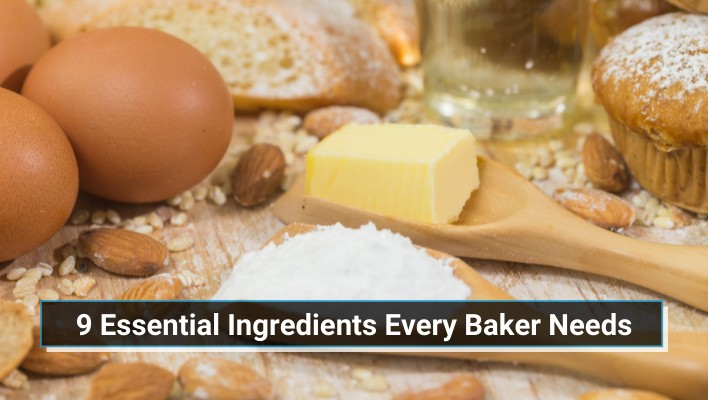
9 Essential Ingredients Every Baker Needs

Flour Most baking recipes call for flour, often known as all-purpose flour or maida in India. It’s sold in branded packets and by the kilo in Kirana stores and supermarkets. Skimming the bran and husk from wheat flour, eliminating the fibre content, and leaving a fine, smooth flour is how maida is made. Because maida is such an important component of any dish, it should be of excellent quality. Self-raising flour is sometimes confused with maida/all-purpose flour. Self-rising flour is made with raising agents like baking powder and a teaspoon of salt, whereas maida is just flour. Baking, as we all know, is a science, therefore sticking to the recipe to the letter is essential. Use all-purpose flour as instructed in your recipes. Leaveners Baking powder and baking soda are two essential ingredients in any baker’s cupboard. Yes, because they work in distinct ways, you should have both. A short version of a long story: Baking soda is used in recipes that contain an acidic ingredient (such as sour cream, buttermilk, vinegar, or citrus), whereas baking powder has its own acid. It’s also a good idea to keep some cream of tartar on hand. Add yeast to your shopping list if you want to bake bread. All of these can be kept on your pantry shelves at room temperature. Eggs are another important leavener. Eggs have a shorter shelf life than other foods, but they’re so versatile that they should be on your regular buying list nevertheless. Stick to large eggs for baking, and keep them refrigerated (of course!). Sugar When sugar is listed as an ingredient in a recipe, it refers to granulated sugar. This type of sugar is made from the juice of sugarcane or beets and has been stripped of its natural molasses. It can then be refined to look white. The tan color of raw sugar is retained. Powdered sugar, also known as confectioners’ sugar, is ground into ultra-fine particles and mixed with starch to prevent it from caking up in the package. Confectioners’ sugar is used in frostings and icings by bakers. Also, a light dusting of confectioners’ sugar makes everything look a little nicer. Brown sugar is refined sugar with the addition of molasses. The color and flavor of light, medium, and dark brown sugars are determined by the amount of molasses in the mix. Brown sugar can clump up and even form crystallized lumps due to its molasses content. This can be avoided by properly storing brown sugar. To measure brown sugar for a recipe, firmly crush it into a measuring cup or spoon until it’s completely compressed and level. Sugars at the next level Castor sugar, sometimes known as superfine sugar, is granulated sugar that has been ground into tiny crystals that dissolve quickly. Some bakers like to use it to produce meringues and sweetened whipped cream because of this. It can be used in place of conventional granulated sugar at a 1:1 ratio. Sanding sugar, also known as decorative or coarse sugar, is simply larger granulated sugar crystals used to add a crystalline finish to baked goods. Every color of the rainbow is available in decorating sugar. Collect all of them! Date sugar, coconut sugar, maple sugar, honey, molasses, maple syrup, cane syrup, and agave syrup are some more natural sugars and sweeteners to keep on hand. Salt In ordinary baking, you’ll use granulated table salt. Because plain baked items can often have an unpleasant flavor, some bakers choose to use table salt that hasn’t been iodized. When measuring salt for a recipe, use table salt. salt of a higher level Sea salt is made from evaporated seawater and has a gritty or flaky texture depending on where it comes from. To offer your taste receptors more than one reason to adore what’s going on in your mouth, crunchy, flaky sea salt is frequently sprinkled over sweet baked items. Flaky sea salt should be used as a finishing salt rather than a measurement salt. Dairy Many wonderful baked items call for sour cream, yoghurt, or buttermilk, but plain old milk—2% or higher—is the must-have dairy for baking (whole milk is preferable). You can replace a lot of other dairy components with milk as a foundation. For example, instead of a cup of buttermilk, prepare soured milk by combining 1 tablespoon vinegar or lemon juice with 1 cup whole milk, then allowing it to thicken for 5 minutes. Cream cheese isn’t a must-have, but it’s worth stocking up on because it’s beneficial in a variety of dishes, doesn’t have a convenient substitute, and has a long shelf life. It’s also a good idea to have a can of evaporated milk on hand; it can be used in place of heavy cream in most recipes (but it can’t be whipped!). Fats: Oil and Shortening Fats that are essential Vegetable oil with a neutral flavor that can be used in recipes as well as to grease baking pans. a stick of butter  Fats of the next level Shortening is a solid vegetable fat that some cooks use to make tender baked goods like pie crusts, either as a replacement for butter or in combination with butter. Because shortening has a greater melting point than butter, shortening cookies hold their shape better. Extracts and Flavorings Extracts and flavorings in their purest form Pure vanilla extract imparts a warm, spice aroma and flavor to baked goods. It comes in liquid and pastes forms, and a little goes a long way. Don’t buy the imitation vanilla because it won’t make a difference in your baking. Learn more about pure vanilla extract and why getting the real thing is worth it. Extracts and flavorings for the next level There’s a whole world of pure extracts and flavorings to discover: almond extract, lemon extract, mint extract, rum flavoring, brandy flavoring…the point is, there’s an entire world of pure extracts and flavorings to discover. However, don’t run out and buy them all at once. Simply add to your collection

Bakery and Pastry Classes, Baking Institute

9 Baking Tips by Experts for Home Bakers

Baking is a combination of science and creativity, it’s not all about just following a recipe. It’s about mastering the technique and paying attention to details in order to achieve a perfect result. It’s very important to have a solid understanding of your ingredients, tools, and techniques. This expert’s guide from the top baking classes in Delhi provides you with the expert insight and practical tips. 9 Proven Baking Tips from Experts to Avoid Common Mistakes Here are the expert baking tips to help you avoid common mistakes and achieve perfect results every time. 1. Recipe – Read and Repeat It is preferable to read a map before laying the foundation for a house. It is not always sufficient to just read a recipe before preparing a dish. It takes a lot of repetitions to do it right. Misconceptions can occasionally spoil a perfectly prepared dessert in the blink of an eye. You don’t want to be Rachel and put beef in the trifle. If you are unfamiliar with your dessert, it is safe to look for the pages. It’s best if you read it from beginning to end. Going over the ingredients first is the best method to read a recipe. Make sure you have all of them on hand. After that, follow the steps. Fun fact: In any recipe, the ingredients are always placed in the correct sequence. As a result, follow the rules. The ingredients are listed in order to assist us in determining the sequence in which they should be added. 2. Know your Tools The next step is to gather the necessary components and tools. In the event that an ingredient is unavailable, make sure you utilize appropriate supplements. Make sure the ingredients are prepared and the utensils are clean. On any of the tools, there should be no dirt or, even worse, wetness. It’s important to remember that it only takes a little to damage something. It’s impossible to be too cautious. Use dry measuring cups for sugar, salt, and other dry substances, and liquid measuring cups for liquids like water, milk, and other liquids. This provides you a good idea of how much was used. Another simple but effective strategy is to keep a dish beside you and empty the contents into it. In a hurry, a bowl beside you can be a relief instead of walking back and forth to the trash can. It can help you save time and effort. 3. Room Temperature If the recipe specifies that the components be kept at room temperature, do so. If items such as butter are requested at room temperature, double-check their legitimacy. It is not a good idea to use frozen butter instead. Eggs, milk, butter, and other dairy products should be kept at room temperature for a reason. They trap air at room temperature, which causes the component to expand in the oven, making it fluffy and soft. If the ingredients aren’t at room temperature or are frozen, it won’t work. There are backups in case you neglect to remove the items in the requested criteria. If you neglected to take out the melted butter and are asked for it, grate it. It will quickly melt. Put eggs in a bowl of hot water if you forget to take them out of the refrigerator. However, only use these shortcuts if you neglect to follow the recipe’s instructions. Some recipes call for frozen components as well, so check the directions carefully and adhere to the circumstances. 4. Learn the Differences Sugars and flours come in a variety of forms. You must understand the distinctions and how to apply them correctly. When it comes to sugar, there are many different types that are used in cooking and baking. For example, powdered sugar dissolves rapidly in liquid, making it great for frosting, and desert pearl sugar does not melt in the heat. There is also a large selection of flours available. They are utilized for a number of functions and have varying degrees of importance in various recipes. In the same way, as there are different baking flours available on the market for different purposes, there are different baking flours accessible in the market for different purposes. For specific foods, it’s critical to utilize the correct baking flour. Baking can be done with all-purpose flour, whole wheat flour, gluten-free flour, or bread flour. Cake and pastry flours are also available. Cake flour has the least amount of proteins, according to studies. It is tender as a result of this feature, making it suitable for baking cakes and muffins. To achieve the greatest results, make sure you’re using the proper flour. Also Read: Baking Blunders: 12 Common Mistakes to Avoid 5. Prepare the Pans Follow the recipe’s instructions to the letter. If it says to use oil to grease the pan, do so. Use the recommended amount of oil to coat the pan. If you’re going to use parchment paper, be sure you prepare it properly. On a wide piece of parchment paper, trace the bottoms of the cake pans. Then, using butter or nonstick spray, lightly grease the cake pans. I normally use a coconut oil nonstick spray that contains a small amount of flour. Place the parchment round inside, and then grease it as well. Cleaning out with parchment paper might also be beneficial. Cleaning the pan with parchment paper is easier than scraping a scorched pan in the sink. 6. Mix well Some recipes call for mixing the ingredients one by one, some for folding them in, and yet others for mixing them all together. So, it’s best to be safe than sorry, and don’t try to mix all of the components at once. The outcome will be unfavourable. Slowly and carefully add the ingredients as directed in the recipe. The components should not be undermixed or overmixed. Over-mixing batter, whether for cakes, cupcakes, bread, Since all the air has been deflated and the gluten has been over-developed, muffins or other baked

Baking Institute

Challenges Faced While Baking a Cake

A cake is something that we all love. Cakes even stay as a friend in need with us during our good times like a birthday or marriage or even in bad times like heartbreaks or mood swings. Baking cakes can be a real treat as well as a very easy task if one knows the method well. Also, with the advent of new technology making cakes have become anyone’s forte. Moreover, you can always enroll in one of the top bakery schools in India to learn the nitty-gritty of baking a perfect cake and please your near and dear ones. However, there can be a few common mistakes, that can ruin one’s mood of baking or eating the cake: TOO DENSE: If a cake comes out very dense from the oven that means it simply did not get enough air in the batter. Now, you need to find out ways to get the air back into the batter to make it less dense. Here can be a few solutions that might help. Firstly, you need to beat the batter as long as it makes the mixture nice and fluffy with good consistency. Secondly, if you use oil instead of butter, make sure to mix the batter well and let air bubbles form well. Thirdly, another reason of dense cake can be bad leavener. If your baking powder or baking soda is really old and expired, it can cause problems. Fourthly, the usage of too much flour can make the cake dense. Use gluten-free flour instead of all-purpose flour as heavy gluten can weigh the cake down. And lastly, preheating the oven for at least 20 minutes before pouring the cake batter in will make the cake nice and fluffy, as preheating the oven a little helps the baking soda and baking powder to work well. CAKE OVERFLOWS: How much batter to exactly pour is a real confusion to many. Pouring a huge quantity can lead to a cake explosion as the cake fluffs up when it is baked. A great hack will be to fill the cake pan halfway to two-thirds of the way up the sides of the pan to get the perfect cake. A SUNKEN CAKE: Your cake may look picture perfect through the oven, however, your smile might completely fade away while taking the cake out of the oven and cooled as the cake might entirely collapse by sinking from inside. This is actually because even if the cake might look done from outside, the insides might have remained uncooked still. The best solution to this problem would be using a knife or toothpick but putting it through the middle of the cake. If the object comes out clean, that means the cake is well cooked. Cakes might also sink because the oven might not have attained a proper temperature before baking. Another hazard might be opening and closing the oven door too frequently to check whether the cake is done well. Such a deed can make the temperature go up and down too fast for it to cook well all over. Also, a good fluffy cake might not happen if the ingredients are not in the right amounts. If you are short of an egg or proper flour, the cake might not be held firm enough to hold. STUCK TO THE PAN:  Even if the cake is baked fine it might be a great hustle for you to take the cake out of the tray to eat. There can be several instances when the cake might get stuck completely, to the edges and the bottom. However, if you grease the baking tray well with oil as well as flour properly, the cake will come out perfectly without anything getting attached to the tray. Another good method will be placing parchment paper in a circle at the bottom of the cake pan that will separate the cake and the tray even after baking. Now if you are wondering how to take out the cake well even if somehow you could not follow the steps before, just place the stuck cake bake in the oven for about one minute. This will make the cake come out easily due to the heat, which will separate the two. CRUSTY EDGES: The cake of your dream might become a nightmare if it gets crusty edges. These edges can be very crunchy and burned. This might be caused due to oiling the pan too much. Too much pan spray or over-greasing the pan is the main cause of the edges getting fried. CAKE BATTER IS TOO STIFF: If it appears to you that mixing the batter is a herculean task as if it feels like mixing cement, the reason actually might be adding too much flour. The stiffness and sticky batter is basically due to excessive adding of gluten through the flour getting mixed. On top of that, if the batter is over-mixed, gluten will get developed more and more. Thus, measure the flour correctly and stir the batter smoothly. FRUIT FALLING TO THE BOTTOM: If you are aiming to bake a delicious fruit cake you might come across this problem of the fruits falling to the bottom of the cake. Mixing fresh fruits with the old cake batter causes this hazard. Also, the batter should have the perfect amount of flour to be sturdy enough to hold the fruits as the fruits tend to be heavy and sink to the bottom. If the batter is too light and fluffy as you make while preparing a chiffon cake, it will not be able to hold the fruits. Another way of equal distribution of fruits all over the inside of the cake would be chopping the fruits into small pieces as it will make the fruits sink down especially in the case of large, moist, and heavy fruits like strawberries, berries, grapes, and many more. For the best help, do enroll in a bakery institute in India. CAKE SIDES CAVING IN: If

Baking Institute

Are You Looking For An Institute To Enroll For Cake Baking Classes in Delhi?

Cakes are generally delicious and we love to have them a lot on every special occasion such as Birthday Parties, Anniversaries, etc. Everyone of all ages would love to have a cake on any auspicious day because of their delicious taste and its part of almost all kinds of cuisine. But the problem is that many can’t bake cakes at their home as they don’t know how to bake the delicious foods. One needs to learn from professional bakers to make awesome cakes on their own. To learn baking you need to have a lot of practice under the guidance of an expert. Joining a baking class can help you learn the art of baking various kinds of cakes and their recipes. Not just baking a cake but also you will learn how to decorate them in a beautiful manner so that the cake just doesn’t taste delicious but also looks awesome. As you will have the attention of senior bakers they can easily correct your mistakes and help you learn easily. Baking can be learned by anyone irrespective of their age and the only thing you need to have a passion for baking delicious cakes. During the baking classes, you will learn and practice baking different kinds of cakes, decorating them in a beautiful way as a part of the course curriculum under experienced baker guidance. They will teach you both modern and traditional methods to prepare cakes. The advantages of joining and completing a certified bakery course are that you can Choose to start your career as a professional baker because of its growing importance in the hospitality industry Start your Entrepreneur Journey establishing own bakery or cafe business Bake cakes as a hobby as well But you need to choose the right cake baking classes institute to enroll in the classes. In this article, you will learn some factors that need to be checked before joining a baking class. These can help you choose a better institute in a smart way: Infrastructure: Baking is an art that needs to be learned by practice. And infrastructure is important to practice baking in a proper manner. Without proper infrastructure in place, you can’t move ahead and learn baking. Good institutes have up-to-date technology baking devices to help their students progress in their journey to learn baking. So it’s an important factor to consider which is helpful to choose the right institute for you to enroll in the baking classes. Experienced Bakers: When you plan to join in baking classes, know more about the chef. A Well-experienced chef can teach you better and make you learn it in an easy way. They know where a student generally gets stuck and help you overcome it in an easy manner. Especially in baking, you need good attention from the chef so that he can correct your mistakes during the practice sessions and help you improve baking skills. So before joining in baking classes, it’s better to learn about the Chef who is conducting the baking classes. Official Recognition: While you are choosing the baking institute to enroll then you must check if the institute has any official recognition which directly indicate the quality of education, infrastructure, etc. Every aspiring baker needs to check Whether the institute has any official government recognition or not.  If they are affiliated to any reputed university If they are offering certification after completion or not as it could be useful for a professional career in the baking industry. Placement Facility: This is most important, especially if you are joining baking classes to start your career as a baking professional. With the growing demand for skilled baking professionals in the hospitality industry, it can be a good career option. So you need to inquire if they provide placement services and how many got placed from the previous batches to get an idea. Knowing this information can be quite useful in deciding between two or more institutes. Course Curriculum and Pricing: You need to know the details of what you will learn in the baking classes such as whether you will be taught only baking cakes or any other items such as muffins, cookies, etc also as a part of the course curriculum. So if you are learning more items as part of the baking classes then it’s an awesome choice to choose a particular institute. Conclusion: Baking is a creative art that needs a lot of practice. So before choosing any institute for cake baking classes in Delhi, try learning more information about them regarding the factors discussed above. As experienced bakers in the institutes like Chef IBCA can guide you to become skilled enough in a period of time. Learn baking with a good amount of practice and get certified so that you can start a bakery business or join as a professional baker in luxury five-star hotels as there many opportunities for skilled bakers.  

Baking Institute

How Pastry Courses for Beginners Are Helpful To Every Aspiring Pastry Chef

Pastries are often delicious and used as a crust for other foods like Pies etc. They are generally made using flour, water, and solids. The major difference between bread and pastry is that pastries have a high fat content unlike the bread. Making pastries just does not mean to bake but also decorate them. So it’s an art to make pastries for which you need to have both creativity and ability to research on various combinations of ingredients to get unique flavors. Pastry Chefs have a good role in both the baking and cooking process along with the authority to guide bakers. So if you want to become a pastry chef you must join the pastry courses for beginners. When you become a certified pastry chef, you can start a career as a professional as there is good demand for people with skills in the baking industry or start your own pastry and bakery business. How Pastry Courses Are Helpful To Become A Pastry Chef In Short Time? When you join a pastry course in the right institute, you will learn everything from the fundamentals of baking. As a Beginner, Pastry courses help you learn more details about the latest technology kitchen tools, ingredients, etc which you might have never heard in the past. For example, while using ingredients you must know the purpose they are used for, their nutritive values and the ratios of weights in which you need to use the ingredients to obtain a particular taste. These things are very important to know as a pastry chef as even small variation will damage the taste. Learning on your own without guidance can be a huge waste of time as you don’t know what to do next resulting in a lot of confusion. At the institutes, the detailed curriculum is planned ahead and you will be able to learn everything step-by-step unlike when you plan to learn on your own. Remember baking is not just about theoretical knowledge but more of practicing what you learned. When you try to learn everything on your own then there will be a lot of mistakes as baking is more about the practice and such things which will not be noticed by you or you don’t know how to correct the mistakes you make. Expert chefs will help you in making the common pastries such as shortcrust pastry, puff pastry, flaky pastry, choux pastry, etc with the standard recipes. Also, you will used to work with a lot of care and attention while making delicate pastries or layered cakes which are also taught in the course. Apart from baking, other skills such as how to communicate with fellow bakers, working as a team, etc will be an addition for your skillset.  In the pastry course, the experienced chef’s will figure out the mistakes easily and suggest the ways so that you don’t repeat them again. Due to these practice sessions under experts, you will be able to make awesome pastries with no faults over the period of time. Conclusion: I hope you have understood how pastry courses are helpful for beginners to become a pastry chef. Joining the right institute will help you learn the art of making delicious pastries in a period of time under the guidance of an experienced Chef. Chef IBCA(Institute Of Bakery And Culinary Arts) is a leading bakery and pastry training institute in Delhi. IBCA is founded by Mr. Balendra Singh who has more than 18+ years of experience in the culinary industry working with various top hotels in the country. Chef IBCA is affiliated to City And Guilds, London with a  goal to produce International Chefs with its courses. If you want to become a Pastry Chef then enroll in the 12 months Professional Pastry Chefs Programme Courses.  

Baking Institute

Is Becoming a Bakery Chef a Good Career Choice in India?

When we generally talk of the bakery, a lot of mesmerizing products comes in our mind. Cakes, doughnuts, biscuits, chocolate cookies, and many more that are favorite in our daily life. Bakery Chef are quite popular in crafting these modern products with their creativity and presentations. There was a time in early 2000 when Bakery professionals were looking for job opportunities in abroad to fulfill their better prospects in the future. But with the growth of tourism in India, many Hotels and bakery establishments were set to meet the demands for the foreign clientele. Now with a modern population of India making a taste for Bakery delicious products, there are huge opportunities for professionals to grow in this market of billion population. Recent trends have shown that Bakery Chef is among the most popular creative and earning field for new age professionals. Bakery Profession – A Brief History Bakery goods have been part of the food industry since their evolution. With the culinary improvements, there was parallel growth in their methodologies too. At the beginning of the 20th century, it was now seen as a completely separate branch from Food production and an era of Bakery products started. New bakers used their creativity to add colors, styles, and shapes in their products to further attract more customer. With the end of the colonial era, many of these bakery products especially cakes, bread, doughnuts, brownies, etc were now used in celebration with weddings, birthday cakes, anniversaries or enjoy the business events. Now with modern evolution these bakery and similar establishments become commercial. Many companies have set corporate products that cater to a large population and have large warehouses where bakers are in a lot of demand these days. Now there are courses available in the education curriculum that offers sophisticated guidance for students and learners to kick start their careers in Bakery. Chef IBCA is a premium institute for the learning curve in Bakery; taught with top industry experts for giving students the right platform from their beginning. Scope and Career Prospects There are numerous opportunities for Bakery profession in India. Many Hotels and restaurant are there where professional bakers are required to meet their daily requirements. Most of these establishments have their hierarchy for the Bakery section under the Food production department. From trainee to executive chef each position comes up with different role and responsibilities. Many Hotels and restaurant go for taking interviews in the top institutes and campus placements. Students and learners must try to maximize their opportunities for grabbing the best positions in the industry. An effective beginning can give students the right path for building a smart career in Bakery. Learning with experience, creativity and discipline are the qualities that students must acquire to have a long sustainable career in Bakery. Even with skills and experience many professional go on to start their Bakery, selling products to direct customers. Many ambitious bakers plan to use their skills to self-entrepreneurship and launch their brand in the market. There are also other options as a Cookery Show Host, Event and Wedding Caterer, Writing with Blogging and Journalism, Restaurant Manager and regular positions in Cuisines/Railways/Airlines Bakers. What is the difference between a baker and a pastry chef? Generally, anyone who works in a Bakery establishment is termed as Baker while a Pastry Chef is more an expert position with expertise in Sweet dishes and better pay-grade. Also Read: Tips to Improvise your Next Batch of Cookies There are a lot of products made in traditional bakery arrangements with Bread, pastries, pies, rolls, cakes, quiches, several savory and sweet dishes. When you are working in a bakery it is common to work on a mixture of these multiple products on a single day. Basic preparations of these bakery items should be known to a Baker for earning a specialization in the future. For an amateur and beginners level bakers, it might involve long working hours, basic skills, learning and taking the experience from other senior-level experts. While a Pastry Chef is more of a high up position in the Bakery Hierarchy with a management position. Although job responsibilities will vary from establishments to establishments, still they are the one with profound expertise in the production of dessert products and deals with presentations to enhance the user experience with their skills. Although you might find them working with bakers all the time and guiding trainees to teach them on the advanced skills. How much does a bakery chef earn in India? In terms of income, it is tough in the beginning with trainee Chef earning Rs 10K to Rs 15K per month. Once you have the understanding of your work and industry your salary will gradually rise to Rs 40K to Rs 50K with experience ranging from 5 to 10 Years respectively. By acquiring skills and experience you can get the topmost positions as Executive Chef of Hotels and Chains to earn high packages with more than Rs 1Lakh per month. Corporate Chefs can earn around 5 to 10 Lakh depending on the size of the hotel chains. While many of these experts use their creativity and open their local bakery shops to sell their products directly to customers. Once the products and name get recognition in the market then they can millions with their business to form new franchises in the country. Conclusion Bakery as a profession has lots of opportunities in Food industry but requires organized structure for acquiring top positions in the establishments. Like every profession, Bakery follows a hierarchal structure in giving step by step growth for the professionals. A well-planned course with practical guidance and theoretical approach will put on the right path for their subsequent career growth. One has to be creative, have learning aptitude and acquire perfection over time to achieve tremendous height in their professional field. At the Institute of Bakery and Culinary Arts (IBCA), we are affiliated with City and Guild (UK) for offering you an international structure learning with Level

Baking Institute

Professional Baker – A Modern Art in Making

As one of the evergreen field Bakery attracts thousands of youngsters every year for carving a successful career. With modern age and equipment, many advancements have transformed this Bakery into an art of its own. Famous around the world for its own look, rusty, flaky, sweet and salty taste, the bakery has carved its own uniqueness with taste and flavor has become a global phenomenon. Cakes and desserts with their assorted colors, decoration and their preparations on special occasion are now celebrated across all the countries. A customer enjoys Bakery dishes for their tempting look, amazing taste in the mouth and a feeling of wholesomeness. In Baking, products are made from dry heating done in oven and desserts that are refrigerated for their perfect finish. A lot of natural factors also have a profound effect on the overall dish result i.e, temperature, humidity etc. Traditional manual methods are now being replaced with modern automated machines. Although their results, conditions and results remain the same but with higher consistency as well as performance. Innovation and creativity are driving Professional Bakers to add newer and better ways to present dishes. At our Institute of Bakery and Patisserie Art Delhi, we welcome every aspirant to build their own future with comprehensive bakery courses. Our Professors and instructors are highly skilled & trained to bring on their expertise in building your initial path for building a learning curve in Bakery with sophisticated guidelines. Step by Step Guide for Starting your Career in Bakery Bakery profession requires one to have specific skills and work understanding of their daily activities. Although there is no pre-requisite for starting training in Bakery but with modern advancement and certification, it is must that you apply for a professional course in earning the right potential from your respective skills. There are numerous bakery dishes, traditional methods, modern creativity, and trending styles that one needs to have a learning knowledge now to get on the right platform for beginning training in 5 Star hotels or restaurants.   Bakery is unique and different from the culinary learning process as it focuses on specific methodologies only. And IBCA as one of the premium Bakery Institute in Delhi offers your the path for succeeding this career. They are accredited with City and Guild (United Kingdom) Level 3,  Tourism and Skill Council(THSC), and National Skill Development Corporation(NSDC) for guaranteeing you with national and international opportunities for scale newer heights in your career.   Our Admission Process requires one to have thorough guidelines of their course curriculum, internship program and respective training & placements from IBCA. Applicants need to have attained minimum requirements as detailed out in brochure subject to a specific course. They need to book their seat with our counsellor. Students must come at our premises for aptitude test and personal interview for final clearance for their admission procedure to go through. Our admission team and counsellors will make effective communication in offering you help in each step. Attributes for Becoming a Professional Baker As a Baker, you need to have the right personal attributes that will be helpful in developing your skills and experience to become a renowned individual. To make a successful career in Bakery you need to have the following attributes for building the right personality. Understand their personal job description, roles and responsibilities Be Disciplined, hardworking, and have the appropriate management skills Have Proficient Basic fundamentals for Bakery Effective Use of each Bakery equipment Excellent numerical skills for calculating bakery ingredients, temperature control Acquire Physical Strength and Stamina to work long hours at highest Skills Maintain highest Safety, Hygiene and aware of the corresponding environment Able to work in a team for better and time efficient solutions Aptitude for learning even with high experience A lot of daily activities for Professional Baker depends on the organisation they are working for. But their Basic roles and responsibilities of a Professional Baker remain the same with few adjustments. Checking and Planning for the whole day activities as per your allotted schedule in the establishment. Working on inventory control, writing and checking ingredients need as per the demand. Preparing the raw materials for their effective use in the recipe, mixing things together at right condition, temperature and as required in the whole dish Rolling, shaping and baking the final product in the oven for serving customers with proper presentation Checking and Maintaining Oven for baking purpose Acquire the power of observing with experience & make changes whenever required for colour, shape and consistency. Ensuring all the safety guidelines, protocols and industry best practices are utilised at their optimum standards. If you have the passion and enjoy making those crafty looking bakery products then you must apply at IBCA for suitable Baking Courses in India. Future Prospects for Career in Bakery Being part of the artistic field there are specific prospects and profile on which Bakers work. There is a huge demand in the Hotels and restaurants for skilled bakers at varying positions. Choosing the right course can lay down the foundation of your successful career ahead. Early apprentice, job trainee, and internship provide complete know-how for the Bakery profession. They also have the option to open their own bakery to start their own business. At plant or wholesale manufacturing units, bakers need to work on a large machine with mixers and ovens. Producing goods in large quantities for supplying in multiple shops, vendors, supermarkets catering to a large pool of audience. Small Entrepreneurs or Bakery Owners have a retail store in the market where there are a lot of demands. Mostly trained and experienced bakers find jobs in these spaces with work on automated machinery.  There are also few specialities bakery options that one can find to showcase their skills to the general public. Bakery Chef, Cake Specialist, Pastry Chef or Patisserie Specialist, Bread Experts, Confectionary Baker, with Institutional and Cafeteria Bakers are some of the Job titles for this craft found in the industry where they can further grow to increase

Scroll to Top
Call Now Button