


Baking Institute

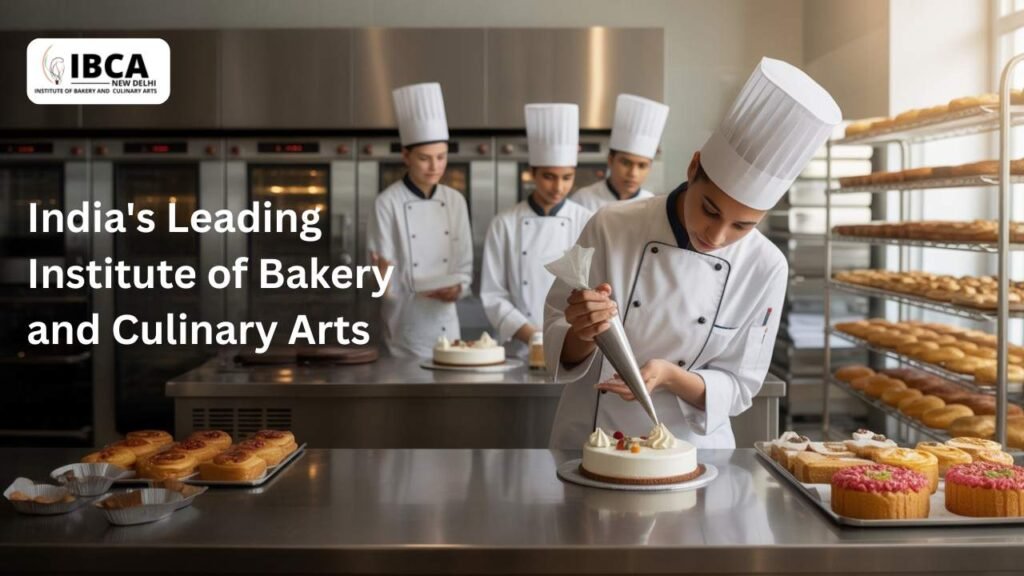
india leading institute of bakery and culinary arts
Bakery Course, Bakery Institute, Baking Courses, Baking Institute, Cake baking classes in Delhi, Culinary Institute, Diploma in Pastry and Bakery, IBCA

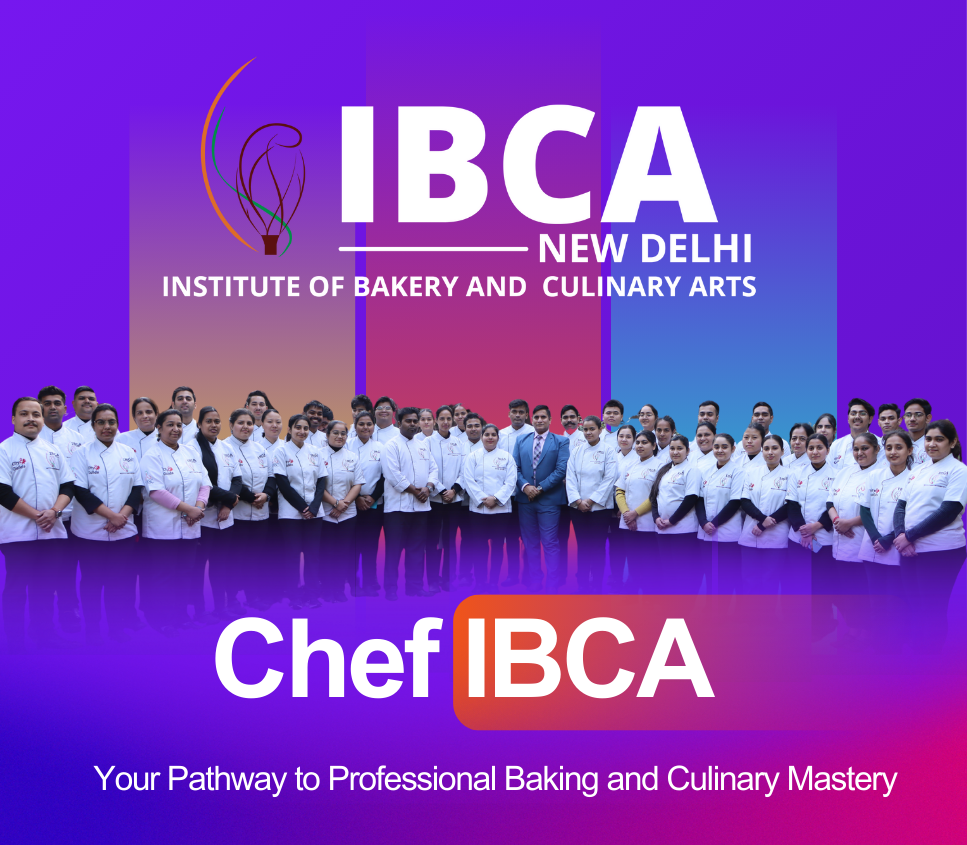
What is IBCA? A Deep Look Into India’s Leading Institute of Bakery and Culinary Arts

Imagine this scene- your food not only tastes super good but also makes you a superstar in the culinary world. Think about it and say wouldn’t you want to make it your career? If yes, IBCA brings you the right opportunity for fulfilling your dream.  For young people interested in bakery and culinary arts, IBCA provides a platform where they can receive international-level training under the guidance of experienced chefs. IBCA is among India’s most trusted and leading culinary institutes that transforms young people’s passion for bakery and culinary arts into their professional success. But who exactly is IBCA? Read this blog and you will know everything about it.  IBCA Full Form- Institute of Bakery and Culinary Arts The full form of IBCA is the Institute of Bakery and Culinary Arts. It is located in Delhi and prepares students with professional culinary and bakery skills.  IBCA doesn’t just give lectures theoretically, but on hands-on experience. It has modern kitchens and bakery labs that help it offer the best training and real-world experience to the students.  The culinary experts offer students in-depth knowledge of baking techniques, culinary arts, and food presentation. Why? Because the institute wants them to be ready for industry that demands quick time management, teamwork, and entrepreneurship skills. About Chef IBCA Delhi IBCA is the best institute for passionate young people who are looking for professional training on their cooking and baking skills.   IBCA offers them practical training and guidance from industry experts. They are experienced, expert, and have certifications regarding the subject they teach. The students learn from the experts only and get proper guidance from IBCA. Notably, the experts not only stop at Indian culinary but also teach international-level techniques, preparing students for opportunities overseas. Students at IBCA get:  Why Is IBCA India’s Leading Bakery & Culinary Institute? IBCA is the leading bakery and culinary institute in India. But what makes it special? Here’re the following reasons:  The chefs trained at IBCA are highly experienced, with international experience. Being under the guidance of experienced professionals develops the skills to face challenges. Students learn directly from real faculty at IBCA and can understand and apply their techniques, recipes, and cooking styles. This significantly improves students’ culinary skills and practical knowledge. IBCA’s syllabus is designed by international mentors and includes modern techniques in continental cooking, bakery, and pastry. With its modified regulations, students receive training from India’s best faculty. They learn from experienced standards from around the world, giving them the confidence to work at an international level. Many institutes don’t focus on students’ practical training. They emphasize the theoretical aspect, but this doesn’t give them an understanding of the real world. IBCA’s primary objective is to strengthen students’ practical skills. How? By focusing on practical training to empower students to cook well but also strengthens their understanding of practical requirements.  IBCA’s management connects students with workshops, competitions, and the bakery industry for internships. This helps them with real-world experience and opportunity to strengthen their professional networking. This helps students to connect with the real industry experts who already have a successful career. Such programs open new doors for students’ careers. IBCA has a proven and successful track record of students getting placed in the best hotels and restaurants in India and abroad alike. But that’s not all!  Several students have opened their own restaurants or bakeries and run successful businesses and created a name for themselves.  Courses Offered at IBCA  IBCA offers a wide range of courses in Bakery and Culinary Arts- Course Name Duration Ideal For Diploma in Bakery and Patisserie 12 Months Aspiring bakers & pastry chefs Diploma in Culinary Arts 12 Months Future professional chefs Hobby Bakery Course 3 Months Beginners & enthusiasts Short-Term Certificate Courses 1-3 Months Working professionals upgrading skills Student Success & Placement Stories Students trained at IBCA are building their careers with pride. They are everywhere- from top Indian hotels & restaurants to abroad and cruise ships. Here are some of the IBCA alumnus:  These are a few examples from the hundreds of students who have made their passion a fruitful career. Their career growth is rapid, helping them become financially strong and independent. Not to forget that Chef IBCA’s placement network connects students with a promising and lifelong career path. How IBCA Shapes Future Chefs? IBCA provides students with a platform where they receive hands-on training in a real kitchen environment. Why? Because it directly teaches to become an expert and its objective is to enhance creativity and sharpen the future potential.  Here, under the guidance and presence of experienced chefs, students learn modern techniques. This means students also learn international cuisine and the art of food presentation. This becomes more important when a student is eager to work overseas. Moreover, real-time feedback and industry exposure elevate their careers, shaping their futures for good.  How to Join IBCA? The process to join IBCA is simple. You can find contact details on the Contact Us page of its official website. Conclusion This is 2025 and people are not rigid about their career. They are experimenting and achieving success doing what they love. Culinary is one of those careers for the new young generation.  But here’s the catch with culinary courses:  Students need modern technology and practical training. In fact, these are essential for young people who are interested and want to build a career out of it.  Here comes the institute IBCA!  IBCA (Institute of Bakery and Culinary Arts) provides hands-on, practical training under the guidance of experienced chefs. IBCA focuses on not only teaching recipes but also to develop creativity, professionalism, and discipline.  Are you looking to build a career in culinary arts? If yes, IBCA is the one right place to join.  FAQs About IBCA IBCA stands for the Institute of Bakery and Culinary Arts, Delhi. It provides professional training and focuses on hands-on, practical learning. IBCA is based in Delhi, the capital city of India and has now become one of the best bakery and culinary

Baking vs Engineering vs Commerce Careers
Baking Courses, Baking Institute, Uncategorized

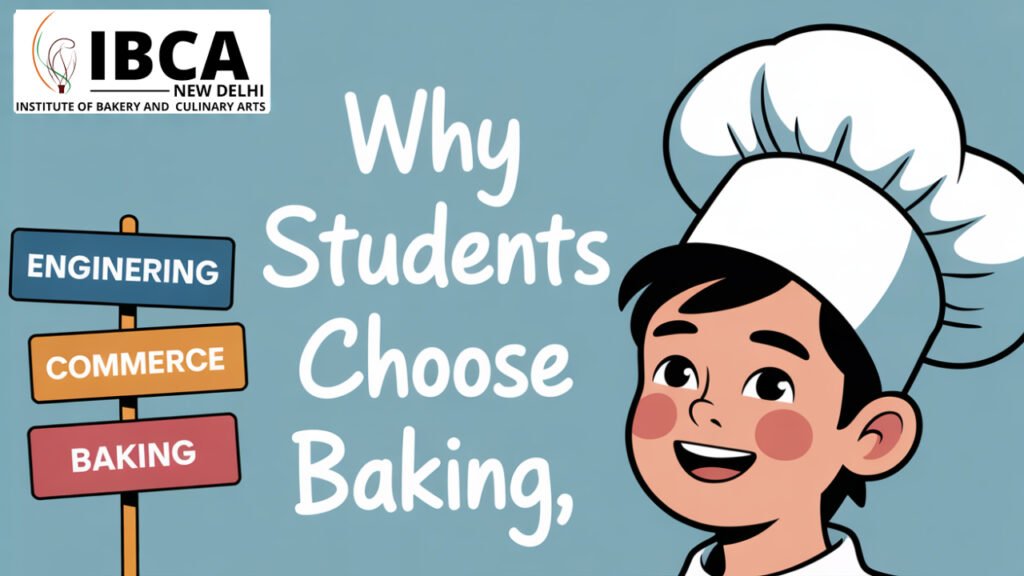
Why Students Choose Baking Over Engineering or Commerce Careers

There was a time when everyone said, “Become a CA or an engineer—then you can succeed in life.” Today, more young Indians have been choosing a unique yet different path—culinary arts and baking. Why? Because it’s not just some hobby anymore—but a grand career that has a lot of respect, is profitable, and has real opportunities. In this blog, we will discuss in detail baking vs engineering vs commerce careers in India, and why many students today are choosing baking over traditional career paths. Traditional Career Choices: Engineering & Commerce  For multiple decades, both schools and parents pushed students towards commerce or engineering degrees. The logic behind this type of mindset was simple: high salaries, social respect, and job stability. But the reality is highly different. Each year, lakhs and lakhs of engineering graduates have been struggling to find work in their field. Most of these students generally end up working in totally unrelated roles or work for years in unpaid internships.  Commerce students face high competition when going for finance or accounting jobs, along with stress from exams and uncertain career growth. This type of pressure of “following the crowd,” actually makes these students stuck in life, burnt out, and feeling unfulfilled. The Rise of Baking & Culinary Careers On the other hand, the food industry in India is booming. From those trendy cafes to 5-star hotel bakeries in Mumbai, there’s a rising demand for skilled bakers and chefs. Dessert startups and cloud kitchens, along with global bakery chains like Theobroma, generally want trained professionals.  Even at international levels, countries like the UK, the UAE, Australia, and others need trained professionals. Unlike those traditional degrees, baking courses, as a 6-month program, will help you land a job fast. You can also start working for a bakery or even start your own cooking or home business, or you can also do freelancing for events, all without needing any kind of degree for 4 to 5 years or more.  Why Students Prefer Baking Now: Baking vs Engineering vs Commerce Careers Students have increasing attention and interest towards baking and culinary courses. Let’s look at why: Passion = Profit: Baking can help you turn your passion and creativity into a career. If you always loved making bread or cakes, now you can do that daily and not just in theory. This is all about creating joy through food.  Faster Start: For just a 6-month course vs a complete 4-year engineering degree? You can start much sooner, and multiple programs do provide paid internships.  Global Opportunities: Work in luxury hotels across the globe or in Dubai, open cafes abroad, or work on cruise ships as well. The market for global bakeries is high due to a high demand for skilled bakers worldwide. Countries like Singapore or the UAE actively want and recruit Indian pastry chefs.  Work-life Balance: Unlike those long-hour shifts in offices, many bakers have flexible work shifts (for instance, morning shifts). You can set your own schedule as a business owner. This type of flexibility is great for balancing personal life and career goals.  Entrepreneurship: Start basic and small—a home bakery or an Instagram page for desserts—and grow that into a complete full-time business. No massive loans are needed to start something. Social media helps you to start your own brand from home. You can start from just a minimal investment and can scale up fast as the demand grows. Also read: The Ultimate Guide to Starting a Bakery from Home Success Stories Let’s look at some of the success stories of how these aspirants made a career in bakery and culinary sciences: These success stories are not just showing that your passion for baking can turn into a well-settled and proven career that can not just provide financial growth but can also make you into an entrepreneur who can even provide jobs to other people. All these stories just started from a simple bakery course, and these people can easily earn around 2 to 3 times the salaries of they used to earn.  Conclusion: Baking Is a Smart Career Choice Baking is not just a “hobby” anymore. It can turn into a full-fledged career and can turn anyone into a baker with the right course. The baking industry is a vibrant place for turning your creativity into your passion and into your profession. You don’t need to study for years to get good at this—all you need is creativity and passion, and the courage to work hard and the courage to try something different.  After learning baking, you can either become a baker in a major hotel or launch your own brand as an entrepreneur; the baking opportunities offered by Chef IBCA are perfectly designed to help you achieve that goal. This is all about building a career in what you like doing and just excelling at it, and Chef IBCA will give you the wings to do that.  Are you ready to turn your baking creativity into a full career?  Just download the free “Baking Course Guide” and book a counselling session today, and know your best options in baking arts from Chef IBCA.

most common mistakes to avoid while baking a cake
Baking Institute

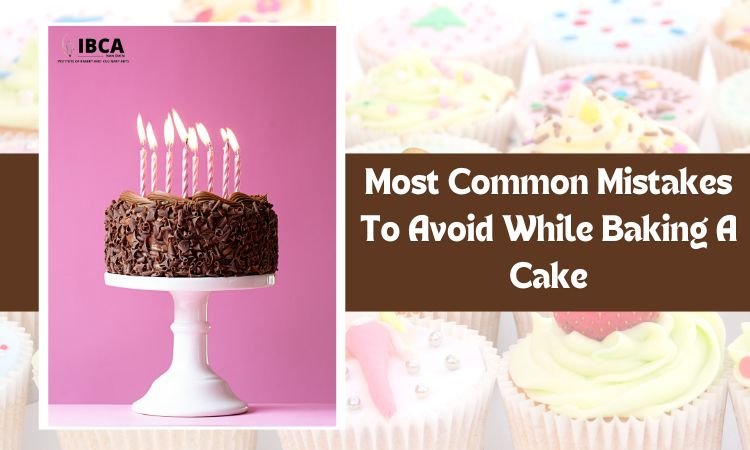
10 Most Common Cake Baking Mistakes To Avoid

When you’re at home with your loved one, you might decide to surprise them with a freshly baked cake. It’s enjoyable to spend time in the kitchen baking for family and friends. However, baking a cake is not always a walk in the park. There are a few cake baking problems and common blunders that even the most successful bakers have made at some point in their journey. While a cake disaster can be disappointing, it’s possible to turn things around with the right tips and techniques. There are a few essential principles to follow when baking birthday or anniversary cakes to avoid common mistakes. In line with that, we’ve put together a list of the ten most common cake baking mistakes to avoid. 10 Cake Baking Mistakes That Can Ruin Your Dessert 1. Not Preheating the Oven The most critical step in baking preparation is preheating the oven, which most people overlook. With so much to accomplish and prepare for the bake, they concentrate on the cake batter and then turn the oven on after the cake is inserted. This disrupts the entire baking chemistry. To avoid this tragedy, preheat the oven fully before beginning to bake. 2. Wrong Ingredient Measurement You will have an uneven chemical reaction with the timing in your recipe directions if the cake ingredient proportions are not perfect. You must stick to the recipe’s specifications. If you want to make a larger or smaller cake than the recipe calls for, you must adjust the components accordingly. And be sure you’re using the right measurements, whether it’s a cup, a spoon, or grams. 3. Frequently Opening the Oven When you’re still honing your baking skills, it’s natural to peek into the oven to see how your cake is progressing. However, this allows heat to escape from the oven. As the temperature drops, you’ll start to experience classic baking issues like cake collapse. As a result, you should inspect your cake for doneness using the oven light and window. 4. Leaving The Cake Too Dry Or Too Wet It’s critical to stick to your recipe’s timing. If you vary the quantity of your components, you’ll need to adjust the bake time as well. The fundamental reason for this is that heat must be evenly dispersed. The cake will become too dry or remain soft in the middle if you bake it for much longer than the recipe calls for. If the cake turns out dry, poke small holes in the top and brush sugar syrup over it to moisten the cake. If it appears to be well-baked on the outside but is unsteady on the inside, reduce the temperature by 20 to 25 degrees Celsius. Cover the cake with foil to prevent the already cooked top from burning. Check for doneness with a dry toothpick. 5. The Cake Flour Is Not Blending Smoothly When the cake dough takes on an undesirable texture (uneven, lumpy, stiff, or runny), it’s a sign that you used too much flour or didn’t sift the flour properly. When preparing for the bake, make sure you use exact measurements and sift your flour. 6. Ingredients Are At The Wrong Temperature Another common baking blunder made by new and aspiring bakers is using ingredients that are at the incorrect temperature. The best temperature for baking is room temperature. Because baking uses both dry and wet components, you must ensure that the milk, eggs, and butter are at room temperature before proceeding. So there’s no need to scrimp—just get to mixing the components. 7. Using Rough Egg Whites It’s possible that you’re using stale eggs if you beat them but they still have a gritty texture. It could also be a result of incorrect temperature. Alternatively, the whisk and bowl could be moist, so make sure they are completely dry before you begin whipping. 8. The Cake Mix Is Not Baking Evenly As different regions of the oven have hotter pockets of air, it is unlikely that the oven heat will remain constant during the bake. The cake will not bake evenly if the cake pan remains in the same position throughout the baking session. To avoid this problem, make sure to rotate the cake. 9. Cakes Are Not Baking With A Flat Top If you’re baking layered cakes and notice that the top isn’t flattening out, you can even out the dome shape by wrapping a moist cloth around the edges of the cake. 10. Cookies Or Cupcakes Are Not Giving An Even Surface You may be baking cookies or cupcakes, and the processes will be slightly different, but the basic concepts will remain the same. If the surface isn’t flat, it’s possible that you used cold dough, so let it sit at room temperature for 30 minutes before baking. Conclusion Baking a perfect cake is both an art and a science. By understanding and avoiding these common mistakes, you can greatly improve your baking results and gain confidence in the kitchen. Whether you’re making a birthday cake, anniversary treat, or a simple batch of cupcakes, attention to detail-from preheating the oven to using room-temperature ingredients-makes all the difference. With regular practice and the right methods, you can bake cakes with perfect texture and taste every time. To improve your skills, you can join Professional Bakery Courses in Delhi for proper guidance and hands-on learning.

bakery business in india
Bakery Business, Baking Institute

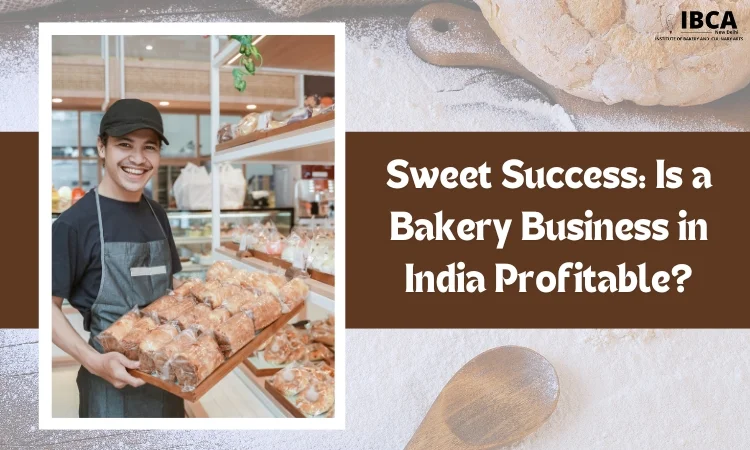
Sweet Success: Is a Bakery Business in India Profitable?

If you’ve ever thought about starting your own bakery, you’re probably asking yourself the big question: Is a bakery business in India really profitable, or should I go for the biscuit line or the packaged foods business?  One can easily think of making trays of fresh pastries, cakes, and cookies, but that is not the full picture here. So in this article, I’ll go into the specifics of what’s involved, including the state of the bakery market, the costs that you should expect and can expect to incur as a start-up bakery, and the potential problems that you may uncover as you move forward to determine whether or not the bakery world is for you. Understanding the Bakery Market Market Size and Growth Bakery products’ market in India is growing much rapidly. be it breads, biscuits, and fancy cakes, baked products are now a common feature in our homes and business premises. In fact, the bakery business in India is increasing by over 9% every year.  The increased population density, the inflating variety of customers’ preferences, and the passion for tasty food had a positive impact on bakeries in Indian cities.  And who can ignore the increasing popularity of coffee shops? The world has transformed into coffee shops. That is why you see many bakeries are incorporating coffee and dessert now, targeting a new generation successful workers and students. Target Audience and Customer Segmentation Well, tell me, Who exactly are you going to sell to? It is one of the critical questions to respond to since it cuts to the heart of what distinguishes this industry from others. In India, you’re catering to different groups:In India, you’re catering to different groups: This way you’d learn the different customer groups, or segments, and design a suitable and appealing menu that will make you get high returns. Also Read: A Detailed Guide On Starting A Bakery Business In India Initial Investment and Startup Costs Cost of Setting Up a Bakery It is always great to start a business such as a bakery, but one has to know that they are going to gain certain costs in the process. If it is a small, home based bakery venture, you can begin with ₹ 2 – 5 lakhs. But for a full-fledged ‘Commercial Bakery’ investment amount ranges to ₹ 10-25 lakhs depending on city, for instance, Delhi. Here’s where your money goes:Here’s where your money goes: Financing Options Worried about the money? There are plenty of financing options available to get your bakery dream off the ground: There are plenty of financing options available to get your bakery dream off the ground: Profit Margins and Revenue Streams Diverse Product Offerings This is probably the most important thing that you need to consider when it comes to baking business; it is advisable to have a variety of products to sell.  It is advisable to stock up your shelves with both necessary everyday foods, and those extra foods that people sometimes like to pamper themselves with. This includes:  When you offer more than one product, then you will be able to capture the market and ensure that you are making sales throughout. Pricing Strategy Without proper pricing, your business can make or break within a short span of time, especially if you own a bakery. Here are a few things to keep in mind:Here are a few things to keep in mind: Profit Margins Baking margins depend on the type of products that are sold by the bakery, but normally most of the bakeries in India are successful in achieving the margin ranging between 20-40%.  For instance, cakes and pastries are known to produce high margins while breads, biscuits,s and the like have low margins though they assist in the creation of high customer traffic.  The way to increase those margins is through cost control— purchasing goods in large volumes, minimizing on portioning wastage, and improving the manufacturing process. Challenges and Risks Competition The bakery industry in India is extremely competitive. This includes those small, local bakeries AND more commercial chain firms. Because let’s face it, there is so much competition out there that in order to compete you simply must offer something exceptional – be it a unique product or an unbeatable bakery experience! Operational Challenges There is a ton to do as the owner of a bakery from baking, managing staff keeping an eye on inventory, and dealing with customer orders. It’s a craft business and without some forethought, you can feel the pressure of time. Especially if you are not organic in the business, Bakery classes in Delhi would bring an easy practical escape from challenges like the above. Regulatory and Compliance Issues Strict health and safety regulations must be followed by Indian bakeries, as the country is famous for its excess regulation of the food industry.  This will require that you keep up to date with the local rules and regulations, which could be at an exceeding rate such as regular health inspections or keeping your licenses.  The bottom line is compliance should not be only that you fear the fines, but also because you do your best in building trust with yours (and my) customers. Final Thoughts on Bakery Profitability Their could not be a better time to start a bakery business in India, but same as every other thing there are challenges associated with it.  If you have a passion for baking, some market research and a sound plan could turn your hobby into the business of your dreams.  Well, if you are serious about entering this world then the bakery classes in Delhi can give you a head start because it is not just the baking but also how to run a business that needs some attention.

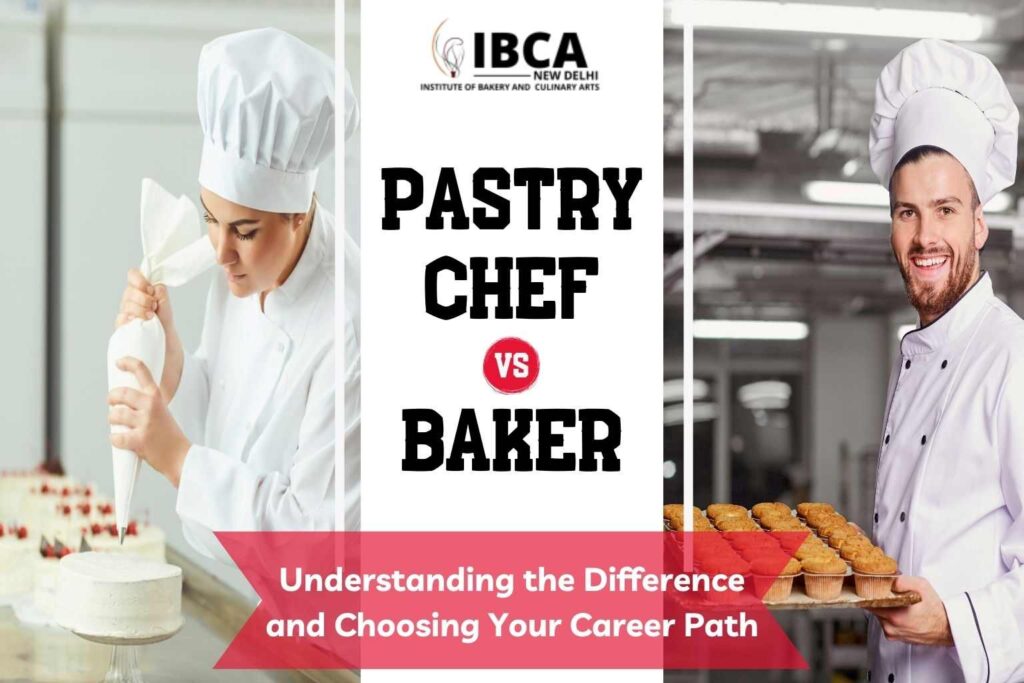
Culinary vs. Bakery Course
Bakery Institute, Baking Institute, Culinary Institute

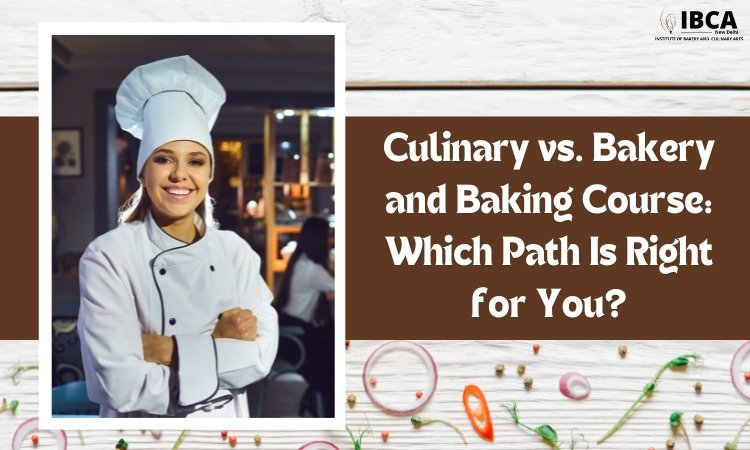
Culinary vs. Bakery Courses: Which Path Is Right for You?

Both culinary and baking are dynamic, challenging career paths that bring in so many aspiring chefs. It offers a container for any aspiring pastry chef or excited restaurant kitchen owner to tunnel live and, if you wield the authentic course of study you will be well on your mannerism. Read on to know the difference between a Diploma in Culinary Arts, and a Diploma in Baking or a combination of both through the course — Diploma Pastry & Bakery, so that you can be sure about your career path mapping with full conviction. Understanding Culinary Courses What is a Diploma in Culinary Arts? The Diploma in Culinary Arts provides a more hands-on understanding of cooking basics, covering essential food safety education and solid kitchen management principles. If you are already a culinary professional, this course is suitable for anyone who wants experience in different Western-style environments and wants to further their knowledge of all aspects, from restaurants and hotels to 5-star boutique catering. Curriculum Overview It usually consists of both theoretical and practical classes where students learn about the world of gastronomy, explore kitchen disciplines such as international cuisines, and operate a professional kitchen itself being able to design their food menus or execute very sophisticated plating. Students work in modern kitchens to help them learn more about their craft and serve hands of everyday experience with experienced chefs. Best Culinary Schools in India Some of the Best Colleges for a Diploma in Culinary Arts ( India) The schools listed below impart a foundational education in culinary so that graduates can stand out within the food service industry. Career Paths Upon the completion of a culinary course, career options are plentiful such as: Express yourself while growing your skills in the kitchen as these are common entry jobs. Ideal Candidates This type of degree is perfect for those who have a passion for cooking and restaurant management. If you are someone who loves challenging your palate and enjoys working in a busy kitchen, then this route might be more suited to you. Difference Between Culinary vs. Bakery Course Aspect Culinary Arts Bakery Course Course Focus The schedule in the Culinary Arts course includes skills training on different methods of cooking, kitchen management, and menu planning. It also covers everything from exotic foods and nationalities on that plate to service and some of the very basics of hotel management. It is a specialized course in the art of baking, pastry making, and confectionery known as the Bakery course. This degree looks deeper into the science and breakthroughs behind making/desserts, breads, and pastries. Key Skills Students gain experience in cooking, plating, and kitchen management as well as food safety concepts and menu creation. The focus of the course is to become an expert in culinary skills and managing a commercial kitchen. A specialization course that develops an instant hands-on skill set of baking, pastry making, cake decorating, loaves of bread, and confections. It was all about the artistic side of pastry and dessert presentation. Career Opportunities Career options include restaurant chef, sous-chef, food entrepreneur/chef-owner; culinary instructor, and corporate chef. Skills acquired are such that can explore an array of opportunities in the culinary field. Most often graduates will qualify to work in bakeries as pastry chefs, bakers, cake decorators, or even bakery owners and teachers. The tourism and hospitality training programs are more general, which makes them suitable for those who want to work outside this discipline. Ideal Candidates A perfect course for those with a wide desire in food preparation, cookery skills as well culinary management. This appeals to the cooks and food service industry fanatics. This course is appropriate for persons who have a passion for baked goods, pastries, and desserts. For those interested in a sweeter bakery career, it is perfect. Job Market Restaurants, hotels, and other food catering enterprises have a huge demand for cooks. This is a course that can be used in many food-related industries. The growth in the bakery industry, patisseries, and other specialty dessert shops is creating increasing opportunities for talented bakers/pastry chefs Course Duration Diploma programs in culinary arts can take a year to 3 years upon completion just as came advanced degrees offered by some others. Bakery & Baking courses are generally for 6 months to 2 years in terms of diplomas and certificates. It becomes more viable for fast specialization, considering its relatively short period. Average Salary INR 3,00,000 to INR 7,00,000 based on experience and location. Many chefs who have worked as culinary professionals for several years and sometimes decades get a raise (or better-paying job) the more experience they achieve. Role and Experience Department Package offered Developer 2,50,000 to 6,00poo per annum Baking for niche markets/ Job specialization leads to higher salaries. Understanding Bakery and Baking Courses What is a Diploma in Baking and a Diploma in Pastry and Bakery? A diploma in Baking includes the techniques and skills required for baking, pastry arts, as well as confectionery. On the other hand, a Diploma in Pastry and Bakery is more about creativity with dessert creation as well which includes cakes and pastries. Detailed Course Explanation Some of these courses range from an introduction baking series, and dough preparation classes to leveling up our cake decorating skills and even chocolate work. This course helps students develop an assortment of treats that can be taken home and/or turned in for extra credit, focussing on accuracy and the innovative side of pastries. Baking Certificate Courses Many short-term baking certificate courses for specialization. They are more skills-based courses, e.g. artisan bread or cake decorating – they give you a faster way to boost your expertise. Career Paths What can I be when graduating from baking courses? This is great for anyone with a sweet tooth and attention to detail. Ideal Candidates If you are passionate about sweets and want to develop your skills with an innovative touch in flavor or style, a degree in baking & pastry may suit you. Key Differences

classic cheesecake a timeless dessert for any occasion
Bakery Business, Baking Institute

Classic Cheesecake: A Timeless Dessert for Any Occasion

Everyone loves a traditional cheesecake. It is a fail-safe dessert that takes its place at the head of festive celebrations, cozy family get-togethers, and late-night sweet cravings everywhere. It is wonderful tangy-flavored, creamy texture not only fills the pleasure of baking but also proves that good food makes all moments so delightful. Let’s know more about cheesecakes in this blog post. Why Classic Cheesecake is Beloved? Traditional cheesecake is a showstopper dessert for good reason. Unique in its delicate, velvet texture that glides like silk across the tongue and melts to a lightly tangy flavor, an irresistible delight. This simple dessert is renowned for its ingenuity and versatility in taking on a variety of toppings and flavors – from bright fruit coulis to chocolate drizzles. The classic cheesecake is a constantly evolving dessert and the ability to please various fussy eaters has made it one of those desserts that will always be on someone’s favorite list all over the world. What Makes the Ultimate Classic Cheesecake? The ultimate classic cheesecake walks the line between creamy and firm. The buttery graham cracker crumbs or flaky pastry crust will shatter against the fork, building a foundation for what follows—the filling. The texture here is soft and luxurious, with a silken mixture of cream cheese, sugar, eggs & their yolks which give such wonderful flavor, and just the slightest hint of vanilla. The secret to its greatness is in part due to the high-quality ingredients used—the fresh cream cheese, farm-fresh eggs, and top-shelf vanilla extract—but also dealing with each step of preparation meticulously right from mixing to baking. Ingredients Needed to Make Classic Cheesecake For the Crust: For the best crust that also lends itself to a traditional cheesecake, blend 1½ cups graham cracker crumbs with ¼ cup granulated sugar and mix in half a stick of melted unsalted butter. This buttery crust forms the base of your cheesecake, creating a slightly crunchy foundation fir perfectly with that dense creamy filling. The graham cracker crumbs, which are sweetened with some sugar and held together by the melted butter form a crunchy contrast to the silky smooth cheesecake filling that amps every single bite up into an explosion of flavor chiming in there. For the Fillings The filling calls for 4 (8-ounce) packages of cream cheese, 1 cup granulated sugar, ¼ teaspoon vanilla extract, Large eggs: sour crèméì and all-purpose flour. The result of this carefully curated mixture is the smooth, velvety texture and a perfect mix between sweetness and tanginess in every slice of your best bet classic cheesecake. Equipment Needed For making a traditional cheesecake, you require different equipment such as a 9-inch springform pan that plays an essential role in baking and helps to remove the cooked cake easily. You need these mixing bowls to mix up the ingredients, and an electric mixer will give you a smooth batter. Use a rubber spatula to help get the sides of your bowl fully mixed. Preparation Preheat Your Oven –  Turn it on to 325°F (160°C). Prepare the crust: Mix graham cracker crumbs, sugar, and melted butter in a bowl. Take out the mixture 5 mins before and firmly press it into a spring form pan at an even level. Chill, whilst preparing the filling. Make the filling: Blend cream cheese in a large mixing bowl until smooth Slowly add in the sugar and vanilla, then beat until it comes together. Add the eggs 1 at a time and beat well after each addition. Combine with Sour cream, flour, and lemon juice until smooth Also Read: Best Substitutes For Egg In Cheesecake Baking Process Pour filling over the entire crust – Spread it evenly with a spatula. Water bath: Cover the exterior of the springform pan (bottom and about an inch up sides) with aluminum foil to prevent seepage. Put the pan inside a roasting sheet and fill it with water, halfway up the sides of your springform pan. Bake: In the preheated oven, place the roasting pan with the cheesecake and bake for 1 hour to 1 hour, or until the center is almost set but still a little jiggly. Cooling and Refrigeration Serving It is a rather beautiful thing, serving up the classic cheesecake. Gently remove the cheesecake from its springform pan, removing no slice will fail to be perfect. Slice with a sharp knife in between wipes of the blade for perfect cubes that reveal all its soft goodness. This dessert is a crowd-pleaser served unadorned–or topped with your favorite toppings like fresh berries, hot fudge sauce, or caramel. Slice after slice and layer upon layer usher forth an opus of flavors and components that conspire to be among the highlights of every meal or celebration. Storage and Shelf Life Keep your classic cheesecake in an airtight container inside the fridge for the best storage and shelf life. It can keep for up to 5 days, still creamy and tasty. If you plan to freeze the leftover slices, wrap them in plastic and then stuff them into a freezer-safe bag. With proper wrapping, we have frozen cheesecakes for 3 months before eating them and they’ve been perfect when thawed with no loss of flavor or texture. To serve, mimic my mistake and unwrap the thawed cheesecake overnight in the refrigerator. These best practices will help you store your cheesecake in such a way that it remains delicious long after the first bite is had, so you can enjoy it to satiate your desire down the road. Variations and Customizations For Fruit Topping: Spread a layer of fruit desired between preserves and cheesecake on top. Chocolate Swirl: Mix melted chocolate into the batter to create a swirl pattern. Nut Crust: Use crushed nuts instead of graham cracker crumbs for something different. Troubleshooting Cracks on top: To avoid this, do not overbake and let the cheesecake cool slowly in an oven. Lump Batter: Make sure your cream cheese is fully softened before mixing. Crushed crust: Pack the heck out of your

Baking Blunders: 12 Common Mistakes to Avoid
Baking Courses, Baking Institute

Baking Blunders: 12 Common Mistakes to Avoid

We came across those scenes, where you followed a recipe perfectly (or so you think that!), started with preheating the oven, and boom, disaster occurred. A worse sunken cake and cookies that look and feel like hockey pucks, or a tart with those soft and soggy bottoms—baking is a wonderful science, but even Diploma in Baking experts fall prey to some of the most common blunders that can destroy your baking experiences. Don’t worry, these bad situations can be stepping stones in your baking journey! But by understanding these 12 mistakes and using some key baking tips, you can easily transform these treats from totally flop to super fabulous. Top 12 Baking Mistakes and How to Avoid Them Baking can be a fun adventure, but even the best bakers make mistakes. Let’s take a look at the 12 most common baking blunders and simple tips to help you avoid them and bake with confidence. 1. Not Preheating The Oven  This one is pretty simple, but it’s super important! Your oven is not ready from the get-go, it needs time to work and reach an optimal temperature for ensuring the best baking experience. Just imagine you prepare the batter and it goes into a lukewarm oven—not ideal for any type of baking experience.  2. Ignoring Measurements  Baking is a super precise art – just a sprinkle of this, a sprinkle of that, and some handful of content of this ingredient, a little more of some ingredient, and disaster. Measuring the ingredients unevenly can create many problems, from dense cookies to dry and unfluffy cakes. Invest in measuring tools like measuring cups along with spoons, or consider a kitchen scale for the best accuracy.  3. Using Expired Ingredients A baking powder past its date of use can’t give you the lift to the treats that they deserve. Always check the date of expiry or best-before date on packages of the ingredients you will be using in your ingredients, especially baking powder and baking soda. Choosing fresh items is the best choice.  4. Over Mixing The Batter Sometimes we are so enthusiastic about our baking that we forget that overdoing anything in baking can worsen it. One of those things is overmixing the batter. Over-mixing the batter develops the gluten in the dough and gives us cakes that have a very chewy, dense, and hard texture. Only mix till everything is combined and follow the instructions of the recipe.  5. Opening the Oven Door Too Often Checking how your recipe is doing inside the oven can be very tempting. But don’t do it. Every single time you open the door, a specific amount of heat escapes, making the oven colder, and potentially affecting the baking temperature and baking time as well. Trust that your oven is working well and open when necessary. 6. Skipping Sifting Sifting is necessary. Sifting those dry ingredients can help areate them. Leading to airier and lighter-baked products. While this is not an essential aspect, it can create a big difference in those delicate recipes and make them don’t have any clumps or any incorporation air in the final goods.  7. Not Greasing the Pan properly  A cake baked to perfection that sticks to the pan can be a real heartbreaker. To stay away from this kind of frustration, just ensure that you fully grease the pan in the inner part where you will be putting the main batter. Pay special attention to the corners and edges of the pan and grease them too. For super simple removal, you can also use parchment paper lining for simple and easy removal. This is like insurance for that tasty cake. 8. Overfilling The Cooking Pan  Filling the pan in one go till the top level seems like a great idea for maximizing the baking session. Overfilling is the perfect recipe for disaster. You won’t like your cake and bakery batter just flowing in the oven and creating a mess everywhere and even destroying your final product at the end or even the uneven edges of that cake.  We do mention that any type of filled pan obstructs airflow, providing hindrance for equal and even baking, potentially leaving with a bad result. Stick to the said recipe along with the right pan size and batter amount. As a general guide, always fill the batter half level or a little more than that and leave the rest empty to make the batter fluffy and rise during the baking process.  9. Underestimating Cooling Time It’s super tempting to just get into those warm and fresh, directly out-of-the-oven treats, but be patient. Cakes and bread become their best when left for some time. Give those hot cakes, breads, or cupcakes some time to cool off before jumping on them with frosting or slicing them. Instantly trying to eat these or doing anything to them freshly out of the oven can make them crumble. Let these baked goods cool, and they will get into a perfect texture. Then you can add frosting or something to them.  10.  Not Reading the Recipe Carefully This seems the most obvious. Everyone thinks they will not make any mistakes reading the instructions. But it’s such a common thing to make a mistake when you are skimming through the details of the recipe. Give time to yourself when you’re reading a recipe, read it in full detail, and pay attention to it. Pay attention to each ingredient and ingredient amount, plus the temperature, as well as any type of specific technique for baking or mixing. Understanding every step of baking is a sure way to achieve success in baking.  11. Adjusting for the Altitude  Do you know that at different altitudes, the air density and other changes, it can affect your baking? As the altitude changes, the lower levels of air pressure can affect how your goods can rise. If the recipe doesn’t make any mention of altitude changes, then you should be opting for a Diploma in Baking and Pastry

Baking Tips
Baking Institute

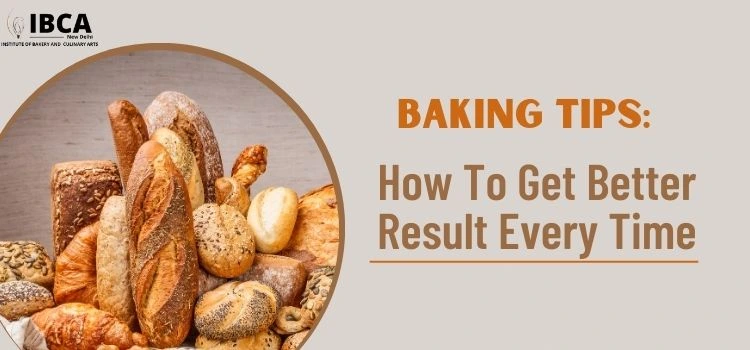
Baking Tips – How To Get Better Result Every Time

Rise & Shine! Conquer Your Kitchen With The Best Baking Tips in Town  Ever dream of those lip-smacking cakes and pastries you see in TV shows or cooking magazines? But if you don’t know how to do it, then dish out those oven blues and get started today, as we will be sprinkling some of those magic tips to get you rolling those sweet treats from your kitchen. Here are some of the best baking tips to get better results every time.  Measure Like a Pro  Of all those baking tips, we think this is the most important tip to becoming the best at baking. This is the number-one rule in baking. If possible, use a digital scale to measure all of your ingredients.  If you don’t have a digital scale, then you can use a technique called the Spoon & Level method: Spoon every ingredient into a cup used for measuring (make sure that the measuring cup is dry) and just level the cup with a straight edge. A cup of floor that’s too much can easily make your cake or pastries dry.  Measure the liquid ingredients in a transparent measuring cup and measure them perfectly according to the scale of the cup.  Become a Mix Master  While hand whisking can be a workout, a great mixer will become your BFF. It can save a lot of time, effortlessly mixing all the ingredients, and you don’t need your arm strength to mix all the ingredients. The time saved can help you focus on other things like cake decorations and other stuff.  The other alternative that can get the job done is an electric hand mixer. Although not as efficient as professional whiskers it still will work but can take a little bit more.  The Room Temperature  When a recipe says it has to be created at room temperature, do that. Cold butter cannot become cream at that moment, and cold eggs can’t be shocked and made into one batter.  The best way to do that is to leave the ingredients on the countertop and out of the fridge the night before the preparation. That will bring them down to room temperature. Bring the eggs down by putting them in warm water (not hot water) for a few minutes.  You can use a microwave to bring the butter down to room temperature. Don’t overdo it and as soon as the butter softens, remove that from the microwave. Cut it into sticks, keep rolling it in a bowl, and microwave it for 10 seconds until soft. Don’t overdo it.  Checking the Oven Temperature  Check your oven temperature to check the accuracy. Don’t open your oven if the baking time is not complete. The only exception is if you see one side of your cake or the other being cooked too much and the other side is not cooked, then you can open it and rotate the container.  Say No To Substitutions  Stick to your recipe as much as possible. We have all come to scenarios where we don’t have one ingredient, let’s put something else that tastes and feels like that, don’t do that.  There’s zero substitute for all-purpose flour, eggs, or butter. Still, there’s nobody that will put you behind bars for putting ingredients of your choice in your dessert. Just don’t alter the ingredients too much so that it ruins the taste at the end. This is where the professionals can teach you how to do it. If you are in Delhi, you can take Baking Classes in Delhi to learn the art of effortless and amazing baking.  Also Read: 9 Baking Tips by Experts for Home Bakers Gentle Hands  Think of butter as a cloud, not as a punching bag. Overmixing is the enemy of great cakes and light cookies. When you overmix, it starts to produce gluten, which will give it a tough and chewy texture, which will ruin your cakes and pastries.  Understand Leavening Agents: Baking Soda, baking powder, and yeast are the magic ingredients for the bakery world. Learn about their superpowers (leavening, gas production, and gluten development) and how to use them. Little less and it won’t work, a little more and it will destroy the whole. Use these wisely.  Adding Ingredients with Flair! Instead of just dumping every ingredient in the bowl like a big lump, try adding ingredients in little piles. Put ingredients slowly and in piles and mix them lightly when you are preparing the batter.  Prepare Pans Properly  Grease your pans properly before putting any batter into them. You can also use parchment paper if needed and preheat this paper (use the lowest temperature to heat it) before putting batter over it.  Scooping Batter With Precision This is important; use portion cups or ice cream scoops for measuring cookie dough for cupcakes, muffins, etc. The scoop gives you better consistency and it will get the job done easily. Some of the best Cooking courses in Delhi will teach you all these skills on a pro level.  Use Quality Ingredients  This is a brainer. Better ingredients, better results! Try to find the recognized brands that have been in the business of creating these ingredients for a long time. Buying a great-quality All-purpose flour or different essences, chocolates, etc can make a difference.  This is where the art of professional bakers comes in. if in the metro region, you can take baking classes in Delhi and these guys will tell you the art of buying the best quality ingredients and how to use them.  High-Altitude Baking Tips for Perfect Results When you are baking at high altitudes, you have to make some adjustments by yourself.  Conclusion  With these tips, you can hone the art of the best baker. Baking a proper cake or pastry can be difficult, but these tips can help you become the best. Also, be a professional baker and learn the art of baking from the best Bakery classes in Delhi to hone your skills. 

Bakery and Pastry Classes, Baking Courses, Baking Institute

Mastering the Art of Baking: Presenting the Top 6 Skills Every Baker Should Possess

Baking is more than just following a recipe; it’s an art form that demands a symphony of skills to produce delectable creations. Whether you’re a seasoned pastry chef or a home baker, mastering these essential skills can elevate your baked goods to new heights. Join us on a journey as we decode the top six skills that every baker should cultivate. 1. Precision in Measurements In the world of baking, precision is the secret ingredient that turns a good recipe into a masterpiece. Imagine a pianist hitting the wrong key—similarly, accurate measuring of ingredients is the cornerstone of baking success. A tablespoon of too much or too little can tip the delicate balance of a recipe. Invest in quality measuring tools, and adopt the meticulousness that defines the art of baking. 2. Patience and Attention to Detail Baking is a dance where timing is everything, and every step requires careful attention. Patience and an eye for detail are non-negotiable. From proofing dough to waiting for the perfect rise, the baker’s journey is a lesson in delayed gratification. The magic happens in those moments of precision, where a watchful eye and a patient heart come together to create confectionery wonders. 3. Creativity and Innovation While precision provides the structure, creativity is the soul of baking. The ability to infuse your creations with a unique flair sets the skilled baker apart. Experiment with flavors that surprise and textures that delight. Dare to innovate in presentation, turning your kitchen into a canvas where each recipe is a stroke of edible art. Creativity in baking is about pushing boundaries and discovering new possibilities in every batter and dough. 4. Time Management Baking is a symphony of simultaneous tasks, from measuring and mixing to baking and finishing touches. Effective time management is the conductor orchestrating this intricate performance. Balancing these elements requires foresight and planning, ensuring that each component of the recipe gets its moment to shine. A well-timed production not only sweetens the final product but also transforms baking into a seamless, enjoyable process. 5. Knowledge of Ingredients To truly master the art of baking, one must go beyond recipes and understand the ingredients at play. A knowledgeable baker is like a scientist in the kitchen, comprehending how different elements interact to create specific textures and flavors. Whether it’s the chemistry of leavening agents or the alchemy of chocolate, delving into the intricacies of ingredients enhances your ability to troubleshoot, adapt, and create exceptional recipes. 6. Adaptability Baking is a dynamic process, influenced by factors ranging from the humidity in the air to the quirks of your oven. The ability to adapt to these variations is the hallmark of a seasoned baker. Maybe your mixer is on the fritz, or you’re missing a key ingredient—adaptability turns challenges into opportunities. Welcome the unexpected, and let it shape your journey as a baker. It’s in these moments of flexibility that you discover your true prowess in the kitchen. Conclusion In the enchanting world of baking, where precision meets creativity and patience dances with innovation, these six skills stand as pillars of mastery. As you venture on your baking adventures, remember that each skill complements the others, creating a harmonious symphony in your kitchen. So, don your apron, preheat the oven, and let these skills be your guiding stars in the pursuit of baking excellence. May your creations be as delightful to make as they are to savor, and may your journey as a baker be a celebration of the artistry that turns simple ingredients into extraordinary delights. Happy baking!

cake decoration pro tips
Baking Institute

Pro Tips and Techniques for Stunning Cake Decorations

Cake-loving folks, ever thought about what makes a cake more wanted besides its taste? It’s their decoration that makes them more appealing, loving, and desired. The rule of design applies here too. This means you need to look for colour combinations and design quality to make a trendy loved cake. But that’s not all. Designing a cake is nothing like painting a canvas or making a graphic. Instead, it needs soft grips, skilled hands, and focused eyes to design a cake. Cause there’s no going back here. It’s not for everyone but if you’re a baker, you must be skilled in it. Unless your cakes are entertaining their audience beautifully, it’s not possible to stay relevant in today’s bakery industry.  In this article, we’re going to discuss some of the best cake decoration tips. This advice is directly from the IBCA experts who have guided hundreds of today’s star bakers in their baking course in Delhi. Follow these tips and make your first professionally decorated cake. Essential Tools and Supplies for Cake Decorating Here is a list of essential equipment that you must have while decorating your cake. These tools and ingredients are important for offering a delicate, balanced, harmonic, as well as stunning designs. Get them all. Offset Spatulas Piping Bags Cake Turntable  Various Tips  Pastry Brushes  Palette Knives  Fondant Tools  Edible Food Colors  Luster Dusts and Edible Glitters  Petal Dusts  Gum Paste and Fondant  Stencils Cake Lavender Settling Up Your Cake Canvas: Use a cake knife or a cake leveller to your cake once it is cool enough.  Apply a thin layer of frosting on the cake. Then use a spatula to make it even from all sides.  Put the cake into the refrigerator for 30 minutes. Let the frosting get stable. Once the crumb is stable, apply a layer of frosting on the cake. Now you can start your work from top to bottom.  Pay attention to imperfections and correct them.   Create your designs with the help of various tools.  Give the final touch to your cake. Tips from the Professionals: 1. Select Proper Frosting: Choosing the right frosting is one of the most important cake decoration tips. Better to say, that it’s crucial to make a delightful stunning cake decoration. Frosting creates a base taste for the cake & elements on it. So be attentive to what you are putting on your cake. Consider factors such as taste, texture, and stability.  Note:  – Buttercream is versatile.  – Fondant offers a smooth finish – Ganache leaves a rich glossy look.  – Cream Cheese frosting adds a tangy flavour.  Consider your preferences and go with them.  2. Piping Perfection: Techniques & Tips: Piping is a basic skill to conquer if you’re into decorating cakes. These piping tips help you to design different textures, elements, & lettering and allow you to practise different techniques to make your design more appealing. Here are some of the important tips to consider.  – Choose the right piping tips.  – Learn to have consistent pressure.  – Practice piping techniques such as Rosettes, Shells, and Borders. These are some of the basics.  – Learn to keep your hands steady.  – Adjust the piping bag position appropriately.  – Maintain a consistent speed to gain even results.  – Keep practising on Parchment papers for new designs.  – Use the right consistency of frosting.  – Wipe off any excess frosting from tips to maintain the clean lines.  – Vary the pressure and experiment.  3. Seek Inspiration from Current Trends: Like all fashionable stuff, cake decoration tips & ideas also get updated each passing year. Earlier it was difficult to track the trends but in the age of social media, you can study what’s in trends right now.  There are several social media accounts showcasing their talent in baking. Follow them and see what designs they are offering. Take inspiration and create fresh designs to showcase your skills.  Don’t forget to check out cake websites, workshops, exhibitions, and events near your place to get more cake decoration ideas frequently. Use the popular & trendy colour schemes, techniques, and themes in your designs. 4. Making Your Cake Perfect with Final Touches: The final touch is what most armatures miss out on. That’s where your presentation will shine amidst the crowd. The final touch includes edible designs and elements, and giving attention to details. Here are a few final touch cake decoration tips to do so.  – Add decorative elements such as flowers, figures, sugar work, or fondant accents.  – Use texture variations to make them visually appealing.  – Clean & fine the edges. Also, create flawless transitions between colours & layers.  Make sure that your final touch balances the harmony of your design throughout the cake.  Also Read: How to Make Red Velvet Cake: A Step-by-Step Guide 5. Practice & Patience: Like any other art, mastering cake decoration also takes time and dedication. You must focus on what you’re doing and be willing to correct the wrongs. Only the right amount of practice & patience can lead you to excellence. Here are a few tips for all beginners.  – Begin with the very simple cake designs & techniques. Move to the next stage only if your basic designs become proficient. – Practise regularly and refine your skills. – Develop a steady hand. – Embrace mistakes as your teacher. – Acknowledge your smallest achievement & improvements. – Finally, be patient.  Conclusion: Baking is not complete if you have not learned the art of cake decoration. Making tasty cakes is essential but presenting them is a luxury and soothing to the eyes. That makes the cakes a perfect present for any kind of celebration.  In this article, we have shared some of the cake decoration tips directly from the professional from IBCA. Hope you would have liked it. Looking for a baking course in Delhi? Stop right here. Join the IBCA (Institute of Bakery and Culinary Art) baking courses where you will be guided by industry experts only and later will be awarded with internship,

Scroll to Top
Call Now Button