

Culinary Institute

Culinary Institute

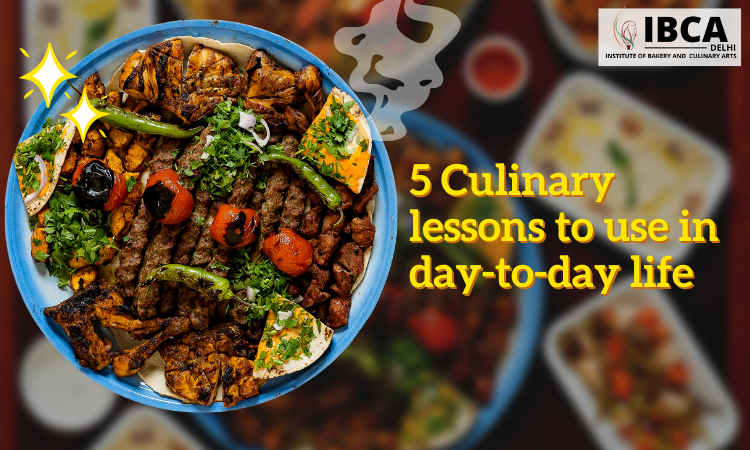
5 Culinary lessons to use in day-to-day life

If you’re thinking about attending culinary school, you’re probably wondering what you can learn. Culinary education may teach you things that you can use every day, both in and out of the kitchen, in addition to introducing you to skills and practices that can help you prepare for a career in the culinary arts.  These include: So here are some takeaways from culinary courses in Delhi that you may apply on a daily basis and not just in food-related situations! Learning something new every day In culinary school, you’ll have the chance to explore unfamiliar flavor profiles like tamarind and anchovy, discover new ways to prepare certain dishes, or even improve your dicing skills. Along with showing you how to be open to learning, the culinary school can also provide you opportunities to practice accepting constructive criticism. You might strive to respectfully take criticism from both other students and chef instructors as a culinary school student. Learning is almost always an active act if you want to progress in your career, but it’s not always easy to know where to start. Culinary courses in Delhi will teach you how to master the art and science of cooking. Whether you want to learn about flavors or ingredients, this is the place for you! Believe in teamwork What does it take to be a chef? It’s not just about cooking. There is teamwork behind every dish you serve, and you’ll be expected to make critical decisions that affect the success of your station. In culinary school, you can learn how to work with others so that they can accomplish their goals, whether through cooking classwork or project-based settings like service lines. Throughout culinary school, you’ll practice new skills like teamwork and collaboration with classmates. During your internship, you can use these skills to your advantage by spending time in a professional kitchen learning how to become an effective teammate. Whether that means passing on tasks you’re not comfortable with, cleaning up after another team member, or collecting ingredients together. Management of Time.  Managing time demands in the kitchen can be a challenge. The best way to master time management is through practice. Whether it’s in the kitchen or elsewhere, you can start by organizing and prioritizing your tasks down to the last minute. This may require closing tasks off from one another until they are completed. It also may mean accepting that some things are out of your control and working with what you have instead. When you manage your time well, you’ll spend more of it on the things that matter most to you. Let’s say you want to fix yourself a plate of your favorite dish from the fridge: smoked pork chop, mashed potatoes, and carrots. You know what they say: “To thine own self be true”—so you cooked this dish many times before. Finally, when it was time to dig into your meal, not only have you been preparing your ingredients all day long, but also you’ve decided to make everything at the same time so that everything will be done at exactly the same moment. Even though managing your time may seem like a more significant task than cooking, it is necessary to successfully cook. With the skills you learn at culinary schools such as time management, scheduling, and organization, it will be easier for you to work efficiently in the kitchen. Using Perseverance for excellence Perseverance is a key skill that you need in order to achieve any goal. Rather than thinking about success, focus on the process. If you put in the effort, it won’t take as much time to get where you want to be! Culinary school is not just about the food! You can learn so many skills that you’ll use in your professional career. If you struggle at a certain technique, ask your instructor for advice and guidance, and then keep practicing until you’ve mastered the skill Patience with your work.  Being patient in the kitchen may be helpful when you want to achieve good results, but it’s also important to remember that patience on a larger scale can be equally rewarding. When you want to speed up the process of learning how to cook, there are a number of exercises that can help you practice your patience. As a culinary school student, you can examine the importance of patience on both a large and small scale. You may realize the value of understanding the fundamentals before attempting more difficult techniques and how speeding the process of braising spare ribs or caramelizing onions can result in poor-quality food. Conclusion. Would you like to find out whether or not you’re good at following instructions and making delicious, original dishes from scratch? Or know which culinary courses in Delhi offer you the best courses in culinary. Then IBCA is the right option for you. It offers both degree and diploma culinary arts programs as well as the option to attend in-person or online. And all these programs include a hands-on industry culinary externship where you can practice incorporating the lessons you need to know while working with our teachers on real-world tasks! Are you prepared to advance in your career? We have a diverse selection of programs that are right for you. Don’t hesitate to contact us today! 

Culinary Institute

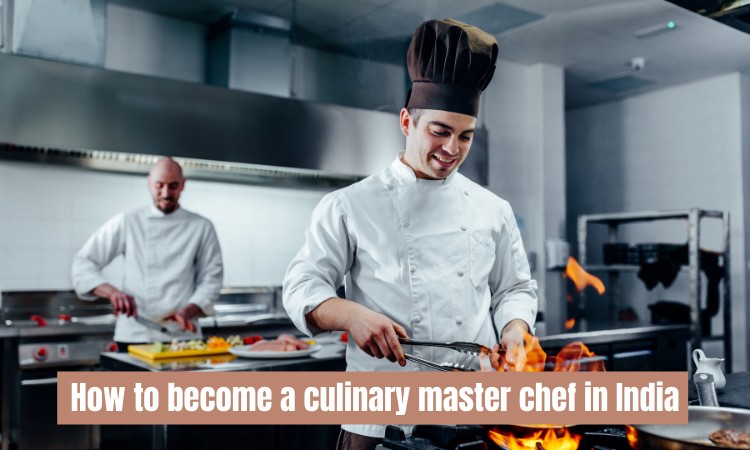
How to become a culinary master chef in India?

Culinary- Cooking might be the hobby of many individuals. It does not matter whether it is a male or a female, everyone loves cooking. The diffusion of different flavors and the combination of distinct spices can vary the taste in many means. However, doing it in a polished way is a challenge. It can only be possible for the master chefs. Even we can not say that it is every day’s cup of tea for them. The highest-ranking chefs also follow the guidelines precisely while cooking to give it a taste of perfection. Any bijou mistake can ruin their entire hard work. They are known as master chefs as they excelled in a master’s way. In India, we can see many chefs working in top-class restaurants. Many universities offer courses on culinary classes for shaping them as master chefs. Many times, a question arises as to whether culinary is a commending career in India or not. Let us emphasize it a little bit. Is Culinary a good career in India? Since India is a developing nation, we can see the development of IT industries, new start-ups, and many companies opened recently. Also, the investors from other countries want to invest in India as they can see their growth graph getting higher. The same goes for restaurants. From some of the best restaurants like Taj Hotel in Mumbai, Indian Accent in New Delhi, Wasabi by Morimoto, Mumbai, and many more, India is a place known as a tourist destination serving magnificent restaurant facilities. In all these, there is a requirement of the best chefs from India, who is not only good in cooking and food presentation skills, but the ones who hold a commendable grip in culinary art. Indeed, if you are amongst the best, or can brush up your skills and give an extraordinary performance, you will be considered from various such hotels and restaurants. What is the salary of Master culinary arts course graduates in India? There is a lot of questions arising regarding the salary of a culinary chef in India like “How much does a culinary chef make in India?”. The salary of a chef varies from 2.5 lakh per annum to 25 lakh per annum as per the experience level. Nonetheless, a trainee can expect to get a salary of 2,50,000 INR per annum. After becoming chefs, they can easily earn anywhere between 3,00,000 to 5,00,000 INR per annum. One who completes their master’s in culinary arts can expect a salary ranging from 5 lakh per annum to 25 lakhs per annum. It depends on their skills and several other factors relating to their personality traits. How to become a master chef in India? Mastering any skill is learning it from depth. So, we can twist the question and make it as “What does it take to become a professional chef?”. Being a professional in culinary arts requires a lot of expertise in various fields from basic cooking to presenting it the best way anyone can. Also, it needs one to brush up on their personality to shine like a master chef. In India, you can find a lot of management institutes willingly teaching you the course of culinary arts. Nevertheless, the fees are very high. If you need job assistance along with the best course materials, you can find IBCA (Institute of Bakery and Culinary Arts) as a leading name in culinary schools in India. They have many students who are now working in different top-class restaurants as IBCA provides them with the best course available. You can check their 18 Months Advance Professional Programmes Course in Culinary which is of level 3. They provide diploma courses in the field of culinary arts. Although, one can get an opportunity to learn a lot from the best trainers available there. You can check their website at 18 Months Advance Diploma Professional Programmes Course in Culinary (chefibpa.com) and refer to the program.  Along with it, they offer two weeks of extensive training on getting into the best restaurants for internships or full-time job opportunities. Here, you can be assured to get trained as a master chef and a job till the date your course completes.

Culinary Institute

HISTORY OF CULINARY ARTS

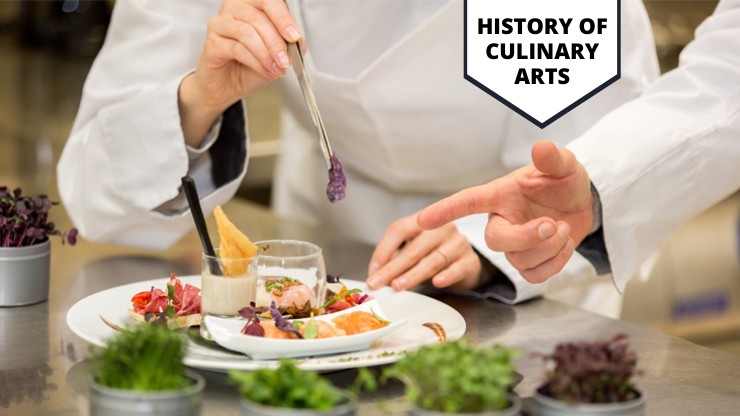
The very word ‘culinary’ means “related to cooking”. Cooking is basically the art and science of preparing food for eating by the application of steam and heat. This kind of arts takes it all which are food preparation, sometimes table manners too, cooking, and even food presentation which are generally in the form of meals. The people preparing food professionally are called cooks or chefs, and formally culinarian or culinary artists. These learned professionals normally have to make the food delicious keeping in mind about the nutritional values along with it being really appetizing to look at which is definitely a herculean job. Professionals in this field mainly aim for reputed hotels and restaurants, then comes hospitals or airlines and many more places to work. We all know about how uncouth and savage the early men were initially to eat raw meat of the animals they hunted. However, with the advent of fire, they started roasted those meat and started enjoying a better version of their food and that was the start of the evolution of human food. This fact was actually proved by the famous anthropologist Richard Wrangham, who is also the author of Catching Fire: How Cooking Made Us Human . He supported it by saying once primitive humans just simply tossed a chunk of meat into the flames and watched it sizzle and found it more appetizing and easy to digest than just raw meat. With slow advancements of earthenware, stoneware and good agriculture and raising of livestock the culinary got development. Such roasting of food continued until the Paleolithic period, when the Aurignacian folks hailing from southern France started to steam foods over hot embers by wrapping them in wet leaves. Along with procedures like toasting and turning wild grains upon flat rocks, shells and skulls. They used hollowed stones for heating liquids. The Neolithic Age also saw the same trend of cooking. Also the introduction of peasants, kings, castes, cultures, regions the food consumed got differed which gave rise to a great variety of dishes and cuisines. Also several improvisations, fusions and experimentations gave rise to more than thousands of cuisines worldwide. Even before Christ the nation of China predated the recorded history in the cultivation of soybeans. Soybean was even a member on the list of five sacred grains of China. There has been quite a lot studying of culinary arts in Europe mainly organized by Jean Anthelme Brillat-Savarin who famously once said, “Tell me what you eat, and I will tell you what you are”, this statement clearly portrays how food over the ages got fragmented and renewed with the taste and preferences of mankind. In Asia, there has been very oriental cuisines that the natives cherished for ages, however with the merge of the Eastern and Western ideas and also food, the industry has been increasing with the gradually heightening of globalization. Culinary students now, are open to a lot more variety and options to study and create. When the Asians were enjoying their original food, in the Western world study of culinary evolved greatly during the Renaissance period. Even before that kings and monarchs used to hire great cooks from a lot of places and the unique dishes they used to prepare used to become special dishes to impress both the kings’ hearts and the guests they attained. With times those royal dishes gained popularity among the common masses as king’s favourite dish or queen’s birthday dish. With the advent of earthen wares and stone wares, the food cooking techniques of boiling, stewing, braising and also pan techniques like pickling, frying and also oven baking also started. These cooks learnt the art of preserving and storing dairy products and fish products by smoking, salting, air-drying and also by chilling. Dishes like Bacalao a la vizcaina and finnan haddie which were predominantly dried cod and smoked haddock became quite popular. These well acclaimed cooks of those times used to write culinary books to note the recipes they improved or recreated newly so that people can follow in the future and remember them and their artistry. Many of them could not have been rescued. However, we feel great and pleasure and pride on the recipes of the books that could have been rescued and are legitimate enough even till this day. Some of those books are:- YALE CULINARY TABLETS – Three clay tablets dating back to 1700 are assumed to be the oldest cook books found till this day. Researchers believe that those recipes are somewhat equivalent to haute cuisine, which are fit for royalty. The experts could decipher just 25 recipes for stew. The difficulty occurred due to the language being in cuneiform. Eatables like bread, both plain and savoury and elaborate sweet cakes too. DE RE COQUINARIA (THE ART OF COOKING) – Also known as Apicius, this cook book has been made as early as the late fourth century and has 10 sections within it. The recipes written there well portray how were the eating habits of the wealthiest strata during that time. KITAB-AL-TABIH – This book was written by Ibn Sayyar al-Warraq in the early 10th century and present a spectacular view into the medieval Islam gourmet culture. The3 book has an enormous collection of more than 600 recipes within 132 chapters. Its pages give a real insight into the lives of that time. L LIBRE DE SENT SOVI – This is a Catalonian book which was writer in 1324 and is the oldest surviving manuscript of its kind. Its author is anonymous and come up with 220 recipes. These days people can buy an English version of the book too, which was first published in 2008. YINSHAN ZHENGYAO – Written during the Yuan Dynasty of China by the court therapist and dietician Hu Sihui during 1330, is not only a cook book but is also a medicine book. The book aimed at making people eat healthy to keep them away from the diseases at the bay. Some of

Culinary Institute

DEMAND OF CULINARY STUDENTS IN OVERSEAS MARKET

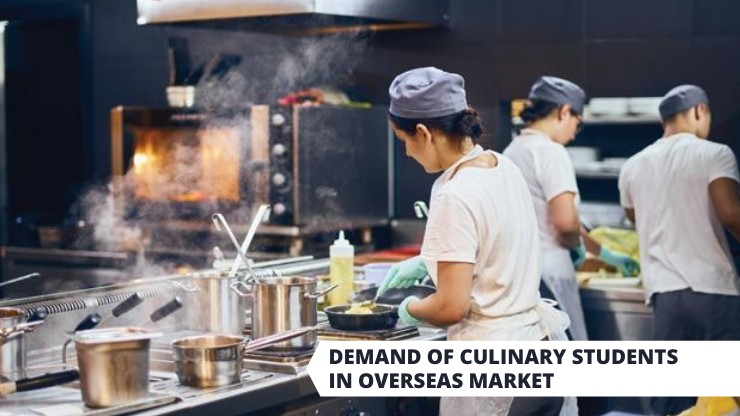
All the culinary students have this question that always bothers them inside their heads. Most of them generally are quite confident about their placements abroad, however, which country has the most demand for young professionals from all over the world is a real question to think about. The very first thing that would matter will be making great food. This is the secret after all which can earn you your deserving passport for a job outside the country. Different nations always welcome chefs from other countries who are well versed in their own country’s authentic dish. Due to the globalization and liberalization of modern society, people enjoy different kinds of cuisine options under one roof. For example, British chefs were always made welcome in the far-flung corners of the Empire, while the first Indian restaurant opened in London 200 years ago and the first Chinese in 1907. The superpower of taking flavors of a part of the world and enriching the other part is pretty dope. India has always been justly proud of its cuisines. This makes the traditional Indian cuisines not only loved in India but it is in great demand all around the world. The market of chefs in India has been rising a lot nowadays. Many culinary schools help students become well-polished professionals and let them spread their wings in making delicious foods all over the world. Being the capital of India, there are many Culinary Courses in Delhi. The students get to acquire Diploma in Culinary Arts like 18 months Advance Professional Programmes Course in Culinary (LEVEL 1), 12 months Diploma Professional Culinary Programme Course (LEVEL 2), 12 months Certification Course in Culinary (LEVEL 1), 3 months Certificate in Home Professional Cooking in Culinary and many more. Eminent restaurants and hotels hire chefs from India as well as different nations to cater to the gourmet class of the country as well as abroad too. The profession of a chef is quite flexible. You may have to move to different countries every month and work for over 9 to 10 hours per day. If you are a novice in the profession, you can choose to serve on a cruise ship, maybe making breakfast in the Bahamas, lunch in Miami, or evening meals somewhere on the coast of Cuba. You need to work hard but it can be quite interesting. It is always a good decision to serve in cruise and merchant navy ships to start with. These ships provide you with an opportunity to learn your trade well as well as the art of preparing food perfectly but with much less time, more than any restaurants or hotels out there. It can be quite a hassle finding the perfect hotel or restaurant with good pay. Considering it as your first job, start with the low-hanging opportunities like British-owned businesses in resorts that are popular with British tourists. Working there will increase your engagement with the locals and experience abroad then you can opt for some other place with a better opportunity than you truly deserve. Current statistics show that Australia has a major demand with 2700 chefs and secures 22nd place in the list of the nations demanding chefs from all over the world. In New Zealand too there is a good market for the profession however it comes with many requirements. Canada has a good market too. America has been at the forefront of modern catering at different levels. Your aim in those parts of the world should be to become a professional chef permanently by buying or creating a business employing local people. Thus, moving outside the country can be a major cultural shock with different climates, cuisines, and people of different preferences to deal with. However, if you can deal with these conditions to cope up with the new workload and working atmosphere of this rising industry, you can shine with flying colors in the future and acquire your dream life. As a premium Bakery and Culinary Institute, we at IBCA, help you to acquire all the necessary knowledge for building your career. Not only does our institute comprise an expert team of instructors but also we are equipped with the latest infrastructure and technology. with an international curriculum, we provide extensive practical training to our students. Here, the students get to learn in a disciplined environment that enables them to excel in the competitive era.

Scroll to Top
Call Now Button