


Blog

How to Become a Head Chef — Skills, Salary & Career Path
Blog, chef career

How to Become a Head Chef — Skills, Salary & Career Path

The hospitality industry is growing rapidly and creating huge demand for professional chefs in hotels, restaurants, resorts, cloud kitchens, big cruise and for dining businesses; that’s why many students want to learn how to become a Head chef, because it offers many opportunities for students like career growth, international opportunities, and also provides attractive salaries.  A Head chef is the main person who manages the kitchen, maintaining the quality of food, creating menus, and managing the staff of the kitchen and servers. If a person wants to become a successful chef, then that person has qualities like cooking talent, leadership qualities, discipline, practical experience, and they also have to have proper culinary education; this blog explains how a person becomes a Head chef. Who is a Head Chef? The head chef is the senior-most chef in the professional kitchen, and he leads the kitchen operations. The head chef is the person who manages the kitchen staff, maintains food quality, he is that person who creates menus, and ensures that kitchen operations run smoothly. The head chef is the person who supervises the junior chefs who mainly prepare dishes, and he also ensures that the junior chefs are doing their work properly. If a person has to become a head chef, then that person must have leadership qualities and cooking skills. Responsibilities of a Head Chef To become a successful Head chef, people must have many years of experience, strong discipline, and also have excellent kitchen management skills. What Does a Head Chef Do? A head chef has to handle many things like cooking, managing kitchen operations, supervising junior chefs, and they also have to keep interacting with the manager for feedback from customers, and that’s why their role is very important in restaurants, hotels, and the hospitality business. Main Duties of a Head Chef Managing Kitchen Staff The head chef supervises and manages the cooks, helpers,  junior chefs, and all the staff members of the kitchen to ensure that the kitchen work is going smoothly. Menu Planning The head chef creates a menu and adds different types of cuisine to the menu for hotels, restaurants, and all the dining businesses to improve the customer experience. Maintaining Food Quality The head chef also ensures that the food quality is maintained and that food matches the presentation standards. Inventory Management A head chef also controls the food stock, kitchen supplies, and the ingredients of food. Kitchen Hygiene & Safety Hygiene and safety should also be maintained while preparing food in the kitchen. Customer Satisfaction Head chefs also hear and solve the problems or complaints of customers to improve their experience. If a person has to become a successful Head chef, then that person has to handle these responsibilities effectively. Skills Required to Become a Head Chef To become a head chef, a student should have developed these skills: cooking skills, leadership abilities as well as good management skills. Cooking & Presentation Skills: Leadership & Team Management  A head chef is also able to manage the kitchen teams under pressure and in rush moments. Leadership quality helps to maintain discipline and coordination between staff members. Time Management Time management is also a very important thing for a chef because if the staff members are not completing their work on time, then the customer experience becomes very bad and the rating of the business is also decreased. Communication Skills Creativity in Menu Planning Modern restaurants and hotels prefer to add creative dishes, international cuisines, and unique menus to attract customers. Kitchen Operations Management Managing Kitchen operations, inventory control and staff scheduling all these are important things to do for long-term growth in a chef career. Problem-Solving Skills A head chef must have problem-solving skills because head chefs have to face many issues during rush hours or operational challenges. Qualifications Needed to Become a Head Chef Professional education helps students understand how to become a Head Chef faster and more effectively. Common Culinary Qualifications Practical kitchen training is very important because hospitality is a skill-based industry. Why Culinary Education Matters Students who complete professional Culinary Courses often grow faster in the hospitality industry. Career Path to Become a Head Chef The Head Chef Career Path generally follows a step-by-step journey process. The Head Chef Career Path usually follows a step-by-step journey. Commis Chef This is the first stage where chefs understand basic kitchen management and meal preparation  Demi Chef de Partie And now the 2nd step in this step chefs manage small kitchen duties and help senior chefs. Chef de Partie A Chef de parties chefs handle a particular portion of the kitchen such as grill, bakery, or sauces and toppings. Sous Chef These chefs are the assistant to the Head Chef and handle regular kitchen management. Head Chef Head Chef is the last and final management position responsible for the entire kitchen operations. Career Flow Table Position Main Responsibility Commis Chef Basic cooking support Demi Chef Section assistance Chef de Partie Section management Sous Chef Kitchen supervision Head Chef Full kitchen operations This structured path supports steady Chef Career Growth in the hospitality industry. How Long Does It Take to Become a Head Chef? Time requirements rely on: Generally, becoming a Head Chef takes many years of getting professional culinary experience. Students who finish Professional Chef Training and culinary internships often rise rapidly because they get early practical experience. Regular learning is also essential because food trends and consumer preferences change from time to time. Head Chef Salary in India The Head Chef Salary in India depends on: Luxury hotels and international hospitality companies usually offer higher salaries. Approximate Salary Table Experience Level Approx Salary Range Beginner Chef ₹15,000 – ₹30,000 Sous Chef ₹40,000 – ₹80,000 Head Chef ₹1 Lakh – ₹3 Lakh+ Experienced chefs can also work in: This creates strong opportunities for global Chef Career Growth. Industries Where Head Chefs Are in Demand Professional chefs are required in many hospitality sectors. Industries Hiring Head Chefs Growing food businesses are increasing demand

Culinary and Baking Admissions 2026
Blog

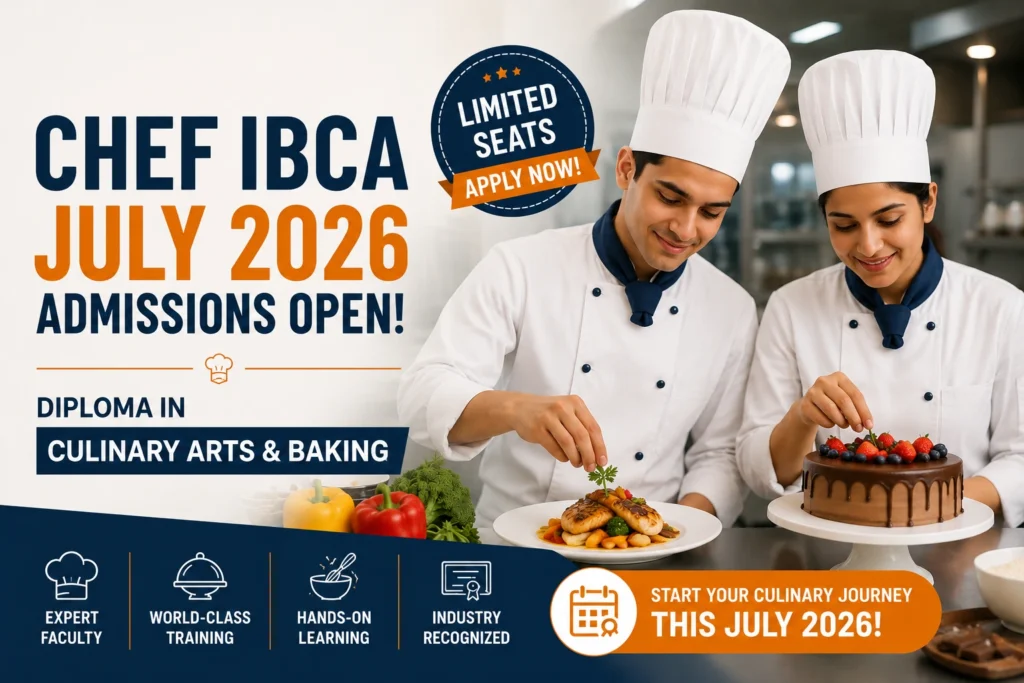
Chef IBCA July 2026 Admissions Open: Diploma in Culinary Arts & Baking — Limited Seats

Admissions for the July 2026 batch at Chef IBCA (Institute of Bakery & Culinary Arts) are now officially open. Seats are limited, and early applications are strongly recommended. If you (or your child) have ever dreamed of wearing a chef’s coat, working in a five-star kitchen, opening a bakery, or building a career on cruise liners and international hotel chains — this is the moment to take the first real step. The July 2026 intake at Chef IBCA brings two flagship programs: the Advanced Diploma in Culinary Arts and the Advanced Diploma in Baking & Pastry Arts. Both are industry-focused, hands-on, and designed to make students job-ready from day one. This blog is a complete guide for students and parents — explaining the programs, the career path, fees, eligibility, and how to apply before the seats fill up. 👉 Enroll Now for July 2026 Batch 📑 Table of Contents 1. Why July 2026 is the Right Time to Join The food, hospitality, and bakery industries in India are growing faster than almost any other service sector. New hotels, cloud kitchens, boutique bakeries, premium cafés, QSR chains, and luxury cruise lines are all hiring trained chefs — and the demand is far higher than the supply of skilled professionals. July is also the official intake when most leading institutes start their academic year. Joining a Diploma in Culinary Arts program in July 2026 means you’ll be aligned with industry hiring cycles, internship opportunities at hotels during peak season, and the standard academic calendar followed by recruiters. Simply put: starting now puts you a full year ahead of students who wait. 2. About Chef IBCA — A Trusted Name in Culinary Education Chef IBCA (Institute of Bakery & Culinary Arts) is built on one simple belief — a great chef is made in the kitchen, not in a classroom. That is why every program at Chef IBCA is designed around real, hands-on training in professional kitchens, under chefs who have actually worked in the industry. Our faculty includes chefs with experience in five-star hotels, international hospitality chains, premium patisseries, and award-winning restaurants. Students don’t just read about techniques — they learn them, practice them daily, and get evaluated by professionals who use those same skills every day at work. From kitchen discipline and food safety to plating, costing, and menu engineering, Chef IBCA covers everything a young chef needs to walk into a real kitchen with confidence. 3. Advanced Diploma in Culinary Arts — Program Overview The Advanced Diploma in Culinary Arts is Chef IBCA’s flagship program for students who want to build a career as a professional chef in hotels, restaurants, cruise lines, or their own food business. This program covers: The Diploma in Culinary Arts at Chef IBCA is designed in a step-by-step structure — students start with the basics in the first months and gradually move to advanced techniques, live kitchen operations, and specialized cuisines. By the end of the program, every student has cooked hundreds of dishes, worked in real kitchen environments, and built a personal recipe portfolio. 4. Advanced Diploma in Baking & Pastry Arts — Program Overview For students who are passionate about cakes, breads, desserts, chocolates, and patisserie, the Advanced Diploma in Baking & Pastry Arts is the perfect fit. This program covers: This program is ideal for students who want to become professional bakers, pastry chefs, dessert specialists, or even entrepreneurs running their own bakery brand. With the rise of home bakers and boutique bakeries in India, this is one of the most rewarding career paths available today. 5. What Students Actually Learn at Chef IBCA One of the biggest concerns parents have is — “Will my child actually become job-ready, or will this just be theory?” At Chef IBCA, the answer is built into the very structure of the course. Students spend the majority of their time inside the kitchen, not in lecture rooms. They cook every day, they make mistakes, they learn from professional chefs, and they slowly build the speed, confidence, and discipline that hotels expect. By the time a student completes the Diploma in Culinary Arts or the Diploma in Baking & Pastry Arts, they have: This is the difference between a hobby cook and a trained professional — and that’s exactly what Chef IBCA prepares students for. 6. Career Opportunities After the Diploma A career in culinary arts is no longer limited to working in restaurants. After completing the Diploma in Culinary Arts from Chef IBCA, students can take up roles such as: Many of our students also choose to go abroad — Canada, UAE, Australia, and Europe have a constant demand for trained Indian chefs, and the program is structured to make students globally employable. 7. Why Parents Trust Chef IBCA We understand that for most parents, this is a serious decision. They are not just choosing a course — they are choosing a career path for their child. That’s why Chef IBCA is built around the values parents look for: The Diploma in Culinary Arts at Chef IBCA is not just a course — it’s a complete career plan, designed to give young students a strong, stable, and respected profession. 8. Limited Seats — Why You Should Apply Early Cooking cannot be taught in crowded classrooms. Every student needs personal attention, a workstation, time on the stove, and one-to-one feedback from the chef instructor. That is why Chef IBCA strictly limits the number of seats per batch. For the July 2026 intake, only a fixed number of seats are available across both programs — the Advanced Diploma in Culinary Arts and the Advanced Diploma in Baking & Pastry Arts. Seats are filled on a first-come, first-served basis. Once the batch is full, no extra admissions will be opened, even for highly motivated students. This is the only way to maintain the quality of training Chef IBCA is known for. 👉 Reserve Your Seat for July 2026 Now 9. Admission Process & How to Enroll The admission

Culinary Arts Course in 2026
Blog

Culinary Arts Course in 2026: Fees, Duration, Career Scope & Salary in India

The food economy and industry are booming in India right now and creating huge demand for chefs, cooks, and more across restaurants, hotels, and cloud kitchens. With the global culinary trends that are coming to Indian markets, 2026 is the right time to build a great career in cooking. This blog will cover everything you need to know about the culinary courses in India, from fee duration to different career opportunities, along with salary aspects. Whether you’re a student choosing a career after 12th or somebody looking for a career change, this roadmap can help you make an informed decision for your culinary future.  What is a Culinary Arts Course? Culinary arts is the actual art of cooking, food processing, and presentation. This is much more than just cooking at home—this is a structured training program that can teach you the perfect kitchen science, food management, culinary techniques, and kitchen science.  While cooking can be learned in a casual manner, professional culinary training can transform you into a great chef today, which is exactly what the industry demands. Graduates can work in diverse settings for luxury hotels, cruise ships, dining ships, catering companies, cloud kitchens, and others who want to start their own businesses. This complete and comprehensive education can provide the way towards the profession. Why Choose a Culinary Arts Course in 2026? The Indian hospitality industry is growing at the rate of 10% per year, with a great expansion of fast-serving restaurants, food startups, and cloud kitchens. The recovery after the pandemic has created an effect where more chef positions are available than ever before. International exposure is for the Indian chefs, and global demand for skilled kitchen professionals is steadily rising.  Unlike those traditional degrees that are based on heavy theory, the culinary arts have a major focus on hands-on training and practical training that’s steadily rising. This skill-based approach ensures that you’re ready for the job from day one, thus making it one of the best and most enjoyable courses in the market.  Culinary Arts Course Eligibility Criteria (2026) Culinary Arts Course Duration in India Certificate Courses  Duration of Courses— 4 months  Great for beginners who want faster entry into the culinary industry, and also hobbyists looking for professionals with their skills. These types of courses can cover the basic fundamentals that can lead to different chef positions.  Diploma Courses  Duration of Courses—6 months Industry-driven and industry-focused course that combines internships. The most popular choice for candidates who want a complete professional course for a professional career. Chef IBCA can provide around 6-month to 9-month programs for guaranteed placements.  Advanced Diploma Courses  Duration of Courses: From 9 months For those waiting for professional skills to match academic qualifications. These programs do include the different management modules, along with training and preparing you for leadership roles. Culinary Arts Course Fees in India (2026) Certificate Courses  Average range: From ₹1,10,000 to ₹1,50,000  Short-term courses for quick career returns.  Diploma Courses Higher Range: ₹2,50,000 to 3,00,000  This includes international certifications, a uniform, and tools, along with internship placement and support.  Advanced Diploma Courses  Average Range: ₹6,00,000to ₹7,80,000 Long-term ROI changes for career growth opportunities and high-earning points.  What is Included in the Fees? Kitchen training, tool kits and chef uniforms, all ingredients as in for practical sessions, industrial internships, along with internationally recognized certifications (like CTH & City and Guilds). Some of them include placement assistance for their fee structure. Culinary Arts Course Curriculum & Skills You Learn A complete culinary program that covers kitchen safety along with hygiene standards for professional environments. You can easily master knife skills along with food preparation techniques that can form the foundation for all cooking. This curriculum can balance Indian regional cuisines along with regional cooking styles. While all the basics of bakery are included, and these are separate courses, specialized pastry training requires completely separate courses.  You will learn the art of kitchen management and skills that go for staff coordination, inventory control, and recipe costing. Some of the modern courses emphasize presentation and plating techniques that make dishes social media-worthy and also restaurant-ready. Career Scope After a Culinary Arts Course in India Initial positions that include junior cook (commis chef) for hotel kitchens or section head (chef de partie) for restaurants. With experience, you can easily advance towards second-in-command (sous chef) and, after all, an executive chef, thus leading the entire kitchen operations. Beyond those traditional restaurants and hotels, graduates can find exciting opportunities for cloud kitchens for food delivery apps, cruise lines with international exposure, food startups that launch innovative concepts, corporate catering companies, and also food media for food stylists or recipe developers. Culinary Arts Course Salary in India (2026) Entry-Level Salary Fresh graduates can earn from ₹25,000 to ₹45,000 monthly in metro cities. Initial positions for five-star hotels can offer higher packages along with accommodation benefits. Mid-Level Salary For 3–5 years of experience, commands salaries from ₹50,000 to ₹90,000 monthly. Special roles like banquet chefs or pastry chefs have higher or special pay. Senior-Level Salary Executive chefs in luxury hotels can earn from ₹1,20,000 to ₹3,00,000+ monthly. Restaurant owners, along with celebrity chefs, can earn significantly through multiple revenue streams. Salary Growth Abroad Cruise line chefs’ salaries start at around $2,500 to $4,000 monthly. Middle East hotel positions provide ₹100,000 to ₹250,000 monthly, tax-free. European & Australian kitchens provide excellent work-life balance for salaries 2-3 times Indian rates, though competition is tough. Culinary Arts Course vs. Hotel Management While hotel management involves additional hospitality duties like housekeeping, customer service, and marketing, culinary arts concentrates just on methods of cooking and kitchen operations. If you like to cook and want a real kitchen experience, choose culinary arts. For people who wish to work in administrative and guest services, hotel management can be a good choice. Hotel management graduates begin in leadership roles in departments, whereas culinary graduates generally start in kitchens & can later move to management. Culinary arts offers deeper abilities as well as faster kitchen

Blog, IBCA

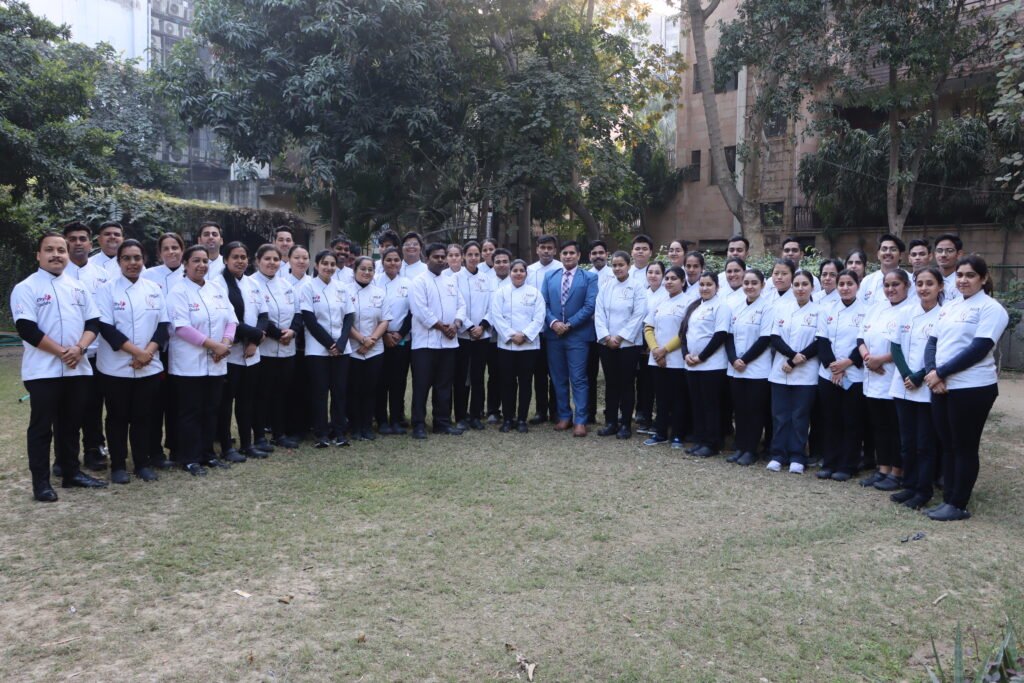
The Chef IBCA Advantage: How We Prepare Students for Global Culinary Careers

Chef IBCA offers a Diploma in Culinary Arts, through which students can pursue their passion for cooking and enter a global career. In this Culinary Arts Diploma program, students receive professional training in many cooking and kitchen management techniques.  So, if someone wants to follow their passion and has a dream to make their hobby a profession, from which they build their own culinary business, like bakeries and pastry shops, many people just have to follow the herd because they don’t get their chance.  However, Chef IBCA is making it possible for people to turn their hobbies into full-fledged professions and providing courses in Bakery, Pastry, Kitchen Management, and Cooking, among others, can help in this regard.  IBCA also provides placements in national and international hotels and restaurants. Why are Baking and Cooking Science? IBCA’s Diploma in Culinary Arts degree also provides a specialization in baking and pastry. This course will help to develop an understanding that baking is not just about recipes; it’s about understanding the ingredients and how to use them, which enhances the taste and beauty of the cakes/pastries, and how yeast can be put in the pastry dough. The proper fluffiness in bread doesn’t affect the taste. Knowing how to add water and flour, and using the correct amount of each ingredient, is taught. It’s important to know when and how to add sugar, because when sugar is heated, it changes its taste and color. You will learn which types of cakes and pastries to use eggs and butter in to get a better texture of the pastries. Learning Global Standards Courses at Chef IBCA IBCA offers specialized courses across Culinary Arts, Baking, and Kitchen Management. Students gain hands-on experience in international and Indian cuisines, mastering kitchen management, plating, and chopping techniques. The Diploma in Culinary Arts covers: The Diploma in Baking focuses on: Opportunities through IBCA Diploma Courses: Hands-On Learning Our students learn by doing! They will learn how to make their own bread, cakes, and pastries. They can also work with chocolate, so by practicing themselves, they can become confident bakers.  They will learn all skills, and they need to make tasty dishes, from mixing and grinding dough to decorating cakes and pastries. So with hands-on training, they can try new things and experiment with different flavors, and develop their own recipes. Through IBCA Culinary Arts degree, students are going to learn by doing: I. Baking cakes, bread.  II. Flavourful chocolate cookies.  III. Baking of pastries.  IV. Cutting techniques.V. Use of proper ingredients to maintain its taste.VI. Decoration techniques of cakes and pastry Creativity and Innovation Mentorship & Support Teachers guide students in this creativity about the amount of ingredients and guide them on how many ingredients and the texture are used in the pastry. Skills You Will Learn The kitchen management techniques and skills are given, where how to manage the kitchen and how to speed up the cooking and plating to efficiently work in the kitchen are taught. There will be proper time ideas given on how to. How to manage the mistakes that are made during cake-making recipes and how to. How to manage the mistakes and to correct with the proper technical skills are taught. The skill of plating beautifully is given, which can attract customers. Understanding the ingredients and how they react, like how sugar changes the texture and color of bakery, and how yeast is added to give a proper fluffy bread. In this, a proper idea of which ingredient will react with which and which flavour gets developed within them. Why Choose Chef IBCA? IBCA is different from other culinary institutes. Their modern kitchens provide the perfect environment for learning. They focus on practical skills, so you will spend more time in cooking and baking and use less of your time Their expert trainers guide you through hands-on training and ensure that you are job-ready. In Modern Kitchens, you get good facilities and get real experience in cooking. In Practical learning, you will learn hands-on training and culinary skills. You will get Global Career Support and you have opportunities to work in abroad and build your international connections. In a Science-Based Curriculum, you have to understand about the science behind cooking and the ingredients of food. Conclusion Achieve Your Culinary Dreams with IBCA and Join Chef IBCA and find a world of culinary professions. Their Diploma in Culinary Arts and other programs will prepare you with the culinary skills and give knowledge to get success in culinary arts. With modern kitchens, expert trainers, and global career support, you will be ready to start your career in cooking so Explore their courses and start your culinary passion today, and discover your passion into your profession, and also develop your skills, and become a culinary expert with IBCA.

Baking and Culinary Arts Course in Gurgaon
Blog

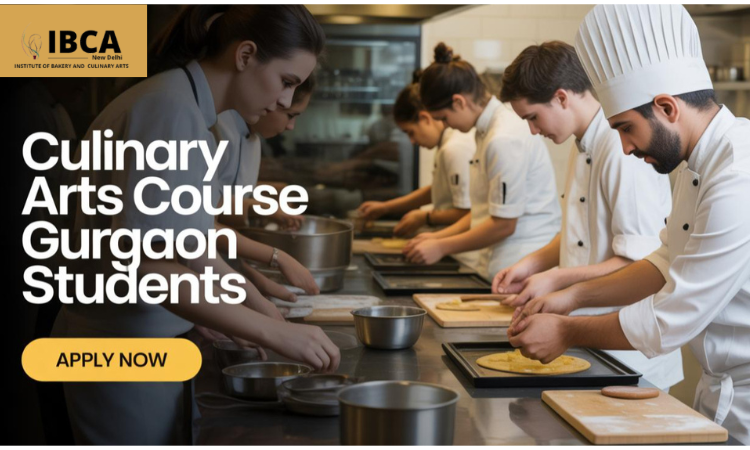
Top Baking and Culinary Arts Course in Gurgaon – Why IBCA Delhi Is the #1 Choice

The culinary scene in Gurugram, or Gurgaon, is flourishing and thriving—that’s directly driven by different food startups, cloud kitchens, fine-dining restaurants, cafes, and more—and the demand for professional bakers has skyrocketed. Both students and even professionals are searching for the right and career-focused training to unlock some opportunities in their career field. However, many local institutes in Gurgaon provide just hobby-level courses, thus leaving the real aspirants to search for the best bakery institute in Gurgaon and other places that are just a metro ride away. Welcome to IBCA Delhi, located in Janakpuri, which is offering global-level courses and certifications for hands-on training, just some distance from Gurgaon. Looking for the best Baking and Culinary Arts Course in Gurgaon? This blog is for you — we’re sharing all the important details you need to know. Why Gurgaon Students Are Searching for Courses Outside Their City All the culinary scenes of Gurgaon are great; the professional culinary institutes are rare in the city. Most of the local classes do focus on general and simple baking courses in Gurgaon that are short-term and normal courses that don’t have the depth or expertise to provide career-level growth. Users are generally searching for the best bakery institute near Gurgaon.  The IBCA Delhi is actually filling the gap with main-level career-focused programs that are supremely aligned with global-level standards and certifications like CTH or City & Guilds, thus providing multiple career opportunities in Michelin-starred kitchens, luxury hotels, and entrepreneurial ventures.  Overview of Baking & Culinary Arts Programs Offered by IBCA The curriculum of IBCA blends both practical expertise along international certifications, providing that graduates stand out in this industry. Some of the popular programs of Chef IBCA are: Baking Courses Search for the best bakery and pastry chef course near Gurgaon; then, Chef IBCA has specialized bakery and pastry programs: Mastering advanced techniques along with chocolate artistry, gluten-free baking and complete command of baking sciences.  Great for developing foundational skills for cakes, desserts, and breads.  Specialized training for the Indian market trends.  A perfect course for enthusiasts who want creative freedom.  Culinary Courses  Chef IBCA has already become a perfect culinary institute in Delhi for Gurgaon students and provides the most career-focused courses: Train as a perfect line cook or a complete sous chef for luxury chefs.  Fast-tracking your career with the 6-month course along with internships with major hospitality brands like Hyatt, Taj, JW Marriott, etc.  Fast-starting options for major career changes.  Distance & Accessibility from Gurgaon to IBCA, Janakpuri The Janakpuri Campus of Chef IBCA is directly accessible via Delhi Metro’s Magenta and Blue lines. The Yellow Line can help you reach there.  What Makes IBCA the Best Culinary & Baking Institute for Gurgaon Students Career Scope in Gurgaon After the Course There are multiple career opportunities, whether you choose the Chef IBCA’s baking course in Gurgaon or the pastry chef course near Gurgaon: Campus Visit and Contact Details  Visit our campus today and set your career in bakery and culinary sciences: Address: Plot 10, Block B, Janakpuri Institutional Area, New Delhi – 110058 Google Maps: https://g.co/kgs/U3NjKQb WhatsApp/Phone: 09643469329 New batches for the culinary institute in Delhi for Gurgaon students start soon—enroll today! Conclusion  The food industry in Gurgaon demands professional expertise and excellence, not just some hobby courses and shortcuts. Chef IBCA is the best bakery institute near Gurgaon that has global certifications, job offers, and internship opportunities—all just some km or a normal metro ride away. Do not settle for local courses that will lead you nowhere; instead, choose the best, whether you want to build a career as an expert chef or baker or run a cloud kitchen. All this needs is professional expertise that only Chef IBCA can offer. 

best culinary and baking courses after 12th
Blog

Chef, Culinary & Baking Courses After 12th — Fees, Career & Scope [2026]

After passing the 12th exam, this is the right time to decide on the future and make decisions regarding a career. If someone is passionate about music, they choose a music institute, and if someone is passionate about food, cooking, or baking, then they must choose a career in the culinary arts that teaches them many perfect recipes that pave their path to success. With the rise in the hospitality industry and a rising demand for skilled chefs, bakers, and culinary entrepreneurs, this field opens a global career path and success at the national or international level. Whether a student dreams of becoming a master chef, opening his bakery, or working in five-star hotels, enrolling in culinary or baking courses after 12th grade can help him turn his passion into a profession. In this blog, we’ll guide you through everything you need to know to succeed in the culinary industry, from types of courses, eligibility, career scope, and the best culinary institute in India where you can give shape to your dreams. Why Choose Culinary or Baking Courses After 12th? Industry Demand & Growing Hospitality Sector People have busy schedules nowadays, and they prefer ready-to-eat food. This is the reason behind the rapidly growing culinary and hospitality industry in India and abroad, which leads to an increase in demand for skilled professionals. As food loved by people must have taste and contain proper nutrition and must be healthy for the people, and all these needs can be fulfilled by well-trained chefs and bakers, as they have received training in that. Creative, Skill-based Career Path Working in the hospitality industry isn’t a desk job; it is a career that depends on creativity, innovation, and hands-on skills. Individuals can express their personality and art through innovative dishes like cakes and pastries. Even a chef can share stories through their baking art, and if they get training from the best institute, then they become so expert that there would be a beautiful story behind every culinary art and recipe. Global Job Opportunities And Entrepreneurship Getting culinary skills and building a career is not limited to the national level, but it opens the door to success at the global level, as food is a basic need of human beings. With the right training and certification from the best institute, one can be able to work in top hotels, restaurants, or cruise ships at the global level. Many culinary graduates started their own businesses, became entrepreneurs, and launched their cafes, bakeries, or cloud kitchens and stepped into India’s booming food industry, where delivery has become easy and people are starting their startups. Types of Culinary and Baking Courses Available After 12th Diploma in Culinary Arts The duration of the diploma in culinary arts is 6, 12, or 18 months, depending on the type of course selected by the student. In this course, a student can learn Indian, Continental, and International cuisines that help students to get jobs in restaurants and hotels where there is a need for chefs with professional training and can get higher salaries and prestige. Professional Pastry & Bakery Course The duration of the professional pastry and bakery course is 6 or 9 months. This course is mainly focused on teaching bakery and patisserie skills like making cakes, breads, pastries, chocolate work, etc.  Hobby Chef Programs This is a short course that is perfect for food lovers who want to enhance their skills and want to cook for their families. These types of courses are done for self-satisfaction, and there is no commitment to a long-term program or career in the future. Eggless Baking Courses (For Vegetarian Learners) This course is specially designed for vegetarians who want to be perfect in bakery courses and want to target vegetarian customers and become popular in the culinary industry. This course includes eggless cakes, cookies, breads, and desserts that are perfect for vegetarian people, especially in India, where people avoid eggs during worship or when they believe in God. Short-term Certificate Options The duration of this course is weeks to 3 months. This course is selected by people who want to focus on skill-building in a specific area, like chocolate making, continental cuisine, or healthy baking. Career Opportunities After Culinary and Baking Courses One of the best parts about this field is that when you become skilled and certified from a famous institute, it opens diverse career options that you can choose after completing a course. Here we have mentioned some career options that you can choose after getting a certification  IBCA Course Fees, Duration & Eligibility (2026) Course Duration Fees (₹) Eligibility Placement 9-Month Advanced Diploma — Culinary Arts 9 months 6,50,000 + 18% GST 12th pass, any stream ✓ 100% 6-Month Diploma — Culinary Arts 6 months 2,50,000+18% GST 12th pass ✓ 100% 4-Month Certificate — Culinary Arts 4 months 1,10,000+18% GST 12th pass ✓ Assisted 9-Month Advanced Diploma — Bakery & Pastry 9 months 4,25,000 + 18% GST 12th pass ✓ 100% 6-Month Diploma — Bakery & Pastry 6 months 2,25,000 + 18% GST 12th pass ✓ 100% 8-Week Eggless Baking Course 8 weeks 25,000 (Excl. of 18% GST) 10th pass Certificate Start Strong with Chef IBCA – A Trusted Culinary Institute in India Chef IBCA (Institute of Bakery and Culinary Arts)  in Delhi is one of the most reputed culinary schools in India. Here we have explained why students should chef IBCA: Expert Faculty: Students can learn from top chefs and industry professionals who are successful in this field and can share their experience with students that will help them to tackle situations in the future. Govt-Recognized Certifications: We provide government-recognized certificates that increase the chance of getting selected in hotels and restaurants. Fully Equipped Kitchen Labs: Here, we provide a fully equipped kitchen and labs that will help you to learn each and every minor art of culinary and give you experience of handling the kitchen. 100% Practical Learning: Every day is spent in the kitchen with professionals, and one can

Blog

7 Top Cutting Techniques Every Chef Must Know!

Mastering essential cutting techniques for chefs: from cross chop to batonnet. Everything you need to know! Becoming skilled in using a chef’s knife is an essential art that every chef must master to stand out from the rest and work towards becoming a head chef. Knowing recipes, cooking techniques, and appropriate attire for the job is essential for a chef, but learning and mastering different cutting techniques is equally important. From the Julienne to the Batonnet, chefs are under constant pressure to learn the cuts, chops, slices, and dice. Here are some crucial cutting techniques that every chef should know to excel at their job and improve their skills. 1. Cross Chop : One of the cutting techniques that chefs should learn is the Cross Chop. This technique is ideal for quickly chopping small vegetables or herbs without worrying about presentation. To execute the Cross Chop, hold the knife’s handle with one hand and place the other hand on top of the blade to guide and control the chopping pace. Then, lift the handle of the blade and chop while keeping the tip of the blade down. As your hands are out of the way, they will be safe. 2. Rock Chop :  Another useful technique is the Rock Chop, which is similar to the Cross Chop. Hold the handle of the blade, keep the tip of the knife down on the board, and use your other hand to move the ingredient. As you chop, keep the blade still and push the vegetable-forward. Remember to curl your fingers to keep them safe from the blade. 3. Julienne Cut : The Julienne Cut is a fine cut where the thickness of each slice is between 1-2 mm. It involves cutting the vegetables into thin rectangular shapes, followed by using the fine slice technique to create thin matchstick shapes. This technique is commonly used for carrots, celery, and Julienne Fries from potatoes. Mastering the Julienne Cut is essential as it is the initial step for other types of cuts. 4. Brunoise Dice : Chefs can use the Brunoise Dice technique to dice the ingredients into small cubes. The cube size should be 2mm x 2mm x 2mm, making it the smallest dicing cut, popularly used for soups. 5. The Small Dice : The Small Dice technique is a slightly larger cut than the Brunoise Dice, with dimensions of 3mm x 3mm x 3mm. Chefs can begin this technique by Julienne Cutting the ingredients and then dicing them into slightly bigger cubes than the Brunoise. 6. The Batonnet : The Batonnet technique is used to cut baton-shaped vegetables like chips, with dimensions of 6mm x 6mm x 6mm. The Baton technique, on the other hand, is used to create large dice with dimensions of 12mm x 12mm x 6cm. Although not regularly used, the Baton technique is still a useful technique to master. 7. Pont-Neuf :  Lastly, the Pont-Neuf technique is only related to cutting potatoes. After peeling and washing the potatoes, cut them into 2cm x 7cm shapes to create chunky chips. Every chef must learn and master these cutting techniques to become an expert in their field. With regular practice, even new chefs can become professional chefs. Do you have a passion for culinary? Learn culinary art at its finest only at IBCA, India’s Most Premium Culinary Art Institute. Start your career as a professional chef today! Admission is open for July 2024 Batch, Apply Now!!

Scroll to Top
Call Now Button